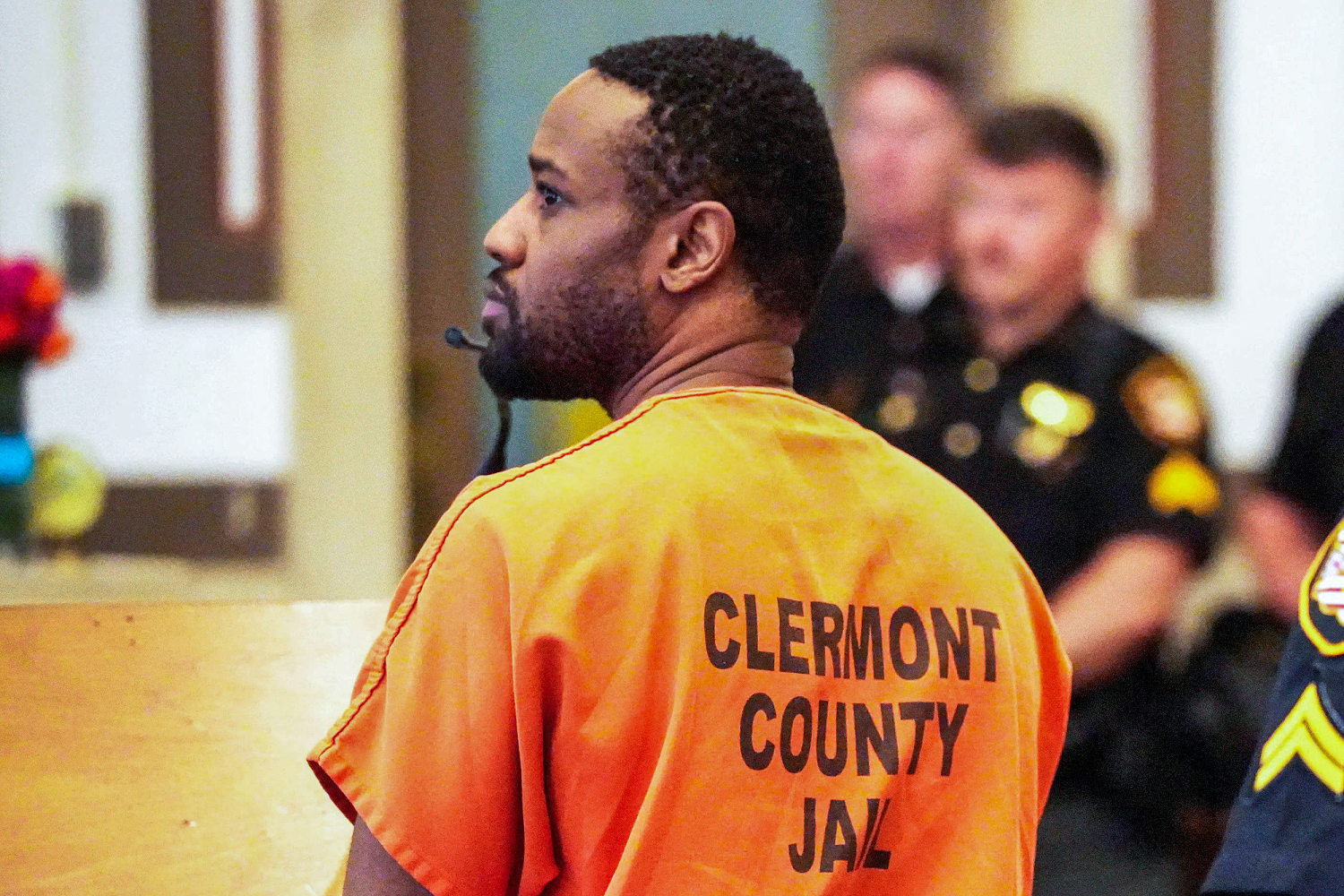
When an Ohio father charged with killing a sheriff deputy is found guilty, the verdict rarely stays confined to a single courtroom in rural or suburban America. In the immediate aftermath, headlines lock onto the simplest narrative available. A law enforcement officer dies in the line of duty. A parent stands accused and is convicted. Yet the deeper truth inside these cases usually turns on split-second tactical decisions, contested mental health histories, family dynamics under severe strain, and courtroom battles over intent that take months or years to unfold.
I have spent decades covering criminal justice, police operations, and high-stakes trials. Most standard crime reports stop at the guilty verdict and move on to the next arrest blotter. That approach leaves readers with a flat silhouette instead of the full picture. To understand why these cases end the way they do, you have to look at what happens before the sirens ever reach the driveway, how prosecutors prove malice versus panic or crisis, and how local communities absorb a shock that splits loyalties and reshapes policing practices. Learn more on a related topic: this related article.
What Happens Before the First Call Goes Out
Every fatal encounter involving a deputy and a father begins long before dispatch logs a timestamp. Often, there is a slow burn. Job losses, custody disputes, untreated depression, substance abuse, or chronic financial pressure can turn a household into a powder keg. Neighbors might notice arguments or erratic behavior, or they might notice nothing at all until the street fills with cruiser lights.
When a call comes in to a county sheriff's office, dispatchers rarely have complete information. A caller might report a domestic disturbance, a welfare check, a shots-fired complaint, or a person in crisis. Deputies respond with limited intelligence and wide geographical coverage. Unlike municipal police departments with dense patrol grids, county deputies frequently cover sprawling territories with longer backup times. Additional journalism by Associated Press explores related perspectives on this issue.
That geography changes the physics of the encounter. A lone deputy arriving first at a residence faces different pressures than a team staging around a city apartment block. Every second feels longer when you know help is ten minutes away instead of ninety seconds. At the same time, a father inside a home—whether acting out of rage, fear, delusion, or desperation—often perceives the arrival of uniformed authority as an immediate threat to his freedom, his family, or his life.
Consider a hypothetical example to see how quickly a situation can spiral. Suppose a man in his forties has been spiraling after a separation and a workplace injury, drinking heavily and keeping loaded firearms in the house despite a history of volatile outbursts. A relative calls for a welfare check after receiving alarming text messages. Two deputies knock on the door. Within seconds, a confrontation erupts in a narrow entryway, gunfire rings out, and a deputy is mortally wounded before backup arrives. Even in a simplified scenario like that, the legal question at trial is not merely who pulled a trigger, but what state of mind existed in the moments leading up to it and what evidence survives forensic scrutiny.
Why Guilt in These Trials Hinges on Intent and Forensics
A guilty verdict in a case where an Ohio father is convicted of killing a sheriff deputy does not happen automatically just because the victim wore a badge. Jurors in American courtrooms are instructed to separate grief from legal elements. Prosecutors must prove specific statutory charges beyond a reasonable doubt, and defense attorneys work relentlessly to create doubt around intent, self-defense claims, impairment, or diminished capacity.
Ballistics and crime scene reconstruction sit at the center of that effort. Investigators examine angles, distances, shell casing locations, door frames, and body-worn camera footage if cameras were active and unobstructed. When footage exists, every frame is dissected at slow speed. When footage is missing or partial, testimony from witnesses, responding officers, and forensic specialists carries heavy weight.
Premeditation and malice are frequent battlegrounds. If the state charges aggravated murder or murder alongside firearm specifications, prosecutors look for evidence of planning, prior threats against law enforcement, statements made before or after the shooting, or deliberate steps taken to ambush responding officers. A defense team may argue instead that the shooting was an impulsive, terrified reaction rather than a calculated killing, or push for lesser offenses if the facts support it.
Mental health adds another layer of complexity. Defendants in high-profile shootings sometimes have documented psychiatric struggles, or families argue after the fact that untreated illness drove the tragedy. Courts draw strict lines between emotional distress and legal insanity. Feeling overwhelmed, angry, or hopeless does not equal meeting the legal threshold for not guilty by reason of insanity. Jurors have to weigh clinical evaluations alongside actions that suggest awareness of consequences, such as hiding, locking doors, or disposing of evidence.
The Strain Inside Families and Small Communities
When a father is on trial for killing a sheriff deputy, the fallout ripples outward in directions standard coverage rarely explores. There are two devastated worlds colliding in the same courthouse. On one side stands a law enforcement family mourning a partner, spouse, or parent who put on a uniform and never came home, alongside fellow deputies who share the same shift rotation and patrol route. On the other side often sits another family—spouses, children, siblings, or aging parents—caught between grief for their own loved one, horror over what happened, and public hostility.
In tight-knit Ohio counties, word travels fast and memory runs deep. A sheriff's department is often a visible fixture at county fairs, school events, and local fundraisers. Losing a deputy hits the agency personally. Deputies know the call signs, the families, and the exact stretch of road where the tragedy occurred. Watching a trial unfold day after day reopens wounds that do not close simply because a gavel comes down.
At the same time, children of the accused father face an impossible burden. They may be grieving a parent they knew in one light while confronting the reality of a violent act that destroyed another family. Community judgment can be unforgiving, even toward relatives who tried to get the man help or warned authorities beforehand.
How Sheriff Departments Rethink Tactics After a Loss
Every fatal shooting of a deputy triggers quiet—and sometimes loud—internal reviews. Command staff examine dispatch protocols, response guidelines, de-escalation training, body armor performance, and communications between neighboring agencies. No policy can eliminate human unpredictability, yet agencies continually adjust how they prepare deputies for volatile calls.
Training has shifted noticeably over the past couple of decades. Modern academies and continuing education courses spend more time on crisis intervention, tactical movement in confined spaces, medical self-aid and buddy aid under threat, and threat recognition when callers provide vague or shifting accounts. Still, experts who study police operations know there is no magic checklist that makes high-risk calls safe. A routine-sounding call can turn lethal in a heartbeat, while a tense call can sometimes be resolved peacefully through patience and positioning.
Resources also matter. Smaller county offices often operate on tight budgets compared with major metropolitan departments. Equipment upgrades, specialized tactical units, mental health co-responder programs, and ongoing training hours compete for limited county dollars. When a deputy is killed, debates over staffing levels, cruiser equipment, and support for officers' mental health often surface in local budget meetings and county commission hearings.
Media Narratives Versus Courtroom Reality
Watching how a story evolves from breaking news alert to final verdict reveals a sharp gap between public commentary and courtroom proof. Early coverage relies heavily on press conferences, initial charging documents, and emotional reactions. Social media amplifies rumors within minutes, inventing motives or exaggerating details before investigators have finished processing the scene.
Inside the courtroom, the pace slows down. Witnesses take the stand under oath. Exhibits are admitted or excluded under rules of evidence. Jurors sit through days or weeks of technical testimony that never makes a thirty-second television clip. A detail that looked decisive on day one may lose weight under cross-examination, while a quiet piece of physical evidence or timeline data may prove crucial.
That gap explains why outcomes sometimes surprise people who only followed headlines. A guilty verdict reflects the specific charges brought, the evidence presented to twelve citizens, and the legal standards governing the case. Understanding that process does not make the underlying tragedy any less painful, nor does it excuse violence against anyone, but it replaces noise with clarity.
What Lasts After the Verdict Is Read
A conviction closes one chapter of the legal calendar while leaving permanent marks on everyone touched by the case. Sentencing brings another round of victim impact statements, statutory minimums or enhancements, and appellate possibilities that can stretch on for years. For the sheriff's office, memorial ceremonies and annual remembrances keep the fallen deputy's name alive long after news cameras pack up and leave town.
For anyone looking closely at how these cases unfold, the real lesson lies in paying attention to the warning signs, the operational realities of rural and suburban policing, and the hard facts established in court rather than rushing to neat conclusions. Real accountability requires looking at the whole chain of events—from early crisis points to final judgment—with clear eyes and steady discipline.