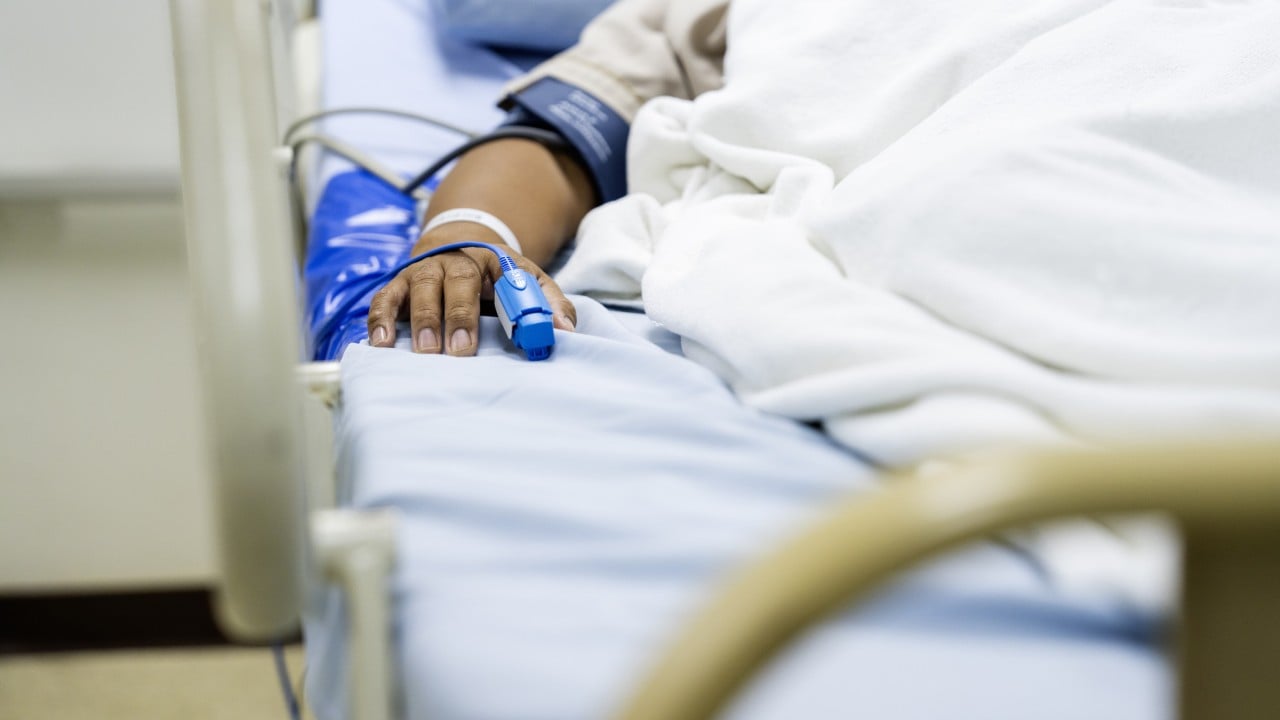
A severe shortage of ventilators in Pakistan state-run medical facilities has created a fatal bottleneck in emergency care, leaving public intensive care units at full capacity and stranding critically ill patients on endless waiting lists. When a stroke or severe trauma strikes in Islamabad or Lahore, the equipment meant to buy time for recovery often simply does not exist.
Consider the recent case of journalist Abid Raza Kazmi at the Pakistan Institute of Medical Sciences (PIMS). After suffering a debilitating stroke, his physicians recommended immediate life support. Not a single unit among the twelve machines in the specialized intensive care unit was vacant. By the time his family attempted emergency logistics to transfer him to a private facility, survival was out of reach. This is not an administrative anomaly. It is the baseline reality of state healthcare infrastructure across the country.
The Anatomy of Chronic Saturation
Public hospitals operate under a rigid "no refusal" mandate. Facilities originally built decades ago for a fraction of the current demographic footprint now absorb millions of citizens. At PIMS, more than ninety specialized life-support units across neonatal, cardiac, surgical, and medical wards maintain an occupancy rate hovering near one hundred percent.
Once a patient suffering from advanced neurological or pulmonary complications goes onto a machine, they frequently occupy that space for three weeks or longer. Concurrently, the operational expense of running a single mechanical bed drains roughly PKR 200,000 daily. Because public emergency departments absorb these costs entirely, institutional budgets buckle under the strain.
Private clinics impose daily fees reaching PKR 300,000. When private reserves deplete, families crowd state-run corridors, desperate for subsidized care. The resulting queues move only when a current occupant expires or achieves miraculous recovery.
The Human Resource Bottleneck
Purchasing hardware represents only a fraction of the equation. Equipment without specialized staffing remains useless.
Intensive care medicine requires a precise ratio of trained biomedical engineers, specialized respiratory therapists, and critical care nurses. State institutions face an acute deficit of qualified personnel. Administrators frequently point out that dumping dozens of boxed units into an understaffed ward changes nothing. Without the clinical hands required to monitor alarms, calibrate pressures, and manage arterial blood gases, advanced hardware turns into expensive decoration.
Furthermore, routine maintenance suffers from ethical paralysis. Planned periodic maintenance requires disconnecting and servicing mechanical components. When every single apparatus is assigned to a breathing human being, pulling a machine offline for routine servicing forces clinicians into impossible moral choices. Maintenance gets deferred. Equipment breaks down permanently.
Industrial Shortfalls and Domestic Manufacturing Stagnation
The broader supply chain offers no shelter. High-end mechanical life-support systems depend on sensitive imported components sourced primarily from North America and Western Europe. Global pricing fluctuations and stringent international export controls place these assets far beyond the fiscal reach of municipal health departments.
Domestic engineering initiatives have historically sputtered. During the height of the COVID-19 pandemic, initial efforts to build localized emergency apparatus produced basic models capable of meeting only partial clinical demands. Those domestic manufacturing pipelines stalled almost immediately after political shifts altered ministerial priorities. Industrial capabilities failed to evolve past basic prototypes, leaving the nation entirely dependent on foreign markets.
Structural Reform Demands More Than Emergency Blocks
Announcements of new hospital wings containing dozens of additional mechanical beds offer temporary relief but fail to fix structural decay. True transformation requires decentralizing emergency services, establishing regional trauma centers outside major metropolitan hubs, and overhauling medical education to retain specialized clinical talent domestically.
Until health authorities treat the deficit as an integrated crisis of staffing, supply chains, and preventive public health rather than a simple hardware shortage, the waiting lists will remain a lethal lottery.