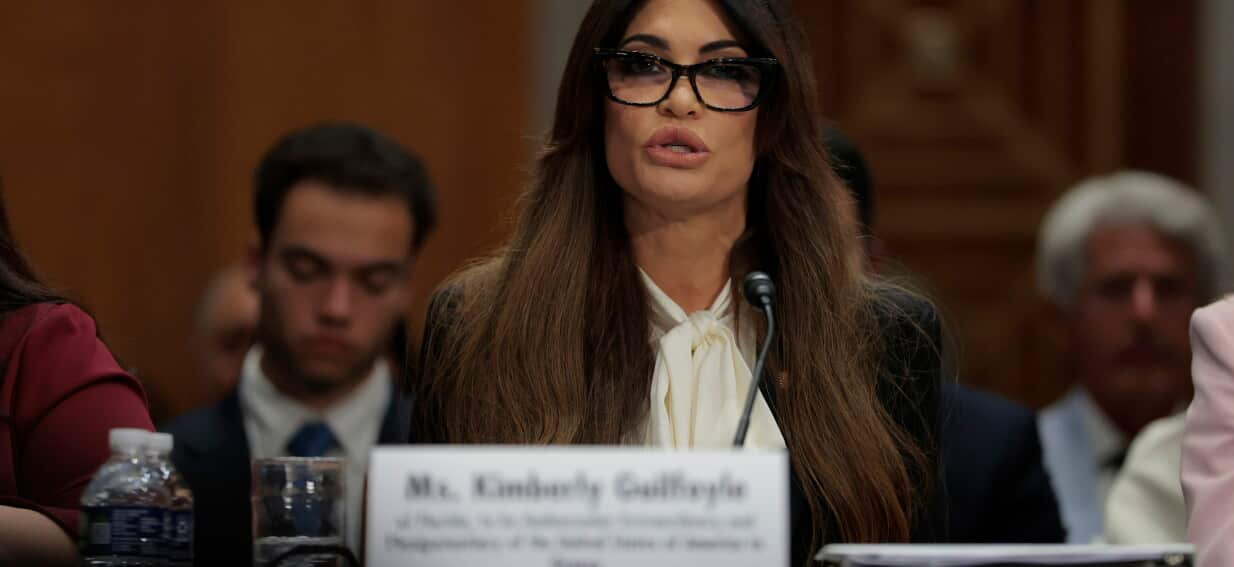
Political relationships inside the orbit of the Trump family have long functioned as a volatile currency, where loyalty, media visibility, and personal ties can elevate an ally rapidly or leave them exposed when internal priorities shift. The reference to someone once engaged to Donald Trump Jr. now facing pressure to resign from a White House or administration-linked role points to a classic Washington pattern. When personal alliances loosen or factional battles intensify, figures who once relied on proximity to the first family often discover how fragile informal influence can be.
In modern political reporting, headlines built around a former engagement or romantic connection to Donald Trump Jr. usually signal that a personal story is being used to frame a broader power struggle. Personal milestones in political circles rarely stay purely private. They get woven into narratives about political capital, factional alignment, and institutional friction. Even when a headline frames the story around resignation pressure, the real mechanics typically involve competing aides, shifting message discipline, or questions about whether an official still commands backing where it counts.
How Proximity Turns Into Vulnerability
Washington has a long memory for insiders whose standing was built on personal access rather than entrenched bureaucratic roots. Access is powerful while the relationship is tight. It can become a liability the moment distance appears.
Aides and appointees connected to high-profile political families often occupy hybrid territory. They serve as surrogates, fundraisers, or message carriers, moving between campaign energy and formal government expectations. That dual identity works smoothly when everyone rows in the same direction. Friction starts when messaging slips, turf wars break out, or senior strategists decide a figure brings more distraction than value.
Consider a hypothetical example of how that dynamic plays out inside a press or communications shop. Suppose a high-visibility surrogate takes an aggressive stance on a cable show that contradicts a carefully negotiated legislative talking point. Within hours, rival staffers leak annoyance to friendly reporters, framing the misstep as a sign of poor coordination. Once a narrative of organizational drag takes hold, even loyal allies may hesitate to spend political chips defending the person.
Personal history makes the calculus sharper. In movements defined by personal loyalty and family trust, any perceived cooling of a close tie invites speculation from rivals and reporters alike. Speculation itself weakens credibility. In a town where perception often precedes policy, whispers that a figure has lost direct access can erode their standing before a single formal decision is made.
The Mechanics of White House Resignation Pressure
Formal resignations in the White House rarely happen out of nowhere. Most are preceded by weeks or months of quiet signals, narrowed portfolios, or leaked accounts of frustration behind closed doors.
When insiders want someone out without triggering a noisy public fight, they rely on familiar pressure points:
- Shrinking visibility: Fewer media bookings, fewer high-profile appearances, and exclusion from key strategy meetings.
- Reassigned responsibilities: Shifting an official from visible decision-making toward ceremonial or narrowly defined tasks.
- Selective leaks: Anonymous comments to reporters questioning judgment, discipline, or fit with current priorities.
- Ally distance: Silence from former champions who suddenly emphasize broader team goals over individual loyalty.
None of these moves requires a formal firing to be effective. Politics is largely a game of momentum and room to maneuver. When an official loses control of their schedule, their message, or their backing, staying put can feel like treading water in a shrinking pool.
At the same time, reporters and analysts should treat "wants her to resign" claims with care. In Washington, anonymous sources frequently exaggerate pressure to nudge an outcome along or settle a score. A rival faction may tell a journalist that an exit is inevitable simply to make it feel true. Separating genuine executive friction from spin requires looking at concrete actions, such as personnel changes, travel schedules, or official statements, rather than relying solely on hallway chatter.
Factional Politics Inside the Trump Orbit
To understand why stories tied to Donald Trump Jr. carry distinct weight, it helps to look at how influence operates across the broader Trump orbit. Unlike traditional party structures where career operatives hold steady lanes, populist and family-centered political movements tend to be fluid and personality-driven.
Donald Trump Jr. has long played a central role as a bridge between the core base, conservative media, donors, and campaign strategy. Because of that visibility, people closely associated with him often sit at the intersection of grassroots enthusiasm and elite maneuvering. That position brings real upside during campaigns and rallies. It can create sharper friction inside the executive branch, where institutional rules, ethics reviews, and day-to-day governance test informal habits.
Loyalty Versus Institutional Discipline
Every administration faces a recurring tension between loyalty and discipline. Campaign veterans often prize bold rhetoric, rapid counterattacks, and personal devotion. Career staff and senior managers often push for predictability, vetting, and strict message control.
When a figure tied to a prominent family member clashes with that discipline, the resulting dispute rarely stays confined to a single meeting. It spills into competing narratives. One side frames the clash as an attack on a loyalist who fought early and hard. The other frames it as necessary cleanup to keep the operation focused.
Neither side holds a monopoly on truth in these disputes. Sometimes an official genuinely overreaches or creates headaches that senior leaders cannot ignore. Other times, ambitious competitors use bureaucratic norms as cover to push aside someone they view as a threat.
Media Framing and Audience Reaction
Media coverage plays a major role in magnifying these tensions. Headlines that anchor on a past engagement to Donald Trump Jr. immediately tap into public familiarity and curiosity about personal drama. That framing grabs attention fast. Yet it can also obscure harder questions about performance, policy execution, or internal power shifts.
Audiences react along predictable lines. Critics of the administration often view internal friction as proof of instability or dysfunction. Supporters may view pressure on a familiar figure as unfair backstabbing or media-driven noise. Meanwhile, seasoned observers look past the soap-opera angle to see who gains influence if someone steps down.
What History Shows About High-Profile Exits
High-profile departures from political orbits follow recognizable patterns across administrations and parties. Very few exits are clean, and almost all are contested in the telling.
In some cases, a departure is framed as a voluntary decision to pursue private-sector opportunities, media work, or consulting. Often, that phrasing softens a situation where staying had become politically awkward. In other cases, an official digs in, betting that public support or a direct appeal to top leaders will outlast internal criticism.
History also shows that political exile in Washington is rarely permanent for everyone. Figures who exit under a cloud sometimes rebuild influence through television, podcasting, fundraising networks, or outside advocacy groups, where institutional constraints matter less. Others fade as attention moves to newer faces and fresher controversies.
What matters most in evaluating any report of resignation pressure is evidence over rumor. Look for confirmed shifts in duties, clear statements from leadership, and consistent reporting across multiple independent sources. Without those markers, a story about looming departure may reflect internal jockeying rather than a settled outcome.
In Washington, headlines about who is in and who is pushed out rarely tell the whole story until the dust settles on who actually holds the pen.