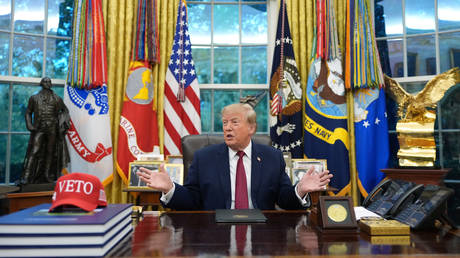
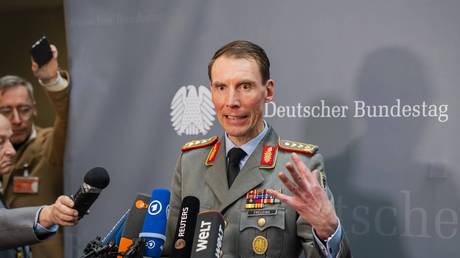
Following the Republican Party's sweeping defeat in the November 2026 midterm elections—which handed full control of both the House of Representatives and the Senate to the Democrats—Washington braced for a bloodletting. Conventional political wisdom dictates that when an administration suffers a historic legislative wipeout driven by an unpopular foreign conflict, heads roll. Yet, instead of a post-election purge, the West Wing locked its doors and dug in. Secretary of State Marco Rubio flatly dismissed rumors of his departure, declaring his intention to stay through the end of the term, while President Donald Trump publicly threw his weight behind embattled Defense Secretary Pete Hegseth despite mounting impeachment threats from within his own party.
To understand why neither man is leaving—and why Trump is choosing loyalty over sacrificial firings—you have to look past the surface-level palace intrigue. This isn't simply a story about stubbornness. It is a calculated survival strategy dictated by Senate confirmation math, the grinding reality of a nine-month war with Iran, and the brutal early positioning for the 2028 presidential race.
The Confirmation Trap That Keeps Hegseth Safe
In almost any other administration, a defense secretary facing articles of impeachment from a member of his own party—in this case, Republican Thomas Massie—would already be packing his boxes. Hegseth has become the lightning rod for voter anger over the nine-month conflict with Iran, a war that disrupted global energy supplies through the Strait of Hormuz, spiked domestic gasoline prices, and sank Republican incumbents across the map. Both Trump and Vice President J.D. Vance have privately and publicly pointed to the war as the primary culprit behind the midterm rout.
So why hasn't Trump fired him? The answer lies in the calendar and the Senate floor.
With Democrats set to assume control of the Senate in January 2027, the window for confirming a new Pentagon chief without brutal, protracted hearings is closing fast. Massie himself inadvertently highlighted this exact constraint when he urged Trump on social media to replace Hegseth immediately "while he can still get the replacements confirmed in the Senate". If Trump were to fire Hegseth now, he would trigger a chaotic confirmation battle during a lame-duck session where bruised, outgoing Republican senators have little incentive to fall in line. Worse, if a replacement isn't seated before January, Trump would be forced to rely on acting officials or submit nominees to a hostile Democratic majority.
Trump recognizes that firing Hegseth right now would be an explicit admission that the Iran war—and by extension, his own foreign policy—is a failure. Instead, the president is rewriting the narrative in real time. Speaking to reporters at the White House, Trump insisted that Hegseth has done a "fantastic job," deliberately pivoting away from the Persian Gulf quagmire to highlight the January 2026 Delta Force operation that captured Venezuelan leader Nicolás Maduro.
By framing Hegseth around the Caracas operation—and sending him to Venezuela shortly after the midterms to sign new military cooperation deals and tout U.S. access to Venezuelan oil reserves as an offset to the Strait of Hormuz crisis—the White House is attempting to insulate its defense secretary through sheer offensive momentum. Hegseth, leaning into his media instincts, has mirrored this posture, releasing defiant video statements dismissing impeachment efforts as attacks provoked by his effectiveness.
Uniforms Over Politicians
While political appointees are being shielded from the fallout, the actual blame for the Iran war's execution is quietly shifting toward the uniformed military leadership. History shows that when civilian leaders refuse to take the fall for a stalled military campaign, the brass becomes expendable.
Reports out of Washington indicate that Trump has weighed replacing top military commanders, specifically General Dan Caine, Chairman of the Joint Chiefs of Staff, and Admiral Brad Cooper, the head of U.S. Central Command. Both officers have been central to the operational guidance of the Iran conflict. Removing a four-star general or a combatant commander requires far less immediate political capital than replacing a Cabinet secretary, and it allows the White House to signal a strategic reset without conceding that the administration's core political team made a mistake. It is a classic Washington maneuver—protect the loyalists at the top of the civilian chain while looking for operational scapegoats in the Pentagon's hallways.
Marco Rubio and the Two-Hat Dilemma
If Hegseth is staying because he cannot easily be replaced, Marco Rubio is staying because he already holds too much of the administration's institutional weight to walk away.
Rumors that Rubio was looking for an exit ramp after the midterms made superficial sense to Capitol Hill insiders. Having served as both Secretary of State and National Security Adviser—a rare consolidation of power not seen since Henry Kissinger—Rubio has spent nearly two years absorbing the grueling demands of multiple global crises. Stepping down after the midterms would have allowed him to distance himself from an unpopular war and begin laying the groundwork for a 2028 presidential campaign.
Rubio, however, killed that speculation directly from his White House office. "Working for President Trump until the end of his term has always been my plan," he stated, laughing off the exit rumors by joking about his dual roles—asking reporters, "Which one?" whenever someone suggests he is leaving his job.
His decision to stay is rooted in cold political calculus rather than mere devotion.
First, walking out on a president immediately after a midterm defeat is political suicide inside the modern Republican Party. Any ambitions Rubio holds for 2028 depend entirely on maintaining good standing with Trump's base. Leaving now would paint him as a fair-weather ally abandoning ship when the waters turned rough.
Second, Rubio has already navigated the delicate dance around the 2028 primary by publicly signaling support for Vice President J.D. Vance, calling him a "very good friend" and flatly refusing to entertain questions about his own presidential prospects. "I literally will not talk about 2028 anymore," Rubio insisted. By taking himself out of the immediate shadow-primary conversation, Rubio preserves his influence inside the West Wing during the final two years of Trump's presidency.
Third, there is the matter of legacy. As the architect of the administration's Latin America strategy—which culminated in the ouster of Maduro and the rapid normalization of ties with Caracas's acting government under Delcy Rodríguez—Rubio sees tangible foreign policy wins within reach. Furthermore, with ongoing trilateral negotiations surrounding the Russia-Ukraine conflict, staying at the helm of both Foggy Bottom and the National Security Council gives him direct control over high-stakes diplomacy that no former senator could replicate from the outside.
The Cost of Standing Pat
Refusing to shake up the Cabinet after a midterm rebuke carries obvious risks. Presidents who treat electoral losses as mere messaging failures rather than policy warnings often spend their final two years trapped in defensive crouch.
With Democrats taking the gavel in both chambers of Congress in early 2027, the administration will face a relentless barrage of oversight subpoenas, war powers resolutions, and funding battles. Hegseth is already demanding at least $350 billion in defense funding while preparing to fight off impeachment inquiries that will consume bandwidth at the Pentagon. Rubio will spend months testifying before hostile Senate Foreign Relations and House Foreign Affairs committees determined to dissect every intelligence assessment that led to the Iran intervention.
Yet, Trump's refusal to budge reflects a hard lesson learned from his first term, when a revolving door of Cabinet departures created a constant sense of chaos and gave critics endless ammunition. In his second term, stability—even defiant, embattled stability—is the priority.
Rubio summed up the administration's prevailing mindset when defending the unpopular choices that cost Republicans their majorities. "Ultimately, that is the price of leadership—is the willingness to do things that may not be politically popular or expedient but are necessary for your country and its long-term future," he said. Whether voters eventually agree with that assessment or punish the party again in two years remains to be seen, but for the foreseeable future, the doors to the bunker are bolted shut—and nobody is walking out.
Watch Midterms Fallout: Rubio Said to Weigh Future in Trump Administration for additional context on the initial post-election speculation surrounding Rubio's standing inside the White House.