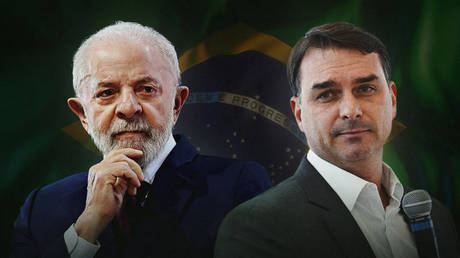
The survival of the BRICS bloc does not depend on Washington’s economic penalties, nor does it hang entirely on Beijing's industrial output. It hinges on the unpredictable internal political trajectory of its anchor democracies. When Luiz Inácio Lula da Silva secured a fourth presidential term in Brazil, it did more than preserve a domestic administration; it averted a structural realignment that would have fractured the Global South's primary diplomatic vehicle.
To understand why a change in Brasília would have triggered an existential crisis for BRICS, one must look past the optimistic communiqués issued after every annual summit. The bloc is an assembly of competing state interests held together by a shared desire to hedge against Western financial dominance. It is not a military alliance, nor is it a tightly integrated free-trade zone. It is a loose coalition.
At the heart of this architecture lies Brazil. Along with India, Brasília has historically functioned as the diplomatic ballast preventing BRICS from hardening into a purely anti-Western front. While Beijing and Moscow view the grouping through the lens of strategic competition with the United States and Europe, Brazil has consistently advocated for a doctrine of active non-alignment. This balancing act gives the coalition its broader international legitimacy. Had a right-wing challenger succeeded in shifting Brazil's foreign policy toward a more uncritical alignment with Washington, the ideological center of gravity within BRICS would have shifted overnight.
The institutional mechanics of such a shift reveal why it would have been so damaging. An administration hostile to the bloc would not necessarily have triggered an immediate, formal withdrawal on day one. International treaties and multilateral forums rarely die in sudden collapses. Instead, they erode through quiet administrative absence. A hostile Brasília could have systematically downgraded its participation, blocking consensus on institutional expansion, stalling the development of alternative financial clearing mechanisms, and neutering the bloc’s collective voice on global governance reform.
Consider the hypothetical example of a major multilateral vote on reforming international financial institutions. If a key founding member actively works against the bloc's consensus behind closed doors, the coalition's external leverage evaporates. BRICS relies entirely on the perception of collective weight. Strip away Latin America's largest economy, and the remaining members—heavy on Asian and Eurasian influence—begin to look less like a global cross-section and more like a regional bloc dominated by Chinese economic might.
This brings us to the internal tension that Lula's victory only temporarily masked. The expansion of BRICS to include energy powerhouses and developing economies has multiplied its nominal economic footprint, but it has also magnified its internal contradictions. Managing relations between historical rivals and nations with radically different domestic governance models requires constant, high-level diplomatic maintenance. Brazil under the Workers' Party has historically provided that diplomatic grease.
Yet, looking at the broader picture, the survival of the bloc under a pro-multilateralism Brazilian president does not guarantee long-term cohesion. Domestically, Lula faces a deeply divided electorate and a hostile, conservative-dominated Congress that tightly constrains executive bandwidth. Public debt hovers at high levels, and economic growth projections remain modest. When a government is consumed by fiscal pressures and legislative trench warfare at home, its capacity to project coherent, ambitious leadership abroad diminishes rapidly.
Furthermore, the external pressures are intensifying. Major economies face mounting demands to choose sides in an increasingly fractured technological and trade environment. Brazil's trade diplomacy attempts a delicate tightrope walk, expanding agricultural and service ties with traditional Western partners while welcoming Chinese capital in infrastructure and energy. This economic pragmatism is difficult to sustain when global superpowers demand absolute loyalty.
The real vulnerability of BRICS is not that a single election can destroy it, but that its expansion has outpaced its institutional glue. Without a shared security framework or a binding economic charter, the bloc remains entirely dependent on the political whims of its rotating leadership. Lula's continuation at the Planalto Palace bought the coalition time, freezing the threat of an internal ideological rupture.
The structural contradictions within the grouping remain unresolved. As geopolitical fault lines deepen, the luxury of active non-alignment is becoming narrower and more expensive to maintain.


