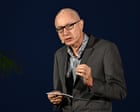
Salesforce has officially appointed Miguel Milano as its new operating chief reporting directly to Chief Executive Marc Benioff, marking a dramatic structural realignment inside the enterprise software giant. This move arrives while the company navigates intense pressure from Wall Street, a 27% slide in share value over the past year, and an existential scramble to prove that traditional cloud software vendors can survive the hyper-aggressive encroachment of artificial intelligence.
Corporate leadership shuffles at this scale are rarely about simple promotions. They are stress tests. When a multi-billion-dollar enterprise alters its command chain, it signals an internal admission that prior growth engines have stalled and new operational machinery is mandatory.
The Weight of the Operating Chief Title
The appointment of Milano places a seasoned veteran back at the center of daily execution. Having previously built international sales powerhouses for the company before a stint at Celonis, Milano returned as chief revenue officer in 2023. Elevating him to operating chief under Benioff creates a tighter feedback loop between top-line sales targets and day-to-day corporate execution.
Software markets have changed. Enterprise buyers no longer write blank checks for basic seat-based cloud storage or standard CRM licenses. Budgets face ruthless scrutiny. Every dollar spent on software must tie directly to immediate, measurable labor reduction. Milano’s background in aggressive revenue capture means Salesforce is doubling down on pipeline conversion at a time when enterprise spending hesitation threatens long-term growth projections.
The Artificial Intelligence Pressure Cooker
The broader narrative behind this executive restructuring is the commercialization of automated intelligence. Salesforce is currently betting its future on Agentforce, its suite of autonomous agents designed to handle customer service, sales operations, and marketing workflows without human intervention.
While executives claim annualized revenue for these new digital labor tools has crossed the one billion dollar milestone, Wall Street remains skeptical. Investors worry that autonomous agents will eventually cannibalize the traditional per-user licensing model that made Salesforce a titan in the first place. If software companies charge less because human agents are replaced by code, the total addressable market shrinks. Milano steps into the operating chief role with the explicit burden of monetizing these AI capabilities before market pressure forces deeper structural contractions.
Executive Exodus and Engineering Realignment
Milano’s promotion does not happen in a vacuum. It accompanies a broader thinning and restructuring of the executive ranks. Longtime stalwarts are exiting the building. Srini Tallapragada is departing after a fourteen-year tenure, clearing the board for fresh architecture. Meanwhile, Rohan Kumar—brought in from Microsoft—takes the helm as chief platform and engineering officer.
This combination of Microsoft engineering pedigree and seasoned enterprise sales leadership points to a bifurcated strategy. Engineering must build bulletproof, scalable AI infrastructure that does not crash under enterprise workloads. Sales must convince hesitant chief information officers to adopt these tools immediately.
Consider a hypothetical enterprise retail corporation evaluating its tech stack. The chief information officer looks at legacy cloud bills, notes the flatlining return on investment, and demands proof that new automation tools can cut operational overhead by 40% within two quarters. Milano's operational apparatus exists to answer that exact demand with speed and precision.
The Succession Question That Never Goes Away
Marc Benioff remains the indomitable force at the center of Salesforce, yet the question of eventual succession hangs over every organizational chart adjustment. Over the years, the company has experimented with various co-CEO structures—notably featuring executives like Keith Block and Bret Taylor—only to watch them depart.
By flattening certain reporting lines and empowering operational leaders like Milano and Robin Washington—who maintains her dual role as chief operating and financial officer—Benioff is decentralizing the immense operational burden that previously bottlenecked top-level decisions. Yet, absolute authority over the corporate vision remains firmly anchored in his office.
The market will judge this new operational alignment not by press releases or keynote announcements, but by sequential quarters of accelerating revenue growth. If the new leadership can successfully transition the massive customer base from passive software consumption to active autonomous agent deployment, the strategy succeeds. If execution stumbles, the revolving door at the top will spin once more.