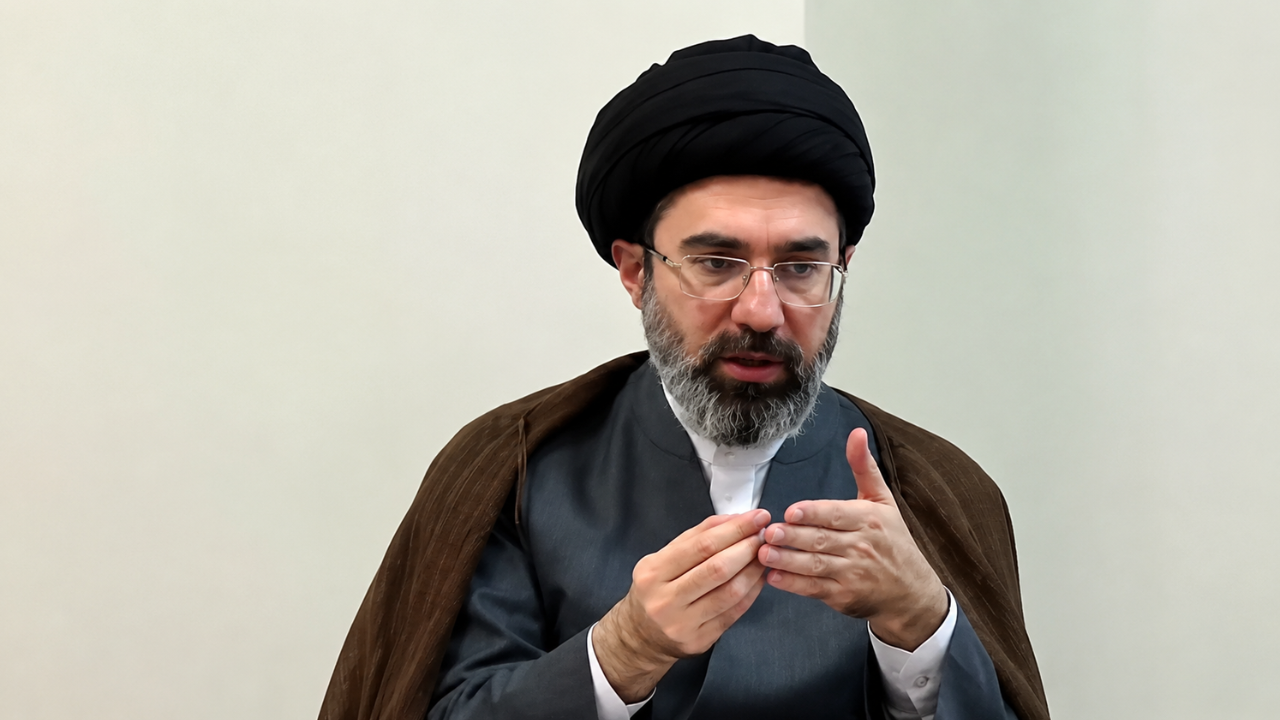
The release of a silent, undated clip by Iranian state media was supposed to end the whispers. Instead, the footage of Mojtaba Khamenei—presiding over a theological study circle and later appearing alongside President Masoud Pezeshkian—exposed the profound paranoia gripping the clerical establishment. Rumors had swirled for months that the newly elevated Supreme Leader was incapacitated, severely wounded, or permanently disfigured following the February joint strikes by the United States and Israel that killed his father, Ayatollah Ali Khamenei.
State broadcasters attempted a counter-offensive with these curated visuals. They aimed to project absolute control. But in authoritarian politics, hyper-secrecy rarely signals strength; it signals a desperate scramble to manage factional anxiety and outward perception.
The Anatomy of an Information Vacuum
When a head of state vanishes from public view for nearly half a year, a vacuum forms. Foreign intelligence agencies fill it with intercepts, opposition groups fill it with wishful thinking, and domestic factions fill it with conspiracy. Mojtaba Khamenei assumed the supreme office in early March under unprecedented duveteen conditions. He never stood before a cheering public. He never attended his father’s official state funeral.
This absence was initially chalked up to operational security. The war footing with Washington and Jerusalem necessitated extreme caution. Yet, as months bled past and regional ceasefires fractured, the silence grew deafening. Reports leaked through diplomatic channels and regional media suggesting that Mojtaba had sustained serious lower-body injuries and facial trauma when the central Tehran compound was struck. When foreign adversaries like U.S. President Donald Trump publicly claimed the Iranian leader was in critical condition, Tehran faced a communications crisis.
Enter the state-backed Mehr and Fars news agencies. They dropped brief, unverified snippets meant to prove that the 56-year-old cleric could sit, speak, and govern.
President Pezeshkian jumped into the fray, publicly asserting that anyone capable of leading a seven-hour academic discussion could not possibly be physically compromised. Yet, the very necessity of a presidential defense highlights how fragile the regime's narrative remains.
The Succession Trap and Bureaucratic Paranoia
Mojtaba’s rise was supposed to secure the regime's ideological continuity. For decades, analysts viewed him as the invisible hand behind the Islamic Revolutionary Guard Corps, pulling strings from the shadows of the clerical office. Stepping into the light, however, required a different kind of legitimacy—one he has systematically avoided testing.
By maintaining total isolation and communicating with senior ministers solely through a slow network of trusted intermediaries, Mojtaba reduces his physical exposure to targeted strikes. At the same time, this bunker mentality cripples his administration. Governance in Iran relies heavily on direct patronage, face-to-face arbitration between rival bonyads, and the personal blessing of the Supreme Leader. When the leader is a ghost, bureaucratic paralysis sets in. Ministers hesitate to make high-stakes decisions regarding economic reform or foreign engagement without explicit clearance that takes weeks to travel through security filters.
Furthermore, the clerical elite is acutely aware of how vulnerability plays into domestic dissent. The public livelihood crises, inflation, and the scars of ongoing military friction with Western powers create an explosive baseline. If the supreme authority is perceived as weak, physically broken, or hiding behind archival footage, internal challengers within the security apparatus may begin to calculate their own independent futures.
Beyond the Screen
The recent media blitz by state television achieved its immediate tactical goal. It forced foreign news outlets to cover the fact that Mojtaba is breathing, talking, and meeting with his cabinet.
It did not, however, answer the deeper structural question. A regime forced to prove its supreme leader's biological survival through fifteen-second silent clips is fighting a defensive war on the psychological front. The video was engineered to project stability, but the intense anxiety required to produce it reveals a system holding its breath, waiting for the next shockwave to hit the capital.
Iran's Supreme Leader Mojtaba Khamenei's Health Sparks Fresh Questions About His Health | News18
This broadcast segment breaks down the international reaction and the conflicting intelligence reports surrounding the sudden release of footage intended to dispel rumors of the Iranian leader's critical condition.