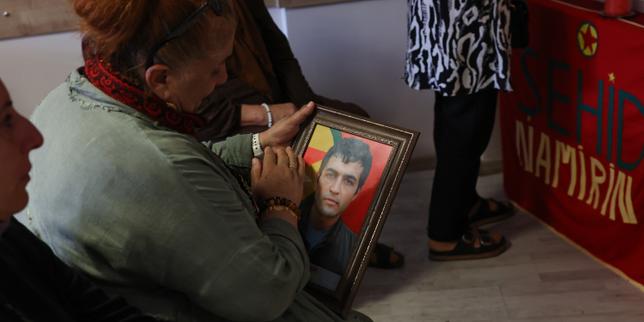
Public memorial ceremonies for killed militants of the Kurdistan Workers' Party, known widely as the PKK, occupy a volatile intersection of grief, politics, and state security within the geopolitical fabric of modern Turkey. When state authorities clamp down on or permit these gatherings, they are not merely managing local public order. They are engaging in a high-stakes contest over narrative dominance, collective memory, and the emotional geography of a decades-long insurgency. For decades, the ritual disposal of a fallen combatant’s body has served as a flashpoint where the structural weight of the Turkish state collides with the persistent underground networks of Kurdish nationalism.
Understanding why these public rituals generate such acute anxiety in Ankara requires examining the mechanics of insurgency survival. Rebel movements do not sustain themselves through weaponry alone; they rely heavily on community grief as a tool for political mobilization. When a militant killed in the rugged terrain of southeastern Anatolia or across the borderlands of northern Iraq and Syria is returned to their hometown, the funeral functions as a mobilization engine. These events transform personal loss into collective grievance. Mourners chant political slogans, display banned iconography, and transform cemeteries into shrines of resistance. For the state, allowing these crowds to gather unhindered signals a dangerous erosion of sovereign authority in regions where the boundaries of citizenship and loyalty are already heavily contested.
The legal and administrative response from Ankara is built on a framework of zero tolerance. Under Turkish counter-terrorism statutes, participating in or facilitating propaganda for an armed organization carries severe penal consequences. Consequently, local governors frequently invoke emergency powers to ban public funeral processions for PKK members. Security forces deploy tear gas, water cannons, and heavy cordons to block access to mosques and graveyards. Bodies are sometimes intercepted in transit and buried swiftly under police supervision at undisclosed locations to prevent crowds from forming. State officials defend these measures as necessary preventions against public incitement and the glorification of violence. Yet this heavy-handed containment often produces an inverse effect, driving mourning underground and converting private grief into a hardened, generational resentment against state institutions.
The political stakes of these rituals extend far beyond municipal boundaries or provincial police blotters. Ruling coalitions in Ankara have historically capitalized on nationalist sentiment by framing every counter-terrorism measure as an existential defense of the republic. Conversely, pro-Kurdish political parties view the restriction of funerary rites as a direct violation of fundamental human rights and cultural traditions regarding the dignity of the dead. When families are denied the right to bury their kin according to local customs, the dispute transcends domestic security and enters the domain of international human rights scrutiny. European legal bodies have occasionally scrutinized Turkey's handling of civilian and combatant remains, citing disproportionality in state responses to mourning families.
Behind the tactical deployment of riot police and legal bans lies a deeper structural dilemma for the Turkish security apparatus. Eradicating an insurgency requires dismantling its ideological appeal, yet coercive measures surrounding death and burial frequently reinforce the narrative of martyrdom that feeds the movement. Every blocked procession and confiscated casket provides local organizers with tangible proof of state hostility toward Kurdish identity as a whole, rather than just targeted military action against armed combatants.
As long as the underlying political conflict remains unresolved, the battleground will extend to the grave. The rituals surrounding fallen insurgents remain a stark barometer of internal stability, revealing the fragile boundary between state control and unyielding resistance in a polarized landscape.