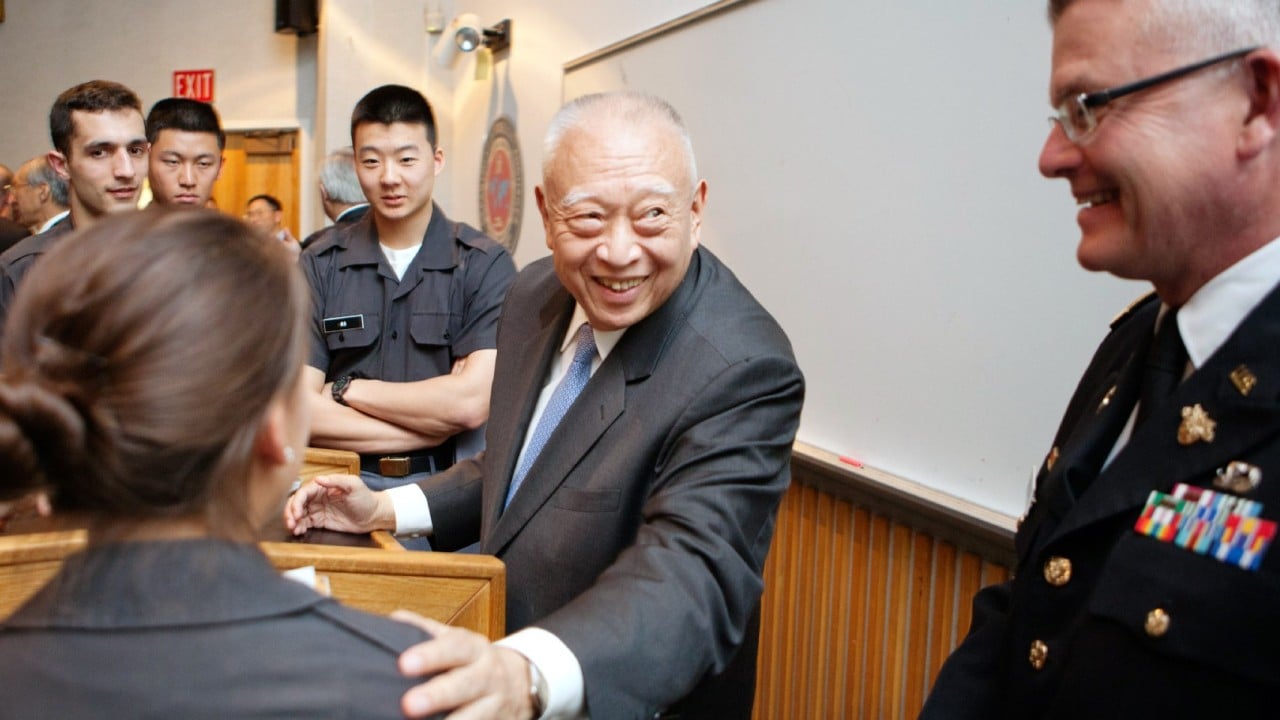
When Singaporean politicians travel to Beijing, the diplomatic choreography is usually parsed down to the millimeter. Every handshake is weighed, every phrase is scrutinized, and every choice of language is treated as a strategic signal. Singaporean Minister for Defence Chan Chun Sing stepped onto the podium at the 13th Beijing Xiangshan Forum with a playbook that bypassed typical diplomatic platitudes. He did not merely attend; he delivered a calculated message straight to the heart of the Chinese security establishment.
The stakes were high. In a room dominated by major power competition and the rising static of US-China friction, Singapore’s approach remains an outlier. It is a small state navigating a fracturing international order where neutrality is no longer a passive state of being, but an active, exhausting daily discipline.
The Language of Power and Pragmatism
For decades, international observers have tried to decode Singapore's foreign policy through a single lens: balancing. That lens is broken. When Chan stood before regional defense chiefs and military brass in Beijing, his choice to deliver remarks that engaged deeply with Chinese cultural and philosophical touchstones was more than an exercise in linguistic dexterity. It was a masterclass in strategic empathy.
He understood the room. The Xiangshan Forum has grown into Beijing’s premier platform for military diplomacy, an intentional counterweight to the Shangri-La Dialogue held annually in Singapore. By walking onto his host's home turf and addressing them in Mandarin, Chan bypassed the sterile translations that often dilute diplomatic intent. He spoke directly to the room's conceptual framework.
Yet, familiarity did not breed submission. The core of his message challenged the prevailing assumptions held by dominant capitals. Major powers love to talk about security in terms of absolute gains and zero-sum outcomes. Singapore offered a different reality. True security for a small nation does not come from outspending a rival or locking down supply chains into impenetrable fortresses. It comes from restraint.
Redefining What It Means to Win
The global security architecture is currently gripped by a dangerous delusion. Policymakers in Washington and Beijing increasingly treat geopolitical competition as a championship match where one side must completely break the other. This mindset bleeds into economic policy, technological decoupling, and maritime posturing.
Chan’s intervention in Beijing targeted this exact illusion. He pointed out a glaring truth that institutional analysts often miss in their spreadsheets. In a hyper-connected global economy, attempting to completely vanquish an adversary is a self-inflicted wound. When supply chains shatter and trust evaporates, everybody bleeds.
Consider a hypothetical scenario where two massive trading nations impose total embargoes on dual-use technologies against each other. The intended target might suffer a temporary slowdown, but third-party nations—the structural connective tissue of global commerce—face immediate operational paralysis. For a port city-state like Singapore, this is not an abstract academic debate. It is an existential threat.
When a state becomes too big to fail, it also risks becoming too clumsy to survive its own momentum. Chan’s address underscored that winning in the twenty-first century cannot be measured by how many competitors you push out of the market. It must be measured by how many partners you can keep at the table.
The Small State Dilemma in a Bipolar World
Middle powers and small states are frequently told they must choose a side. This false binary is pushed by ideologues who view international relations as a moral crusade rather than a management problem. Singapore has consistently refused this choice, a stance that frequently frustrates strategists inside both the Beltway and Zhongnanhai.
Why does Beijing listen to Singapore when it delivers uncomfortable truths? Because Singapore’s critique is symmetrical. The Republic delivers the same unvarnished assessment of great power overreach whether it is speaking in Washington, Geneva, or Beijing. Credibility is hard-earned and easily squandered. By maintaining consistency, Singapore punches far above its weight class.
During his engagements on the sidelines of the forum, including discussions with regional counterparts like North Korea's vice defense minister and China's military leadership, Chan reinforced a sobering reality. The architecture of regional peace is fraying because multilateral institutions are being hollowed out. When international law is treated as optional by the strong, the weak are left with only deterrence and diplomacy.
Navigating the Trap of Anticipatory Compliance
There is a creeping danger across Southeast Asia known as anticipatory compliance. Smaller nations, anxious about stepping on the toes of superpowers, begin self-censoring their policies before any pressure is even applied. They bend before the wind until they break their own spine.
Singapore’s defense diplomacy is designed to inoculate the region against this decay. By showing up in Beijing and speaking candidly about the responsibilities of major powers, Chan demonstrated that engagement does not equal endorsement. You can sit across the negotiating table from a rising hegemon without signing away your sovereignty.
The security architecture of the Asia-Pacific will not be saved by massive naval buildups or rhetorical posturing at defense summits. It will be preserved through the grinding, unglamorous work of institutional maintenance. It requires leaders who are willing to tell the biggest players in the room that their current trajectory leads straight off a cliff.
The delegation will return to Singapore, the headlines will fade, and the strategic calculus will remain brutally complex. The maritime trade routes will still face friction, and the rhetoric between Washington and Beijing will still oscillate between cold war and cold peace. But the marker has been laid down.
Power commands attention, but consistency commands respect. Singapore walked into the heart of Beijing's defense establishment, spoke its mind without flinching, and reminded the giants that the smaller nations watching from the sidelines are not just pawns on a board, but the very foundation holding the board together.