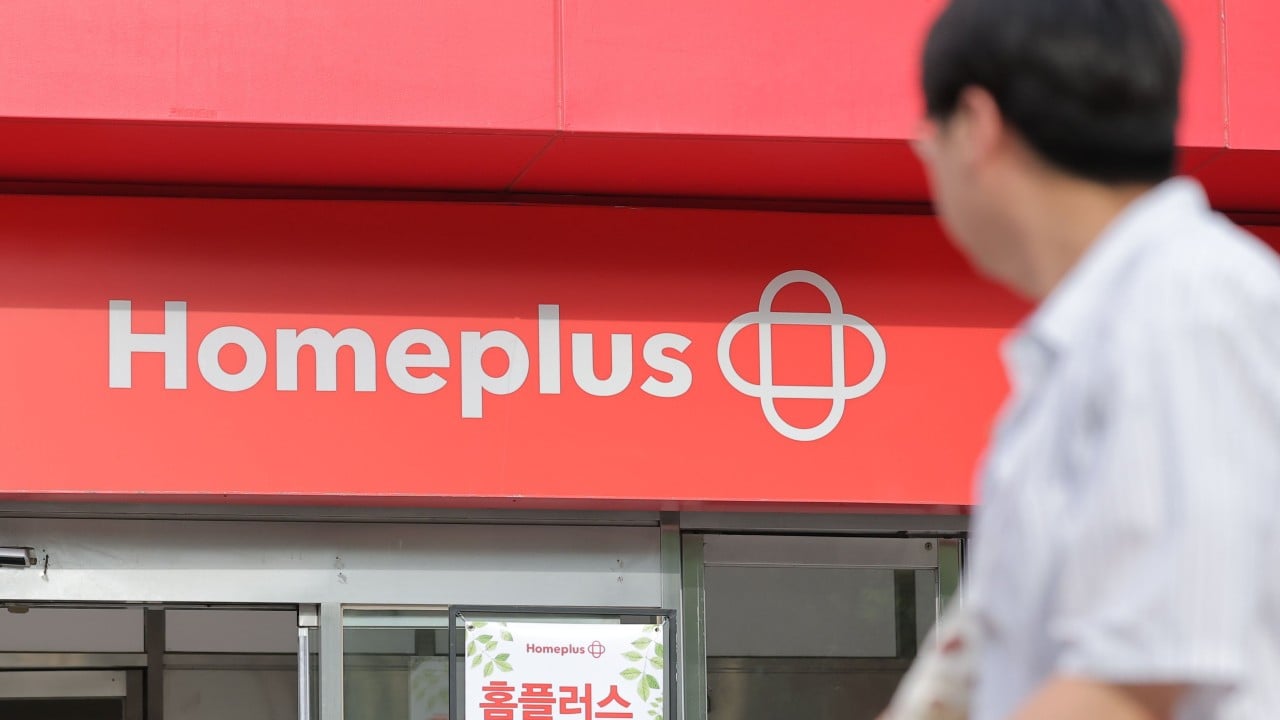
The spectacular decline of the South Korean hypermarket chain is not merely a story of convenience-seeking shoppers abandoning giant brick-and-mortar stores for smartphone apps. It is the structural disintegration of a retail model that once commanded more than half of the country’s entire retail revenue. By April 2026, the market share of the nation's three giant big-box operators—E-Mart, Lotte Mart, and Homeplus—shrank to an all-time low of 7.9 percent. For decades, these multi-level mega-marts defined suburban Korean life. Today, they are fighting a losing war against structural regulatory traps, private equity hollow-outs, and a hyper-efficient e-commerce machinery that weaponized the time constraints of the modern worker.
To understand the scale of this collapse, one must look past the superficial explanation that consumers have simply become lazy. The true crisis lies at the intersection of a failed political experiment to protect mom-and-pop shops and a corporate failure to invest in logistics when the window was wide open. While traditional narratives blame shifting lifestyle preferences, the data reveals that the fall of the South Korean hypermarket chain was entirely manufactured by bad policy and worse financial engineering.
The 28 Trillion Won Illusion
For years, corporate boardrooms took comfort in massive revenue figures that masked a slow, internal bleed. In 2024, the combined sales of E-Mart, Lotte Mart, and Homeplus sat at 28.62 trillion won. On paper, it looked like a formidable firewall against the digital onslaught. In reality, it was an illusion. That same year, Coupang, the undisputed king of domestic e-commerce, clocked 41.29 trillion won in sales, thoroughly eclipsing the brick-and-mortar heavyweights on their own turf.
The transition happened with brutal speed. At their peak in 2010, hypermarkets dominated Korean commerce, routinely outperforming department stores and traditional markets combined. The format relied on a predictable consumer ritual: families driving to a massive suburban facility on the weekend, loading a shopping cart with bulk household goods, electronics, and apparel, and driving home.
That ritual is dead. South Korea has transitioned into a society where consumers fiercely guard their scarcest resource: time. The modern Korean worker does not want to dedicate three hours of a precious weekend to navigating concrete parking structures and endless aisles. When a subscription to an e-commerce platform provides next-day delivery of a pack of pens or a carton of milk for a negligible monthly fee, the economic utility of the physical mega-mart vanishes.
As the non-perishable inventory shifted online, hypermarkets found themselves paying exorbitant rent and maintenance fees on vast, empty square footage. They were burdened with real estate they no longer needed, selling goods that consumers could buy with a single thumb tap while riding the subway.
How Well-Intentioned Laws Broke Brick-and-Mortar Retail
The deepest self-inflicted wound to the industry came from the National Assembly. In 2012, lawmakers amended the Distribution Industry Development Act. Driven by a desire to shield traditional open-air markets and neighborhood mom-and-pop shops from corporate conglomerates, the government banned hypermarkets from operating between midnight and 8 a.m. More damagingly, they mandated that these mega-stores must close their doors entirely for two Sundays every month.
The law assumed that if a consumer found E-Mart closed on a Sunday, they would walk down the street to the local butcher or neighborhood produce stand. It was a catastrophic miscalculation.
Instead of revitalizing traditional commerce, the regulations acted as a multi-billion-won marketing campaign for online delivery platforms. Data from the Korea Economic Research Institute and the Bank of Korea exposed the futility of the restrictions. When hypermarkets were forced to close on weekends, spending did not migrate to traditional markets; it migrated online to platforms unconstrained by municipal operating hours. In fact, traditional markets saw their average daily customer traffic plummet by 31 percent between 2019 and 2024, proving that forcing a big-box store to close merely destroyed the foot traffic of the entire surrounding commercial district.
While physical retailers were legally barred from fulfilling deliveries or opening their doors during peak weekend shopping hours, online platforms built massive, automated fulfillment centers that operated 24 hours a day, seven days a week. Despite mounting evidence that the rules were choking local economies and destroying retail jobs, politicians extended the hypermarket operating restrictions. Between 2022 and 2024 alone, the three major hypermarket chains shed over 4,300 employees as they scrambled to cut costs under the weight of these regulatory chains.
The Leveraged Buyout That Cannibalized a Retail Giant
Nowhere is the structural failure of the hypermarket more apparent than in the ongoing collapse of Homeplus. Once a fierce rival to E-Mart for the top spot in Korean retail, Homeplus entered court-led rehabilitation after a long liquidity crisis. By 2026, the chain had shuttered dozens of its locations, shrinking from over a hundred stores to a mere 67 outlets, leaving its workforce in constant fear of total liquidation.
The downfall of Homeplus was accelerated by a classic private equity playbook. In 2015, MBK Partners acquired the chain in a heavily leveraged buyout. To service the massive debt incurred during the acquisition, management embarked on a aggressive strategy of selling off prime corporate real estate and leasing it back.
This short-term financial engineering provided quick cash injections to appease creditors, but it stripped the company of its most valuable defensive assets. While its competitors were experimenting with early digital fulfillment, Homeplus was drowning in lease payments for stores it used to own. Capital that should have been funneled into building cold-chain logistics, upgrading digital infrastructure, and matching the rapid fulfillment networks of e-commerce upstarts was instead diverted to debt service.
By the time the pandemic accelerated the shift toward online grocery shopping, Homeplus lacked the infrastructure to compete. The company missed its critical window for digital reinvention. It was left with an aging fleet of physical stores, high fixed costs, and a mountain of debt that eventually pushed it to the brink of bankruptcy. It is a stark reminder that in a rapidly shifting retail market, treating real estate assets as a piggy bank rather than a foundation for operational evolution is a corporate death sentence.
The Post-Destination Shift to Fresh and Fast
The hypermarkets that remain standing are undergoing an aggressive, desperate mutation. The old model of the "sell-everything" superstore is dead. Operators have realized they cannot compete with online platforms on price or selection when it comes to non-perishable goods, household appliances, or clothing.
As a result, E-Mart and Lotte Mart are radically downsizing their non-food sections. They are transforming their sprawling layouts into hyper-focused grocery hubs, rebranding under concepts like Grand Grocery and Starfield Market. In some of their highest-grossing historical locations, companies have chopped their floor space by more than half, dedicating up to 80 percent of the remaining shelves exclusively to fresh food, dine-in experiences, and ready-to-eat meals.
The strategy is simple: sell what cannot be easily replicated by a standard delivery box. They are filling the vacated floor space with third-party tenants that drive consistent daily foot traffic, such as bookstore chains, cosmetic shops, and ultra-discount retailers like Daiso.
Hypermarket Market Share Trajectory (Total Retail Revenue)
2020: 17.9%
2022: 13.0%
2024: 11.0%
2026:  7.9%
Simultaneously, the economic environment has forced these retailers into an uncomfortable price war. With persistent inflation squeezing household budgets, consumers are migrating toward deep-discount stores. Daiso Korea, long viewed as a minor player selling cheap trinkets, saw its sales climb to 4.54 trillion won, matching and outperforming major hypermarket branches by offering fixed, ultra-low pricing.
In response, E-Mart has been forced to roll out budget lines, mirroring discount-store tactics by selling household staples and appliances at dirt-cheap price points. The hypermarket is no longer a premium destination; it is a defensive coordinator trying to retain budget-conscious shoppers who calculate every single won.
The structural decline of the South Korean hypermarket chain offers a definitive lesson for global retail. Physical scale is no longer an insurmountable moat. When structural regulations freeze a company's ability to operate dynamically, and financial engineers prize cash extraction over logistical innovation, even the most dominant market leader can be reduced to a historical footnote in a matter of years. Physical retail will survive only if it ceases to view itself as a destination for transactions and begins operating with the ruthless, time-saving efficiency demanded by the modern consumer.