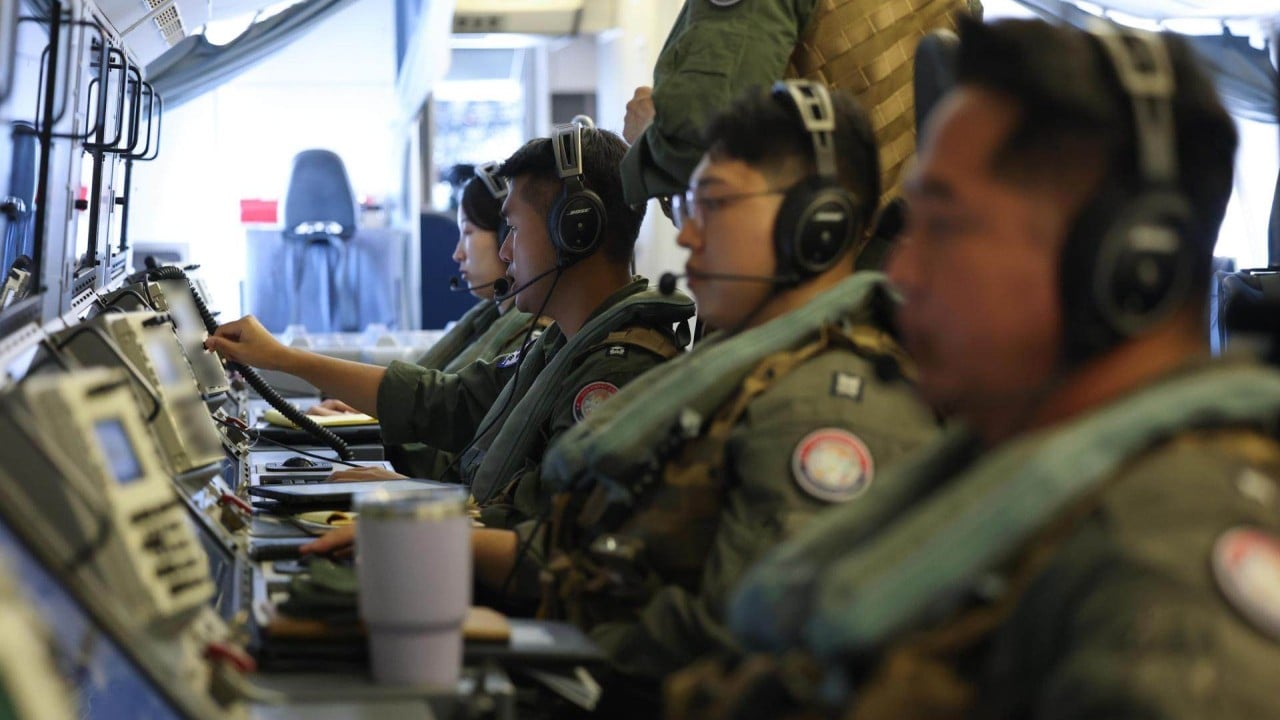
The United States, Japan, and South Korea are cementing a defense architecture that alters the strategic balance of East Asia. Decades of historical animosity and diplomatic friction between Tokyo and Seoul once rendered a unified front nearly impossible. Washington spent years playing reluctant mediator to two vital allies who historically spent more energy bickering with each other than coordinating against shared threats. That era is over. Through complex, multi-domain exercises like Freedom Edge, the three nations are forging an integrated military capability designed to counter North Korean missile provocations and broader regional coercion from Beijing.
This is not a sudden diplomatic miracle. It is a cold, calculated response to an accelerating security dilemma.
Breaking the Historical Gridlock
For generations, the shadow of Japan's twentieth-century colonial rule over the Korean Peninsula poisoned any serious attempt at bilateral military coordination. Intelligence-sharing agreements stalled or collapsed under domestic political pressure in Seoul. Japanese prime ministers and South Korean presidents found themselves trapped in a domestic feedback loop where appearing too accommodating to the neighbor meant political suicide.
Washington watched this friction compromise its entire hub-and-spoke alliance system in Asia. Bilateral ties with Tokyo were strong, and bilateral ties with Seoul were strong, but the missing link between the two Asian democracies created a dangerous structural vulnerability.
The turning point required more than diplomatic cajoling. It required a generational shift in threat perception. Pyongyang's rapid nuclearization and advancing intercontinental ballistic missile arsenals, paired with Beijing's maritime expansionism in the East and South China Seas, forced a pragmatic realignment. Leaders in Seoul and Tokyo recognized that waiting for a historical reckoning over past grievances was a luxury neither nation could afford while missiles flew over the Sea of Japan.
The Mechanics of Freedom Edge
Policy declarations and joint communiques mean little if military units cannot communicate under fire. The operational reality of the trilateral push centers on translating political will into tactical interoperability.
Exercise Freedom Edge broke new ground by integrating air, maritime, underwater, cyber, and ballistic missile defense capabilities simultaneously.
- Real-time data integration: Radar information regarding missile launches is now shared rapidly across national command structures, cutting down decision-making windows that used to be bottlenecked by bureaucratic delays.
- Complex domain integration: Forces do not merely sail in parallel; they execute joint anti-submarine warfare, defensive counter-air operations, and maritime interdiction training.
- Logistical synchronization: Ships from the Japan Maritime Self-Defense Force, the Republic of Korea Navy, and the U.S. Seventh Fleet practice coordinated replenishment and medical evacuations, building the foundational muscle memory required for actual crisis management.
To understand the mechanical challenge, consider a hypothetical naval interception scenario involving incoming ballistic threats. Seconds matter. If Japanese radar tracks a trajectory that South Korean interceptors are better positioned to track or counter, the data must cross communication pipelines instantly. Previous architectures suffered from compatibility lags and political hesitations. The current institutional framework aims to automate that data exchange, removing human friction points that adversaries could exploit.
The Counter-Pressure from Beijing and Pyongyang
Every action in geopolitics generates an equal and opposite reaction. The institutionalization of the US-Japan-South Korea axis has predictably drawn fury from neighboring capitals.
Pyongyang routinely labels these joint maneuvers as rehearsals for invasion, using the drills to justify its own accelerated weapons testing cycles. State media outlets issue constant warnings, characterizing the trilateral cooperation as an Asian version of NATO.
Meanwhile, Beijing views the alignment through an even wider lens. Chinese strategic planners worry that the hardening borderless intelligence and naval network is a containment ring designed to lock the People's Liberation Army Navy within the first island chain. Beijing has responded with economic coercion, diplomatic protests, and its own increased joint patrols with Russian forces in the Sea of Japan.
This dynamic creates a classic security dilemma. The allies insist their posture is strictly defensive and designed to deter aggression. Critics and adversaries argue that the accumulation of offensive capabilities and high-end command integration inevitably provokes the very escalation it claims to prevent.
Fragility Beneath the Surface
Despite the undeniable momentum, professional analysts must look past the optimistic press releases coming out of defense summits. This architecture faces distinct internal vulnerabilities that could fracture the alliance under future political stress.
Domestic political shifts remain the most volatile variable. Leadership changes in Seoul or Tokyo can swiftly alter the warmth of bilateral relations. South Korean politics, in particular, experiences sharp partisan swings regarding engagement with Japan and North Korea. A progressive administration in Seoul could deprioritize trilateral intelligence-sharing agreements or scale back large-scale field exercises to appease domestic constituencies or pursue inter-Korean détente.
Furthermore, structural asymmetries persist. The United States remains the central hub holding the wheel together. Without Washington acting as the indispensable guarantor and communications bridge, the bilateral relationship between Japan and South Korea could easily regress into suspicion. The alliance is institutionalized through memoranda of understanding, but it lacks the binding legal treaty framework that characterizes traditional multilateral pacts.
The military drills will continue because the threat environment demands them. But transforming a temporary convergence of interests into a permanent, unbreakable security shield requires weathering future political storms that have historically derailed every attempt at Asian collective defense.
The structural alignment between Washington, Tokyo, and Seoul is real, operational, and expanding into every domain of modern warfare, leaving little room for historical grievances as the security landscape hardens around them.
Freedom Edge 2025 US, South Korea & Japan Strengthen Indo Pacific Defense
This video provides visual context on the execution of the multi-domain Freedom Edge military exercises near the Korean Peninsula.
http://googleusercontent.com/youtube_content/1

/GettyImages-157526585-93425538070d4422ad42d22af28c0758.jpg)