The war in Ukraine has entered a brutal attrition phase where the ultimate arbiter is not raw courage on the frontline, but the unglamorous mechanics of supply chains, industrial capacity, and sustained military logistics. While daily headlines fixate on territorial shifts and tactical skirmishes, the foundational reality of the conflict remains rooted in an industrial war of production. If you want to understand why frontlines harden into static stalemates, you must stop looking at infantry movements and start examining factory output, artillery shell manufacturing rates, and the grueling maintenance cycles of heavy armor.
The Exhaustion of Western Arsenals
For decades, modern military doctrines in North America and Western Europe prioritized high-tech, low-quantity precision over mass production. Fleets of advanced fighter jets and sophisticated missile systems dominated defense budgets, leaving conventional munitions stockpiles optimized for short, expeditionary interventions rather than protracted industrial warfare.
When major hostilities erupted in Eastern Europe, those reserve stockpiles began to drain at an alarming pace.
Military analysts repeatedly warned that Western defense contractors were structurally unprepared for the sheer volume of high-explosive ordnance consumed daily by intense artillery duels. An artillery barrel degrades rapidly after firing thousands of rounds, requiring specialized factory maintenance or complete replacement. When thousands of tubes are firing continuously across an extensive front, the replacement pipeline becomes a critical bottleneck.
Western governments scrambled to sign multi-year procurement contracts with defense conglomerates, yet scaling up heavy manufacturing requires more than just political willpower. It demands specialized raw materials, skilled machinists, and secure supply lines that take years to establish. The discrepancy between political promises of unending support and the hard physical limits of industrial output has created a persistent operational deficit.
The Technological Adaptation Race
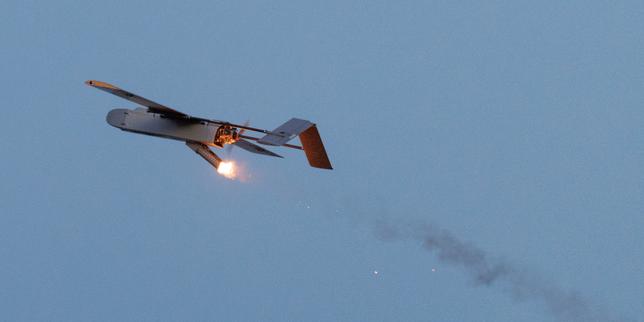
Modern battlefields have evolved into transparent surveillance zones. The proliferation of commercial drones, thermal optics, and electronic warfare systems means that massed armor columns can no longer execute breakthrough maneuvers without immediate detection and targeting.
This transparency changed the tactical calculus of offensive operations.
Armored vehicles must now operate under a constant umbrella of electronic countermeasures, while infantry units rely heavily on small, first-person-view aerial drones for reconnaissance and direct attack. The speed of technological iteration on the battlefield outpaces traditional military procurement cycles. A drone software fix developed in a makeshift workshop on Tuesday can render a specific electronic countermeasure obsolete by Thursday.
Traditional defense contractors struggle with this hyper-fast innovation loop. Bureaucratic procurement frameworks are designed for stability and rigorous compliance, not for agile adaptation against an inventive adversary. Consequently, frontline units frequently bypass official supply chains entirely, relying on crowdfunding, civilian networks, and decentralized maker-spaces to source essential hardware modifications.
The Human Element and Personnel Fatigue
Behind every artillery piece, armored vehicle, and logistics truck stands an increasingly exhausted human operator. The psychological and physical toll of continuous combat under relentless drone surveillance cannot be overstated.
Rotation schedules are stretched to their absolute limits.
Veterans of prolonged trench warfare face severe psychological trauma, and the training pipeline for replacement personnel struggles to keep pace with attrition. While mobilization efforts continue to bring fresh recruits into the armed forces, turning a civilian into a combat-ready soldier capable of operating complex mechanized systems under fire requires time. Shortcutting this training period to meet immediate manpower shortages inevitably leads to a decline in tactical efficiency and higher casualty rates.
Morale is sustained not merely by ideological conviction, but by the tangible reliability of logistical support. When soldiers experience shortages of warm clothing, medical supplies, or rotation rest, the strain compounds rapidly.
The Economic Strain on the Home Front
Sustaining a war effort of this magnitude requires deep economic mobilization. The conflict is no longer just a localized geopolitical crisis; it is a prolonged economic drain affecting global energy markets, agricultural supply chains, and fiscal stability.
Inflationary pressures make defense procurement increasingly expensive. Raw material costs, particularly for specialized metals and energetic materials used in propellants, have surged. Governments find themselves balancing the immediate imperative of military aid against domestic political fatigue and rising public debt.
Sanctions regimes have complicated global trade networks, forcing nations on both sides of the conflict to seek alternative suppliers for critical components, microchips, and industrial machinery. While economic isolation has not caused the immediate collapse that some policymakers initially predicted, it has forced a profound restructuring of global trade corridors that will persist for generations.
The Strategic Horizon
The trajectory of the conflict points toward a protracted struggle where technological innovation, industrial endurance, and domestic resilience will dictate outcomes. The romanticized notions of swift military breakthroughs have faded, replaced by the grim reality of logistics mathematics.
Every ton of steel, every batch of propellant, and every trained technician matters more than political rhetoric. As the conflict grinds forward, the nations capable of sustaining long-term industrial output while managing domestic economic strain will shape the final outcome of a war that has fundamentally rewritten the rules of modern statecraft.
The frontlines will shift, seasons will change, but the foundational architecture of the war remains anchored in the factories and supply chains far away from the trenches.