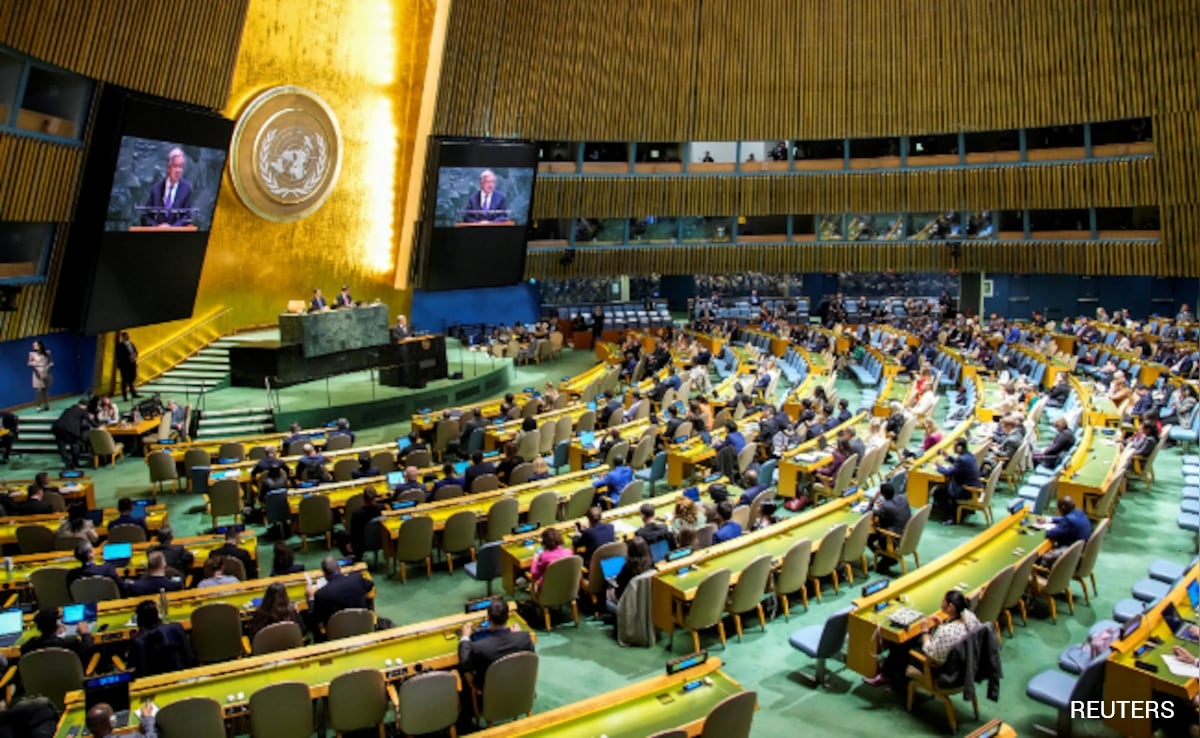
The collapse of the 11th Nuclear Non-Proliferation Treaty (NPT) Review Conference at the United Nations on Friday did not just end in another predictable diplomatic stalemate. It signaled the functional death of the post-Cold War nonproliferation framework. While initial reports framed the failure as a routine bilateral dispute between Washington and Tehran, the reality inside the rooms at the UN Headquarters in New York was far more severe. The 191 signatories walked away without even a watered-down consensus document because the underlying logic of the treaty—trading disarmament guarantees for nonproliferation compliance—has been fundamentally shattered by active warfare.
This marks the third consecutive failure of an NPT Review Conference to produce a consensus document. In 2022, Russia blocked agreement over its invasion of Ukraine and the occupation of the Zaporizhzhia nuclear plant. This time, the conference took place under the shadow of the ongoing, volatile Iran war, which began with massive U.S. and Israeli airstrikes on February 28. Although a tenuous, Pakistan-mediated ceasefire has paused the worst of the kinetic combat since April 8, the diplomatic blowback inside the UN has proved terminal for global nonproliferation policy.
The Safeguards Illusion
At the core of the collapse is a irreconcilable dispute over Article III and Article IV of the NPT. For decades, the treaty operated on a basic quid pro quo. Non-nuclear states were guaranteed the right to develop peaceful nuclear energy under International Atomic Energy Agency (IAEA) safeguards, while the five recognized nuclear-weapon states promised to pursue disarmament in good faith.
The U.S. delegation opened the conference by accusing Tehran of showing absolute contempt for its treaty commitments. Washington pointed to Iran’s accumulation of over 11 tons of enriched uranium, including more than 440 kilograms enriched to 60% purity. That material has no credible civilian utility. It sits just a short technical step away from weapons-grade 90% enrichment.
Tehran’s counter-argument, backed by a significant bloc of the Non-Aligned Movement, flipped the script on international law. Iranian diplomats argued that the U.S. and Israeli airstrikes deliberately targeted nuclear facilities at Natanz, Fordow, and Isfahan—sites fully subject to IAEA safeguards. From Iran's perspective, the treaty failed to protect its sovereign civilian infrastructure from a recognized nuclear-weapon state, rendering its nonproliferation obligations null and void.
Iran has banned IAEA inspectors from accessing the bombed facilities since the strikes. By bombing the very sites the NPT was meant to monitor, the U.S. and Israel inadvertently provided Tehran with the ultimate diplomatic shield to go completely dark.
The Failure of Maximum Pressure in Islamabad
To understand why the UN talks dissolved, one must look at the parallel bilateral tracks that completely broke down in the weeks leading up to the New York conference. Following the April 8 ceasefire, Pakistani Prime Minister Shehbaz Sharif attempted to broker a permanent settlement via high-level talks in Islamabad.
The framework presented by the Trump administration was an aggressive reinstatement of its "maximum pressure" doctrine. The U.S. demanded an absolute, verified end to all Iranian uranium enrichment, alongside the physical removal of past nuclear material to a third country. In mid-May, Washington hardened its position, setting five strict preconditions for any resumption of formal deal negotiations:
- Surrender of Material: Iran must deliver 400kg of its enriched uranium directly to the United States.
- Infrastructure Caps: Iran is permitted to maintain only a single operational nuclear facility.
- Geopolitical Linkage: Future talks remain contingent on the absolute cessation of regional proxy hostilities.
- Asset Freezes: The U.S. refused to release at least 25% of Iran’s frozen foreign assets.
- No Reparations: Washington flatly rejected Iran's demand for war reconstruction reparations.
This punitive approach hit an unyielding wall in Tehran. The geopolitical calculus in Iran shifted dramatically after the February airstrikes, which killed Supreme Leader Ali Khamenei. The transition of power to his son and the subsequent consolidation of military influence within the state apparatus have eliminated any internal appetite for compromise.
Iran responded with its own 10-point plan, demanding full sanctions relief, comprehensive war reparations, and an immediate lifting of the maritime blockade in the Strait of Hormuz before any nuclear constraints would be discussed. Iranian parliamentary speaker Mohammad Bagher Ghalibaf made the domestic posture clear, stating that a bilateral ceasefire or isolated nuclear negotiations were completely unreasonable under current conditions.
The Great Power Divergence
While the U.S.-Iran friction acted as the immediate trigger for the NPT's collapse, a deeper structural rot paralyzed the conference from the outset. The five major nuclear powers—the U.S., Russia, China, France, and the United Kingdom—actively worked behind the scenes to steer the draft text away from substantive disarmament commitments.
Disagreements over nuclear testing moratoria, the modernization of atomic arsenals, and "nuclear sharing" arrangements—such as stationing U.S. nuclear weapons on European territory—were systematically scrubbed from the working drafts to appease the major powers. The non-nuclear states watched as the P5 effectively immunized themselves from accountability regarding Article VI, which mandates good-faith steps toward total disarmament.
Furthermore, the language regarding Ukraine exposed the deep geopolitical rifts preventing any multilateral consensus. The draft documents expressed vague concern over the safety and security of nuclear facilities in Ukraine but meticulously omitted any direct mention of Russia's occupation or military threats to those facilities. This sanitized language alienated Ukraine and its Western allies, while any attempt to toughen the text faced an immediate veto from Moscow.
The NPT is designed to operate on absolute consensus. When every major geopolitical axis—U.S.-Iran, U.S.-China, and NATO-Russia—is in a state of active or cold conflict, consensus is mathematically impossible.
The Rise of a Post Treaty World
The permanent breakdown of the NPT review process leaves the international community without a viable roadmap to manage nuclear ambition. For over fifty years, the treaty served as the bedrock of global strategic stability. It successfully contained the spread of atomic weapons far below the catastrophic levels predicted in the 1960s.
That era has ended. The failure in New York proves that the institutional tools of global governance are incapable of restraining states that perceive an existential threat. When a non-nuclear signatory is attacked by a nuclear state, the historical lesson learned by middle powers is not to comply more rigorously with inspections; it is to achieve a credible deterrent as quickly as possible.
The immediate consequence will be felt in the Middle East. With the NPT framework effectively dead and the bilateral Islamabad talks deadlocked over Washington's maximalist demands, Iran has no diplomatic or legal incentive to restore IAEA monitoring. The country’s enrichment infrastructure is heavily buried, dispersed, and now entirely shielded from international oversight.
The United States and its allies must confront a brutal reality. The policy of leveraging military strikes and economic isolation to force an unconditional nuclear surrender has achieved the exact opposite of its intended goal. It has destroyed the multilateral treaties designed to prevent proliferation, locked the region into an unstable ceasefire, and left the world’s most volatile nuclear standoff entirely unmonitored.
The diplomatic runway has run out. Future stability will not be found in the grand conference rooms of the United Nations, but in the raw, transactional management of deterrence among nations that no longer trust the law to protect them.