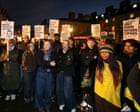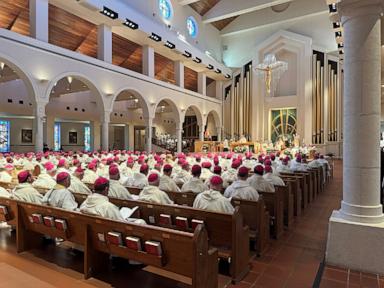
When more than two hundred American Catholic bishops gathered at the Baltimore Marriott Waterfront in November 2026, the political ground beneath their feet had just shifted dramatically. Sweeping Democratic victories in the midterm elections handed control of Capitol Hill to a party promising to codify federal abortion rights and dismantle the fifty-year-old Hyde Amendment within the first hundred hours of the new legislative session. Simultaneously, voters in states like Virginia and Nevada enshrined abortion access into their state constitutions, while Missouri voters rejected a bid to overturn their own 2024 protections. Yet inside the hotel ballroom, the United States Conference of Catholic Bishops (USCCB) spent its public sessions approving a revised lectionary, debating a budget, and advancing a sainthood cause.
The contrast was stark. While political operatives in Washington were preparing for a legislative war over reproductive healthcare and federal funding, the American hierarchy projected an image of quiet institutional maintenance. That restraint was not accidental. It reflects a deep, unresolved strategic paralysis inside the Catholic Church as it confronts a divided government, a fractured electorate in its own pews, and a waning ability to dictate terms on a single signature issue.
The Limits of Single-Issue Politics in a Divided Nation
For decades, the USCCB operated with a clear political center of gravity. Regardless of what else appeared on the agenda, opposing abortion remained the preeminent priority, a framing explicitly codified in the conference's voter guides and hammered home during national election cycles. That posture relied on a relatively straightforward strategic bet: align closely with conservative judicial and legislative power to overturn Roe v. Wade, and the moral architecture of the country would follow.
The 2026 midterms exposed the ceiling of that strategy. Even in a political environment where Republican President Donald Trump occupies the White House—providing a reliable veto pen against any federal abortion expansion—the cultural and electoral momentum has swung decisively against strict bans. Only Idaho managed to defeat a state-level abortion rights referendum in November 2026, a rare bright spot for anti-abortion advocates who leaned heavily on arguments regarding parental rights rather than purely religious doctrine.
Archbishop Paul Coakley, serving as president of the conference, struck a notably diplomatic tone in Baltimore. Rather than issuing fiery warnings to incoming Democratic lawmakers—a sharp departure from 2020, when the bishops spent months debating whether to deny Holy Communion to President Joe Biden—Coakley emphasized a willingness to collaborate across party lines. The conference pledged to work with whoever holds power in the White House and on Capitol Hill to protect human dignity.
That diplomatic pivot is born of necessity. If the bishops want to influence policy over the next two years, they cannot afford to alienate the incoming Democratic congressional majority. Their legislative wishlist extends far beyond abortion, encompassing immigration reform, opposition to autonomous weapons, social safety net funding, and new regulatory guardrails for artificial intelligence. To get a hearing on those fronts, the hierarchy has had to lower the temperature.
The Pews Are Not a Voting Bloc
To understand why the bishops avoided a public confrontation over the election results, look at the exit polling. The idea of a monolithic "Catholic vote" has always been something of a myth, and the 2026 data proved just how fractured the American flock truly is.
According to national voter surveys from the midterms, Catholics split almost evenly down the middle in U.S. House races. Beneath that top-line parity lies a stark demographic fissure:
- White Catholics broke modestly for Republican candidates, continuing a multi-cycle trend driven by cultural conservatism and judicial appointments.
- Latino Catholics swung heavily toward Democrats, with roughly two-thirds backing Democratic House candidates.
This demographic split puts the bishops in an impossible bind. Aggressively championing the Republican platform alienates the fastest-growing segment of the American Church, particularly over immigration. Conversely, leaning too hard into social justice rhetoric risks triggering a backlash from wealthy, conservative white donors and clergy who view abortion as the sole non-negotiable moral issue.
Immigration enforcement became the primary wedge driving Latino Catholics away from the GOP in 2026. More than half of all Catholic voters stated that the Trump administration's immigration crackdown had gone too far, expressing broad disapproval of Immigration and Customs Enforcement tactics. On this issue, the bishops had already staked out an unusually aggressive stance. The previous autumn, the USCCB issued a rare special message condemning indiscriminate mass deportations and the vilification of migrants.
When bishops speak forcefully on immigration, they find themselves aligned with progressive lawmakers and at odds with the White House. When they speak forcefully on abortion, the alliances invert completely. Navigating that contradiction requires a delicate balancing act that satisfies almost nobody.
Internal Dissent and the Ghost of the Consistent Life Ethic
Not every prelate was content with the muted atmosphere in Baltimore. Days after the assembly adjourned, Cardinal Blase Cupich of Chicago publicly criticized his fellow bishops for failing to meet the historical moment. Speaking at an event honoring the late Cardinal Joseph Bernardin, Cupich expressed frustration that the conference spent its time on internal housekeeping while ignoring a looming healthcare funding crisis, global instability, and the urgent need for national unity after a bruising election.
Cupich invoked Bernardin's famous "consistent life ethic"—often referred to as the "seamless garment" philosophy—which argues that opposition to abortion must be linked directly to opposition to war, poverty, capital punishment, and systemic neglect. By backing away from that broader framework over the past twenty years, Cupich argued, the American hierarchy has rendered itself predictable to partisan operatives and less credible to the broader public.
"We had the election—this is an opportunity for maybe the bishops to talk about national unity as we come to Thanksgiving... but our discussions were all about internal things." — Cardinal Blase Cupich
Cupich's critique highlights an ongoing ideological tug-of-war inside the USCCB. While a conservative majority still controls most committee chairmanships—including Bishop Michael Burbidge of Arlington, who heads the pro-life committee—the global Church under Pope Leo XIV has nudged bishops toward broader systemic concerns. In Baltimore, the conference updated its socially responsible investment guidelines to divest from private prisons, migrant detention centers, and manufacturers of autonomous weapons. They also rolled out a new committee focused on artificial intelligence, echoing Pope Leo XIV's encyclical Magnifica humanitas.
These moves show an institution trying to modernize its moral vocabulary without abandoning its traditional anchors. Yet by refusing to debate the political reality of the 2026 midterms on the floor, the bishops left observers wondering whether their caution was strategic wisdom or institutional avoidance.
The Legislative Battlefield Ahead
Despite the calm demeanor in Baltimore, the legislative fight heading to Washington in January 2027 will test the bishops' new diplomatic posture immediately. Democratic leaders have signaled they will move quickly on two major fronts:
- The Women's Health Protection Act: A federal bill designed to establish a statutory right to abortion nationwide, effectively overriding state-level bans and restrictions prior to fetal viability.
- Repealing the Hyde Amendment: Eliminating the decades-old budget rider that prohibits the use of federal Medicaid dollars to fund abortions, except in cases of rape, incest, or danger to the mother's life.
Anti-abortion organizations, such as Students for Life of America, have already begun pressuring the White House to guarantee a presidential veto if either measure reaches the Resolute Desk. With Republicans still holding the presidency and enough Senate votes to sustain a filibuster on sweeping legislation, the immediate statutory threat to anti-abortion laws remains blocked.
However, congressional Democrats can still use committee hearings, budget negotiations, and regulatory oversight to reshape the national debate. For the USCCB, lobbying against the repeal of the Hyde Amendment requires maintaining working relationships with moderate Democrats—precisely the lawmakers who are most sensitive to Catholic voters in swing districts.
Lessons From the State Ballot Measures
The state-level results from November 2026 offer a sobering case study in how the abortion debate has evolved. In Virginia, local bishops launched a coordinated campaign urging Catholics to vote against constitutional amendments protecting abortion and redefining marriage. The campaign failed to stop either measure. Following the defeat, church leaders pivoted to spiritual consolation, reminding the faithful that political losses do not alter theological truth.
Meanwhile, the lone victory in Idaho relied heavily on non-religious messaging. Opponents of the Idaho ballot measure successfully framed the amendment as an assault on parental notification laws rather than a purely theological debate over the beginning of life. That tactical distinction is not lost on Catholic strategists. Moral absolutism plays well inside the walls of a seminary, but at the ballot box, voters respond to concrete concerns about family autonomy and government overreach.
The Cost of Institutional Caution
By choosing business as usual in Baltimore, the U.S. Catholic bishops bought themselves breathing room. They avoided the self-inflicted wounds of previous assemblies, where televised debates over denying Communion to Catholic politicians dominated cable news and alienated moderate parishioners. They demonstrated that they can talk about artificial intelligence, ethical investing, and youth outreach without turning every microphone into a partisan weapon.
Still, silence carries its own risks. An institution that claims to be a moral compass cannot indefinitely sidestep the defining political shifts of its era. As Congress prepares to clash over federal abortion funding, healthcare subsidies, and mass deportation policies, the bishops will eventually have to step out of the hotel ballroom and take a stand that costs them political capital on one side of the aisle or the other. Until they decide which relationships they are willing to burn, their voice in Washington will remain polite, measured, and largely background noise.