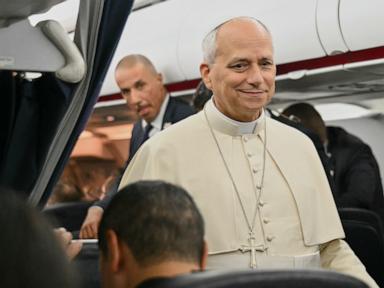
A Sept. 9 Vatican letter addressed to Chicago White Sox Chairman Jerry Reinsdorf arrived at Rate Field on Sept. 29, 2026—hours before Game 1 of the American League Wild Card Series against the Houston Astros—and the White Sox won 6–3. Standard sports coverage treats that sequence as a whimsical coincidence: a Chicago-born pontiff (formerly Robert Prevost, known locally as Father Bob) roots for his childhood club, sends a note thanking Reinsdorf for a follow-up to an Aug. 11 promotional night, and the team wins its playoff opener.
That framing collapses three distinct phenomena into a single narrative: institutional correspondence mechanics, sports mean reversion, and high-status signaling in franchise marketing. Separating them exposes what actually moved, what only appeared to move, and how front offices and communications teams should treat symbolic interventions when roster fundamentals carry the actual load. Building on this idea, you can also read: England Player Ratings and the Real Cost of Irreplaceable Stars.
Deconstructing the Competitor Narrative
Conventional wire-style reporting on the Sept. 29 news cycle relies on a compact three-beat structure. First, it establishes the surface event: a letter from Pope Leo XIV dated Sept. 9 arrived at Rate Field on the day of the Wild Card opener, accompanied by the club's social post ("Earlier today, a letter from Pope Leo XIV arrived at Rate Field. Go White Sox!"). Second, it supplies biographical color: Pope Leo XIV was elected in May 2025, grew up in Chicago as a White Sox supporter, and attended the 2005 World Series opener in which Chicago defeated Houston 5–3. Third, it links the letter to the 2026 turnaround—an 84–78 regular season that broke a streak of three consecutive 100-loss campaigns—and notes the pontiff's "No comment" when asked whether he had a hand in the revival.
That structure fails as analysis for three reasons: Observers at ESPN have also weighed in on this trend.
- Temporal conflation: A letter dated Sept. 9 was written three weeks before the Sept. 29 Wild Card opener, during a live pennant race rather than as a bespoke playoff dispatch. Its arrival at Rate Field on game day reflects mail routing, clerical scheduling, or deliberate release timing—not a real-time tactical or psychological intervention.
- Post hoc causality: Linking a 6–3 Game 1 victory to a letter received hours earlier commits the post hoc ergo propter hoc fallacy. A single nine-inning baseball game has high variance; attributing the outcome to ceremonial correspondence mistakes correlation in time for mechanism.
- Unexamined institutional exchange: The Sept. 9 note was not an unprompted blessing. It was a reply thanking Reinsdorf for a note sent after the White Sox's Aug. 11 Rate Field promotion—an event that distributed Pope Leo-themed hats to fans and preceded a photo of the pontiff holding the cap.
Known Facts vs. Operational Hypotheses
Evaluating the episode requires separating verifiable records from inference.
Verified Facts
- Correspondence timeline and provenance: The letter was dated Sept. 9, 2026, written on official Vatican letterhead, addressed to Chairman Jerry Reinsdorf, and posted by the White Sox on X on Sept. 29, 2026, ahead of Game 1 against Houston.
- Prior institutional touchpoints: Pope Leo XIV became pope in May 2025. On Aug. 11, 2026, Rate Field hosted a Pope Leo-themed cap giveaway, Reinsdorf followed up with a note, and the pontiff was photographed with the cap.
- Historical and competitive baseline: Pope Leo XIV grew up in Chicago as a White Sox fan and attended the 2005 World Series opener (a 5–3 win over Houston). After losing at least 101 games in each of the prior three seasons, the 2026 White Sox finished 84–78 to claim an AL Wild Card spot, then defeated Houston 6–3 in Game 1.
Educated Hypotheses
- Release timing as earned-media amplification: Publishing the Sept. 9 letter on Sept. 29 maximized algorithmic and press pickup during a national playoff window when baseline sports attention is orders of magnitude higher than mid-September.
- Zero direct on-field causal weight: Players and managers in a Wild Card series operate under pitch-clock, matchup, and bullpen constraints; a ceremonial letter addressed to ownership alters dugout execution only insofar as front-office framing chooses to surface it.
The Three Pillars of Franchise Turnaround vs. Ceremonial Noise
When an organization jumps from 100-loss seasons to an 84–78 playoff berth, narrative observers reach for external catalysts because roster rebuilds look slow and abstract. A cleaner model separates the actual drivers of competitive recovery from ceremonial noise.
Pillar 1: Roster Attrition, Player Development, and Mean Reversion
Sustained 100-loss seasons compress organizational talent at the major-league level through trades, injuries, and developmental bottlenecks, while simultaneously generating high draft capital and clearing payroll room for younger contributors. Moving from 101-plus losses to 84–78 requires fixing run prevention, cutting high-leverage bullpen volatility, and converting young position players into league-average or better regulars. Over 162 games, those structural changes compound. A letter from Rome cannot alter exit velocity, strike-zone discipline, or pitching sequencing.
Pillar 2: Asymmetric Status Signaling
In sports marketing, attaching a globally recognized institutional figure to a club creates asymmetric status transfer. The White Sox gain cultural legitimacy and cross-category reach (news, religion, international wire desks) at near-zero marginal media-buy cost. The Vatican, conversely, engages in approachable, humanizing public diplomacy—tying broader remarks on sport from Feb. 24 to a recognizable Chicago civic attachment without issuing doctrinal endorsements. The exchange works precisely because neither institution surrenders its core mandate.
Pillar 3: Variance in Short Series
Even a well-constructed 84-win club enters a best-of-three Wild Card series against an opponent like Houston (which went 81–81 in 2026 and entered on a five-game regular-season edge over Chicago) facing high single-game variance. In a single game, three to six runs separate a contender from an elimination-eve deficit. Treating a 6–3 Game 1 win as validation of a pregame letter confuses low-sample noise with system performance.
Cause-and-Effect Chains the Standard Story Misses
The conventional account treats the letter as an isolated spark. Tracing the actual chain of events reveals a multi-stage feedback loop driven by institutional etiquette and media incentives.
- Promotional activation creates a bilateral link: The Aug. 11 Rate Field cap giveaway and subsequent photo gave ownership a concrete pretext to write to the Vatican.
- Clerical reply creates an archival asset: Reinsdorf's note prompted the Sept. 9 response thanking him for the gesture and referencing the pontiff's Feb. 24 remarks on sport.
- Playoff qualification creates a distribution window: Reaching 84–78 and clinching a Wild Card berth converted a private institutional courtesy into high-value public content.
- Game-day release creates a narrative bridge: Surfacing the Sept. 9 letter on Sept. 29 linked a 21-year-old World Series memory (2005 vs. Houston) to a present-day playoff opener against the same franchise.
Notice what sits outside that loop: player preparation, pitching matchups, and dugout management. Manager Will Venable's AL Manager of the Year recognition and front-office roster decisions under General Manager Chris Getz belong to the operational layer that produced 84 wins; the letter belongs to the communications layer that monetized attention around Game 1.
Tactical Protocol for Sports Communications and Front Offices
Communications directors and baseball operations leaders routinely misallocate energy between symbolic morale gestures and operational discipline. Applying a strict separation of duties prevents self-inflicted distractions during postseason runs.
Step 1: Audit Every External Touchpoint for Operational Interference
Before releasing any third-party message, letter, or celebrity endorsement during a series, run a two-question check: Does this require player appearances, media availability, or clubhouse logistics? If yes, kill or defer it until after the series. A letter routed through ownership to social media has near-zero clubhouse footprint, making it low-risk compared to pregame ceremonies.
Step 2: Separate Internal Morale from External PR
If leadership wants to share a note with players, keep it private and unscripted. Turning an internal message into a public X post converts a private gesture into a public expectation—creating immediate downside if the team loses Game 2.
Step 3: Anchor Postseason Messaging to Controllable Inputs
Front-office and media teams should frame playoff momentum around pitching depth, bullpen availability, and matchup execution rather than lucky talismans or historical callbacks. When a club wins Game 1, reinforce repeatable process metrics; when it drops a game, avoid retrofitting narratives around external symbols.
Step 4: Document Institutional Relationships as Long-Horizon Assets
Treat high-profile civic or institutional goodwill—such as the Aug. 11 cap promotion and subsequent correspondence—as multi-year brand equity. Do not burn that goodwill by forcing it to carry analytical weight it cannot bear.
Limitations and Boundary Conditions
Symbolic alignment has strict boundaries. First, it cannot substitute for talent acquisition or player development; a 65-win roster does not become a pennant contender through ceremonial letters. Second, publicizing institutional correspondence invites scrutiny whenever off-field or fan-conduct incidents occur around related promotions, as local coverage noted following the Aug. 11 festivities. Third, over-indexing on historical callbacks—such as the 2005 matchup against Houston—can breed complacency in a sport where roster turnover rapidly erases prior-era advantages.
Strategic Play for the 2027 Cycle
Treat the Sept. 29 letter release as a completed communications asset, not a repeatable competitive strategy for 2027. Direct capital and managerial bandwidth into the operational levers that actually lifted Chicago from three straight 100-loss seasons to 84 wins: locking in rotation progression (including moving Grant Taylor into the 2027 rotation while keeping Hagen Smith in a defined bullpen role), addressing high-leverage closing depth, and protecting clubhouse focus from narrative inflation whenever symbolic endorsements surface.


