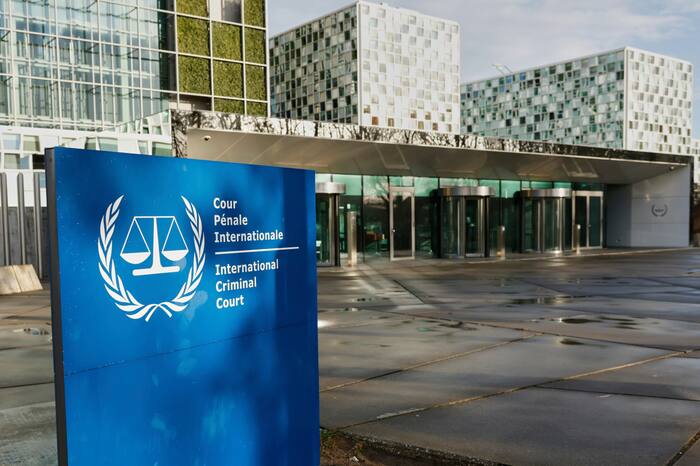
The lazy consensus in international relations holds that handing a prestigious human rights prize to the International Criminal Court right after a round of American sanctions is a brave act of defiance. The mainstream media frames this as a David versus Goliath collision, a noble tribunal standing tall against the geopolitical muscle of Washington.
It is a comforting narrative. It is also entirely wrong.
When institutions swap legal mandates for institutional self-preservation, the applause usually comes from the galleries that understand the least about how power actually works. I have watched diplomatic bodies posture for decades, trading moral currency for press clippings while structural impunity goes entirely unchecked.
Let us look at the mechanics of what is actually happening here.
Sanctions from a superpower are designed to isolate and punish. Prizes from European institutions are designed to validate and insulate. When the two collide, the public is treated to a theatrical spectacle of principle versus pragmatism. But notice what gets lost in the noise. The prize does not rewrite enforcement mechanisms. It does not create jurisdiction where none exists. It simply offers a soft cushion of PR to an organization struggling to prove its operational relevance in a multi-polar world where the heavyweights routinely ignore its arrest warrants.
The common misconception is that the court is being punished for holding powerful states accountable. The reverse is closer to the truth. The court is being weaponized as a symbolic proxy in a broader diplomatic turf war. When international bodies accept prizes for simply existing under pressure, they reveal their primary function: to act as a moral clearinghouse for governments that lack the stomach or the leverage to confront power directly.
Consider the structural reality of global jurisprudence. A court without a police force is not a court; it is a suggestion box. Giving that box a gold medal because someone shouted at it from across the Atlantic does not change its operational capacity by a single fraction of a percent. It just makes the committee members feel better about their own impotence.
The critics of the sanctions miss the plot by focusing on the unfairness of the penalties. The defenders of the prize miss it by pretending the recognition has teeth. Both sides are playing a game of shadows while the real architecture of international law continues to bend entirely to sovereign utility.
If you want to measure the health of global justice, stop looking at who is holding the trophy and start looking at who is actually complying with the warrants. Until then, prize ceremonies are just expensive noise designed to drown out the silence of inaction.