The kitchen table in Tel Aviv is covered in three things: cold coffee, a yellow ribbon pinned to a canvas tote bag, and a laminated sheet of paper showing the seating chart of the Knesset.
To understand how an election is won or lost in Israel, you cannot start with television pundits or campaign slogans. You have to start at that table, at six in the morning, before the radio news bulletin begins. For an outsider, Israeli politics often looks like an incomprehensible shouting match—a blur of collapsing governments, five elections in under four years prior to 2022, and coalitions stitched together from ideological opposites. Yet when you sit with voters who have spent the last few years watching the sky for interceptors and checking their phones for names of the fallen, the noise resolves into a cold, quiet math.
The numbers are unforgiving. Sixty-one.
Out of 120 seats in the Israeli parliament, no single party has ever won an outright majority in the nation's history. Every prime minister, from David Ben-Gurion to Benjamin Netanyahu, has been a coalition builder—a political architect forced to balance the demands of secular centrists, nationalist hawks, ultra-Orthodox parties, and Arab lawmakers on a razor's edge. Today, that traditional arithmetic has been shattered by trauma, turning a routine democratic exercise into an existential referendum on security, accountability, and who bears the weight of defending the country.
The Ghosts in the Voting Booth
Consider a hypothetical voter—let us call her Maya, a forty-two-year-old software engineer from Haifa whose husband has completed over two hundred days of reserve duty since October 2023. Maya is not an ideological extremist. Before the war, she voted based on the cost of living, housing prices in the center of the country, and whether her children's schools had enough funding.
Now, when Maya looks at a ballot, she sees ghosts.
According to political analysts and polling data from institutions like the Israel Democracy Institute, the war in Gaza and the prolonged conflict along the northern border with Hezbollah have fundamentally reordered what Israelis call "the security question." For decades, the debate in Israel centered on long-term diplomatic horizons—territorial compromise versus retaining control over the West Bank, or how to manage conflict with Palestinian leadership. According to researchers tracking Israeli public opinion, the events of October 7 collapsed that abstract debate into a visceral, immediate demand: basic physical safety.
"People aren't voting for a vision of the Middle East ten years from now," notes one veteran Jerusalem-based political strategist in interviews regarding post-war voter behavior. "They are voting on whether they can sleep through the night without a siren, and who they blame for the fact that they couldn't."
This shift cuts in two sharp, contradictory directions, creating a deadlock that defines the current electoral struggle.
On one side of the kitchen table sits the demand for accountability. Critics of Prime Minister Benjamin Netanyahu and his ruling coalition—composed of his right-wing Likud party alongside religious-nationalist and ultra-Orthodox factions—argue that the government presided over the worst intelligence and military failure in the nation's history. Opposition leaders, including figures like Yair Lapid and Benny Gantz, alongside newer protest-born movements, frame the election around a single moral imperative: a state commission of inquiry and a clean slate. For Maya, every day her husband spends in uniform without a clear diplomatic exit strategy feels like a bill paid by ordinary families for political survival at the top.
On the other side sits the logic of wartime continuity and deterrence. Supporters of Netanyahu and the right-wing bloc view the situation through an entirely different lens. As Likud spokespeople and allied commentators frequently argue, changing leadership in the middle of a multi-front confrontation involving Hamas, Hezbollah, and Iran projects weakness to enemies watching from Tehran and Beirut. To these voters, the lesson of recent years is not that Israel needs more diplomatic flexibility, but that any territorial withdrawal—like the 2005 disengagement from Gaza—invites catastrophe. In their eyes, only a hardline coalition willing to withstand international pressure can ensure total victory.
Why Sixty-One Seats Feel Like a Mountain
To grasp why neither side can easily break through, imagine trying to solve a Rubik's Cube where every time you align one color, two others scramble across the grid. That is the Knesset's proportional representation system.
In Israel, voters do not cast ballots for a local representative in a district. The entire country is a single electoral district. Voters choose a party list, and any party that clears the electoral threshold—currently set at 3.25 percent of the total vote, roughly equivalent to four seats—enters parliament. It sounds democratic, even egalitarian. In practice, it gives disproportionate leverage to small kingmaker parties.
Think about what happens when a bloc sits at 58 seats, just three shy of the 61 needed to govern. Suddenly, a faction representing barely four percent of the electorate holds the keys to the prime minister's office. They do not just ask for a cabinet seat; they demand control over budgets, judicial appointments, or military exemptions.
Right now, two tectonic fault lines run straight through that 61-seat math, making traditional alliances nearly impossible to maintain without alienating core voters.
The Draft and the Burden
The first fault line is the ultra-Orthodox, or Haredi, military draft exemption. For decades, full-time yeshiva students were largely exempt from mandatory service in the Israel Defense Forces (IDF)—a political compromise arranged when the Haredi community was small, which Netanyahu and previous leaders relied upon to keep Haredi parties like Shas and United Torah Judaism loyal to their coalitions.
War changed the math. Exhausted. Stretched. Overwhelmed.
With tens of thousands of secular and national-religious reservists serving months on end—losing businesses, missing births, and risking their lives—the political tolerance for blanket exemptions evaporated. In 2024, Israel's Supreme Court ruled unanimously that there was no longer a legal framework permitting the state to exempt yeshiva students from conscription.
Look at the trap this creates for coalition builders. If Netanyahu passes a law enshrining exemptions to keep his Haredi partners happy, he risks alienating secular right-wing voters and even members of his own Likud party whose families are carrying the military burden. Conversely, if an opposition bloc tries to form a government without the Haredi parties, they must cobble together an alliance stretching from secular center-left parties to nationalist hawks—a marriage that proved notoriously fragile when a similar "change government" collapsed in 2022 after barely a year in power.
The Voice of Twenty Percent
The second fault line involves Israel's Arab citizens, who make up roughly twenty percent of the population. In 2021, Mansour Abbas made history when his Islamist Ra'am party became the first independent Arab party to join an Israeli governing coalition, unlocking billions of shekels in infrastructure and anti-crime funding for neglected Arab towns.
Since the outbreak of the war, however, the political climate has hardened dramatically. Many right-wing opposition figures—including potential kingmakers like Avigdor Lieberman or Naftali Bennett, depending on who runs—have signaled reluctance or outright refusal to rely on Arab parties to form a majority. At the same time, disillusionment within Arab society over the war in Gaza and rising violent crime at home has threatened to depress voter turnout. According to election analysts, low turnout among Arab citizens mathematically inflates the seat count of right-wing and religious parties, making it significantly harder for the anti-Netanyahu bloc to reach 61 seats on its own.
The Invisible Stakes Behind the Polling
If you read the weekly polls published on Israeli television channels—Channel 12, Channel 13, Kan 11—you will see a mesmerizing dance of single-digit shifts. One week, a hypothetical party led by former Prime Minister Naftali Bennett surges, pulling votes away from both Netanyahu's right and Gantz's center. The next week, a military operation or a hostage deal shifts two seats back toward Likud.
Yet focusing solely on the horse race misses what is actually at stake beneath the surface. The next Israeli government will not merely manage day-to-day policy; it will decide the structural identity of the state for a generation.
Consider the questions sitting unanswered on the cabinet table:
- The Day After in Gaza: Who governs two million Palestinians once major combat operations subside? Hardline coalition members advocate for military administration or even the re-establishment of settlements, while centrist and security-establishment figures warn that permanent occupation will bleed the military dry and isolate Israel from allies like the United States and moderate Arab states.
- The Northern Border: tens of thousands of Israelis displaced from towns like Kiryat Shmona and Metula have spent over a year living in hotel rooms across the country. Restoring their trust requires either a diplomatic arrangement backed by credible deterrence or a sustained military buffer—both of which carry immense economic and human costs.
- The Judiciary and Institutions: Before October 7, Israel was torn apart by mass protests over the government's judicial overhaul—legislation aimed at curbing the power of the Supreme Court. War paused the street demonstrations, not the underlying conflict over checks and balances, the role of the Attorney General, and the independence of civil institutions.
These are not abstract policy papers. They are the rules by which Maya's children will live, pay taxes, and serve in uniform.
The Weight of a Slip of Paper
Walk into an Israeli polling station on election day and you will not find a touchscreen or a pencil to fill in a bubble. You will find a wooden box divided into dozens of tiny cardboard compartments. Each compartment holds stacks of small white paper slips, printed with one, two, or three Hebrew letters representing a political party.
The ritual is strangely intimate. You step behind a blue curtain, select a single slip of paper—just a few grams of ink and pulp—slide it into a blue envelope, and drop it into a slotted box in front of a committee of ordinary citizens watching to make sure no one cheats.
That tiny piece of paper carries an unbearable load right now. It carries the grief of families still waiting for hostages to return from dark tunnels, the exhaustion of reserve soldiers packing their duffel bags for a fourth rotation, the fear of parents in border towns listening to the hum of drones overhead, and the stubborn hope of citizens who refuse to let their country fracture from within.
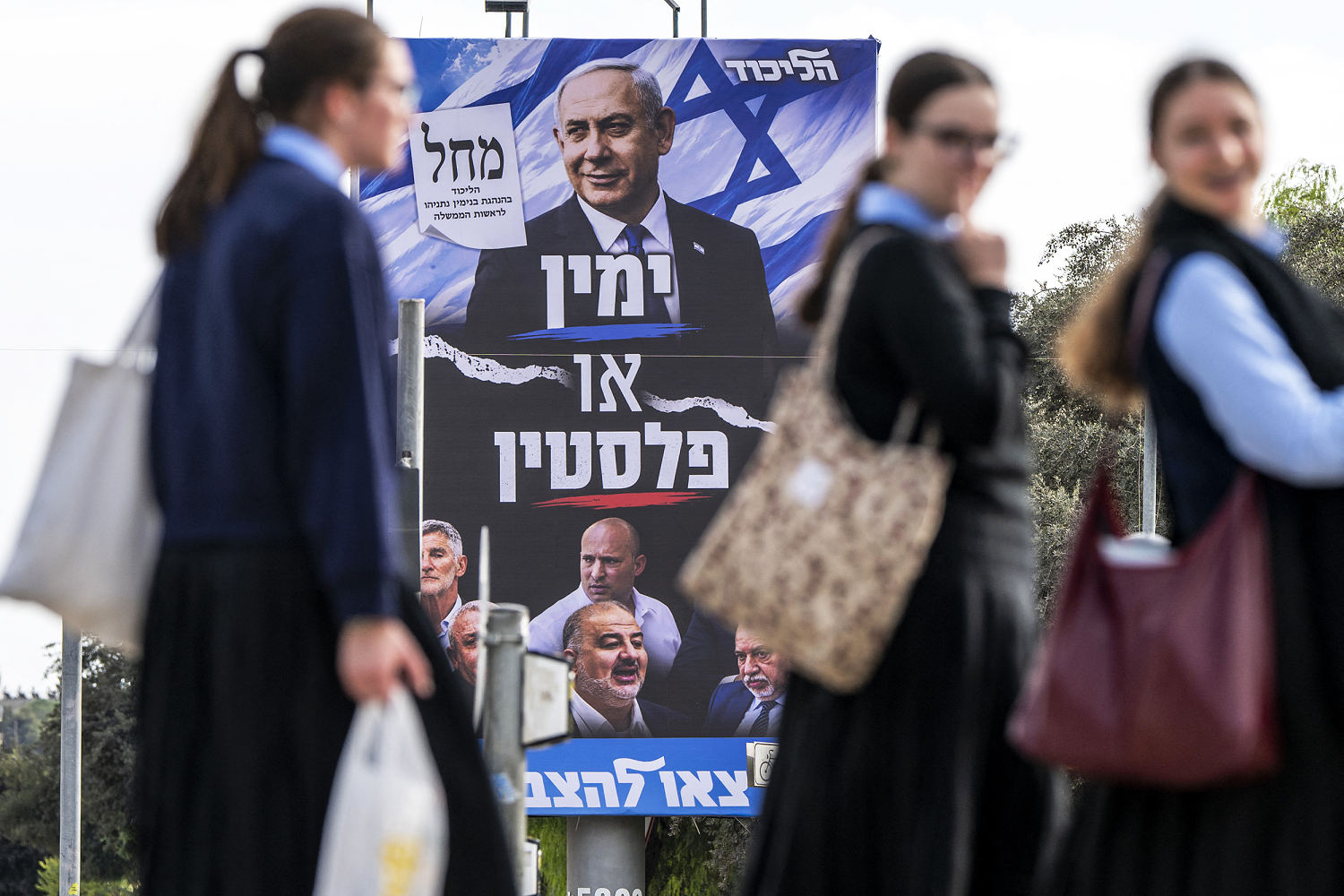
Outside, the campaign posters will promise simple answers: Total Victory, A New Path, Security First. Inside the booth, behind the blue curtain, every voter knows the truth that no politician can put on a billboard—that in a land where survival and democracy are locked in a perpetual embrace, sixty-one seats is never the end of the struggle, only the beginning of the next compromise.