While the world watches the price of Brent crude and the movement of carrier strike groups, a far more fragile lifeline is being overlooked. The Persian Gulf is not just a gas station; it is a laboratory for survival where millions of people depend entirely on a handful of high-tech straws dipped into the sea. If war breaks out, the first thing to go won't be the lights. It will be the water.
This is a crisis of geography and engineering. The Gulf states—Saudi Arabia, the UAE, Kuwait, and Qatar—now rely on desalination for up to 90% of their domestic water needs. These massive industrial plants are fixed, stationary targets. They are the ultimate strategic vulnerability. Unlike a mobile missile battery or a decentralized power grid, a desalination plant cannot be moved or easily hidden. A single drone strike or a sustained cyberattack on a facility’s control systems doesn’t just cause a temporary outage. It triggers a humanitarian catastrophe within 48 hours.
The Engineering of Dependency
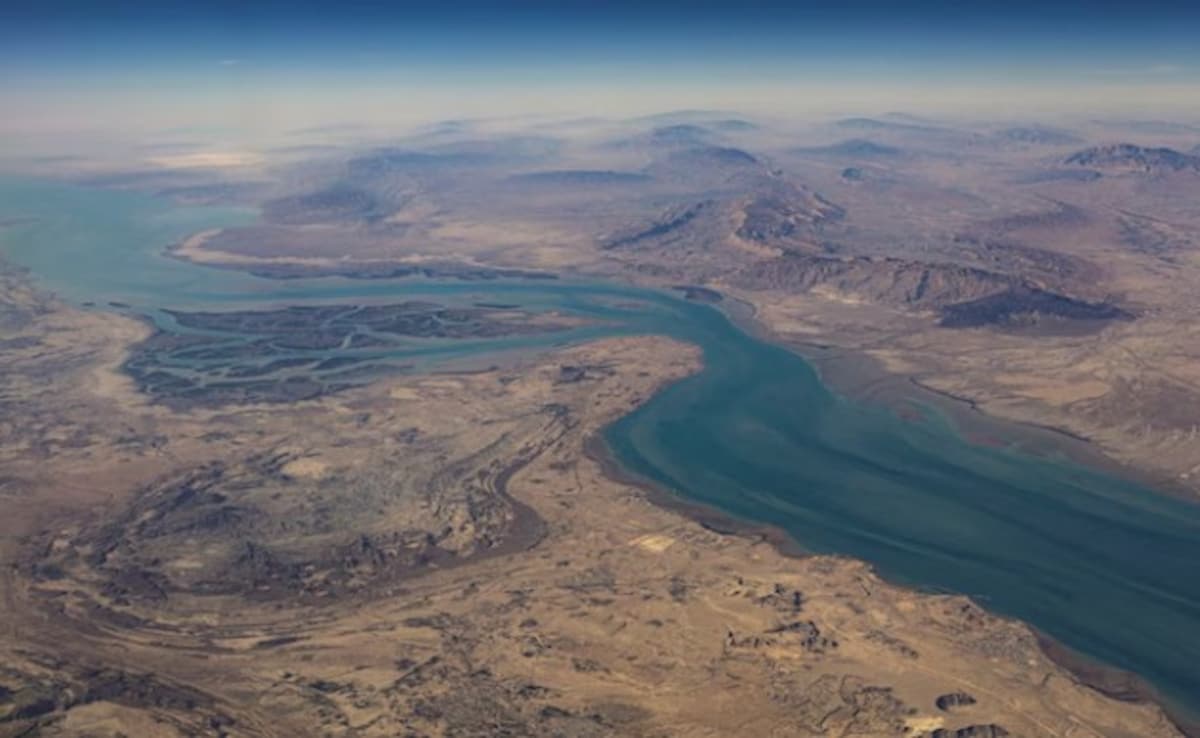
To understand the scale of the threat, you have to look at the chemistry of the Gulf itself. It is a shallow, narrow, and exceptionally salty body of water. Because it is nearly enclosed, it has a high evaporation rate and low circulation. Most modern desalination relies on Reverse Osmosis (RO), which pushes seawater through membranes at high pressure, or Multi-Stage Flash (MSF) distillation, which boils it.
Both methods are energy-intensive and mechanically complex. They are also incredibly sensitive.
In a conflict scenario, the threat isn't just a direct kinetic hit with a cruise missile. The more subtle, and perhaps more devastating, threat is environmental sabotage. The Gulf is already one of the most stressed marine environments on Earth. An oil spill, whether accidental or intentional, can clog the intake valves of these plants instantly. During the 1991 Gulf War, the world saw the devastating impact of deliberate oil releases. Today, the density of desalination infrastructure is much higher. If an oil slick reaches the intakes of a major plant like Al Jubail in Saudi Arabia—one of the largest in the world—the facility must shut down immediately to prevent permanent damage to its membranes.
There is no "Plan B" for a city like Riyadh or Dubai if the taps run dry.
The Reserve Mirage
Governments in the region are well aware of this Achilles' heel. They have spent billions building massive strategic reservoirs. Saudi Arabia has developed underground storage systems, and the UAE recently completed the Liwa Strategic Water Reserve, an artificial aquifer that can hold 26 million cubic meters of desalinated water.
It sounds impressive. It is not enough.
These reserves are designed to last for roughly 90 days under strictly rationed conditions. However, that timeline assumes the power grid remains intact and the distribution network is functional. In a full-scale regional war, the logistics of moving water from a centralized reserve to a panicked population of millions is a nightmare no spreadsheet can solve.
Furthermore, the "brine problem" creates a feedback loop that war would only accelerate. Desalination produces a highly concentrated salt byproduct that is pumped back into the sea. This increases the salinity of the intake water, making it harder and more expensive to process. If plants are damaged or forced to run at inefficient levels due to power shortages, the environmental degradation of the immediate coastline could make the water practically untreatable for years.
Cyber Warfare and the Ghost in the Machine
The most modern plants are masterpieces of automation. They are also playgrounds for state-sponsored hackers. We have already seen "proof of concept" attacks on water infrastructure globally, from the Oldsmar plant in Florida to various attempts across the Middle East.
An adversary doesn't need to blow up a building to kill the water supply. By infiltrating the Industrial Control Systems (ICS), a hacker can alter the chemical balance of the treatment process. They can spike the water with excess chlorine or sodium hydroxide, or they can simply trigger a massive overpressure event that ruptures the filtration membranes.
Replacing these specialized membranes is not like buying tires for a truck. They are precision-engineered components with long lead times and a limited global supply chain. If five major plants across the Gulf are taken offline by a coordinated cyber strike, there are not enough spare parts in the hemisphere to bring them back online before the reservoirs hit bottom.
The Military Reality of the Strait of Hormuz
Most geopolitical analysis focuses on the Strait of Hormuz as a chokepoint for 20% of the world’s oil. This is a 20th-century way of thinking. For the people living in the Gulf, Hormuz is a chokepoint for the chemicals, spare parts, and specialized labor required to keep the water flowing.
If the Strait is closed, it isn't just the tankers that stop moving. The supply chain for the entire life-support system of the Arabian Peninsula grinds to a halt. The Gulf states have spent decades buying security through advanced military hardware, but you cannot shoot a "salt plume" with a Patriot missile. You cannot intercept a cyber-worm with an F-35.
The Myth of Decentralization
There is a growing movement toward smaller, solar-powered desalination units. On paper, this reduces the "single point of failure" risk. In reality, these units are currently incapable of meeting the industrial and cooling needs of major metropolitan hubs. They are a boutique solution for a mass-market crisis.
The region’s rapid urbanization has doubled down on centralization. Mega-projects like NEOM in Saudi Arabia or the continued expansion of the Dubai skyline are built on the assumption of infinite, cheap water. This architectural hubris ignores the fact that these cities are essentially space stations on Earth. They exist in an environment that is naturally hostile to human life, sustained only by a constant, fragile infusion of processed seawater.
Redefining Regional Security
True security in the Gulf will not be found in the belly of a destroyer. It will be found in wastewater reclamation and the aggressive restoration of natural aquifers.
Currently, the Gulf states treat and reuse only a fraction of their "gray water." Most of it is dumped back into the sea, a staggering waste of the energy already spent to desalinate it. If these nations want to survive a conflict with Iran or any other regional power, they must move toward a circular water economy.
This means:
- Moving water production away from the vulnerable coastlines where possible.
- Investing in "atmospheric water generation" at a scale never before seen.
- Hardening the cyber defenses of every pumping station with the same intensity used for nuclear facilities.
The current trajectory is a gamble. The Gulf is betting that the cost of conflict is so high that no one would dare pull the trigger. But history shows that when a regime feels backed into a corner, "mutually assured destruction" becomes a viable strategy. If the water stops, the cities of the Gulf don't just lose their wealth; they lose their habitability.
Investigate the feasibility of your city's emergency water backup systems and compare them to the strategic reserves of the Gulf states to see how thin the margin of safety truly is.