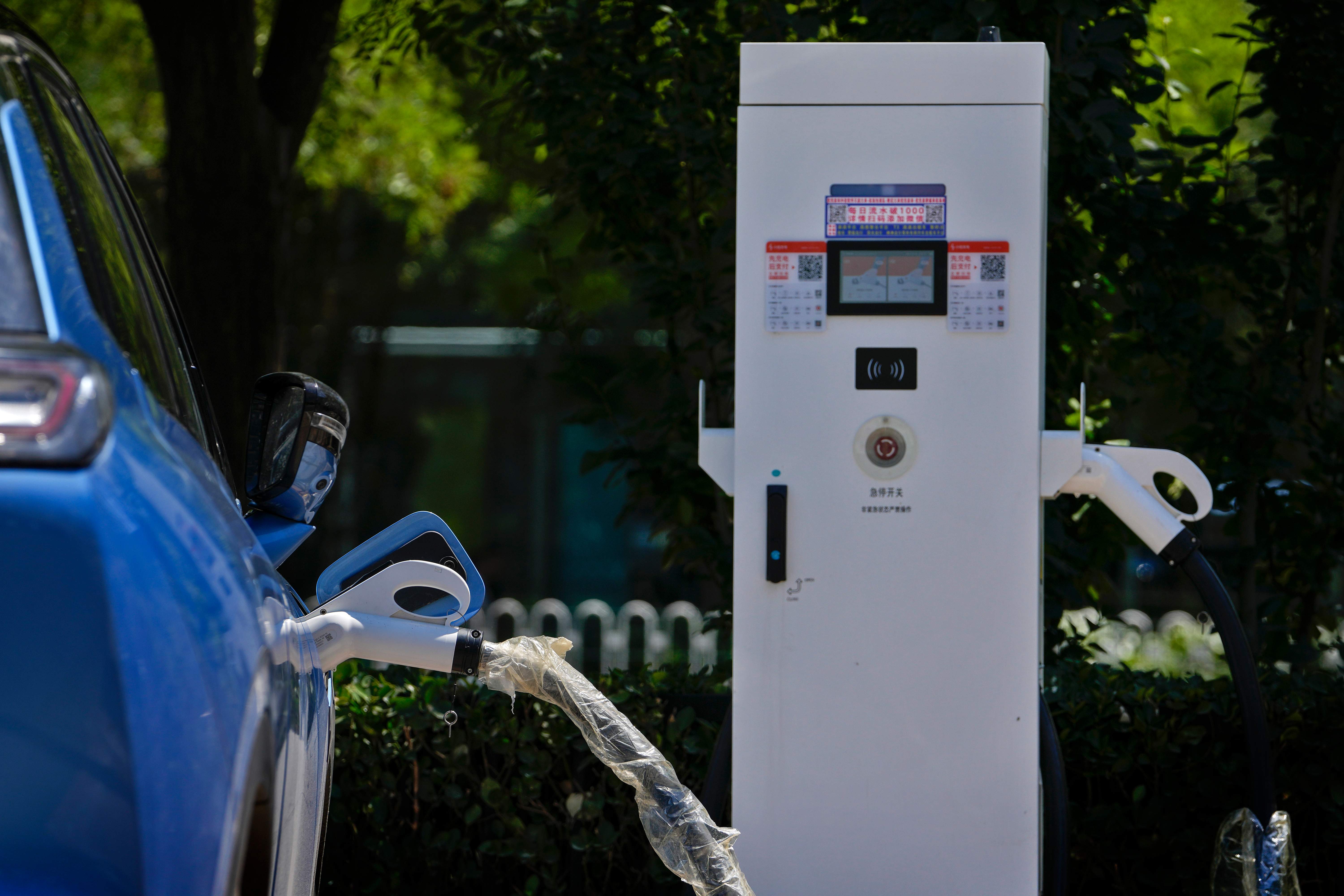
Picture a Tuesday morning in Ottawa. Rain streaks the windshield of a sleek, silver electric crossover sitting in bumper-to-bumper traffic on Wellington Street, two hundred yards from Parliament Hill. Inside, the cabin smells faintly of synthetic leather and rain-dampened wool. A commuter—let us call her Elena, a hypothetical policy analyst who bought the vehicle because it cost fifteen thousand dollars less than any comparable North American model—taps her touchscreen to skip a podcast ad.
She thinks she is driving a bargain.
She does not know that the eight cameras tucked beneath her side mirrors and bumpers are quietly mapping the security perimeters of federal buildings, recording the license plates of diplomatic vehicles, and logging the daily arrival times of defense contractors. She does not know that the cellular modem buried inside her dashboard is pinging a server three time zones and an ocean away.
And she certainly does not know that her daily commute is about to become illegal.
When Canada’s Transport Minister announced that Ottawa would review where Chinese-made electric vehicles are permitted to drive, the headlines read like dry bureaucratic housekeeping. Another regulatory committee. Another geopolitical wrist-slap in an endless trade dispute over steel, aluminum, and batteries. Most commuters scrolled past the story between weather alerts and hockey scores, assuming it was a niche problem for diplomats in black sedans or tariff lawyers in downtown Toronto.
That assumption is dangerous.
Because this review is not really about cars. It is about what happens when the most intimate private space in modern life—the driver’s seat—turns into a rolling, four-thousand-pound sensor array controlled by a foreign adversary.
The Trojan Horse in the Driveway
For a century, a car was a mechanical beast. You turned a key, burned refined prehistoric carbon, and steered a collection of steel rods and rubber hoses down a ribbon of asphalt. If a foreign government wanted to spy on a Canadian military base in Cold Lake, Alberta, or monitor shipping traffic in the Port of Halifax, it had to put an agent on the ground with a telephoto lens or park a trawler just outside territorial waters. Espionage required friction. It required risk.
Modern electric vehicles erased that friction overnight.
To understand why Ottawa is suddenly drawing invisible lines on the map, stop thinking of a new electric car as a vehicle. Think of it as an iPhone on four wheels, equipped with military-grade spatial awareness. To navigate highway lane-keeping, avoid pedestrians in blinding snowstorms, and park itself in tight downtown garages, a modern EV relies on an interconnected web of LiDAR lasers, high-definition optical cameras, ultrasonic sensors, and continuous GPS telemetry.
Now, add one crucial detail. Under Beijing’s 2017 National Intelligence Law, any Chinese organization or citizen must support, assist, and cooperate with state intelligence work whenever asked—and keep that cooperation a secret. There is no judicial warrant process like the one Canadians take for granted. There is no corporate firewall high enough to block a state directive.
Consider what happens when tens of thousands of these rolling data-vacuum cleaners enter a country’s roadways.
Even if a Chinese automaker never intends to spy on anyone, the architecture of connected vehicles demands constant over-the-air software updates, diagnostic uploads, and cloud-based mapping. Every time a driver brakes hard on an icy bridge in Winnipeg, or plugs into a fast-charger next to a hydro-electric substation in Quebec, data flows upstream. Multiply that by fifty thousand cars driving every arterial road, every suburban cul-de-sac, and every perimeter fence around critical infrastructure, and you get something intelligence analysts call pattern-of-life surveillance at national scale.
Beijing understood this vulnerability long before Western capitals woke up to it. As early as 2021, the Chinese military banned Tesla vehicles from entering military complexes and housing compounds, citing fears that the cars' built-in cameras could record sensitive locations and transmit the footage back to American servers. Later, entire districts in cities like Beidaihe—where top Communist Party leaders hold their summer retreats—restricted Teslas from driving along coastal roads during sensitive political gatherings.
Ottawa is not inventing a paranoia. Ottawa is simply reading Beijing’s own playbook and realizing the game is already underway on Canadian soil.
When the Road Suddenly Ends
I remember the first time I stood inside a municipal traffic operations center in Southern Ontario, watching live feeds from highway cameras flicker across a wall of monitors. What struck me was not the technology, which looked surprisingly dated, but the sheer predictability of human movement. You could watch a city breathe in real time. Every morning at 7:15, the arteries swelled toward industrial parks, naval dockyards, and research corridors. Every evening at 5:00, they exhaled back toward the suburbs.
Now, overlay a geofence onto that breathing city.
If Transport Canada follows through on restricting where Chinese-connected vehicles can operate, the enforcement will not look like police officers waving drivers over at roadside checkpoints. It will be invisible, automated, and deeply disruptive.
Let us return to Elena, our hypothetical Ottawa commuter, six months after the new regulations take effect.
Suppose Elena works as a civilian accountant at the Department of National Defence headquarters on Carling Avenue, or perhaps she is a nurse at a hospital adjacent to a major telecom hub, or a contractor servicing power substations outside Montreal. One Monday morning, she turns onto the access road leading to her workplace. On her dashboard, a chime sounds. A red icon flashes across the central screen, warning that she has entered a restricted security zone.
Depending on how Ottawa structures the rules, one of three things happens next.
In the mildest scenario, her car’s software is required by federal mandate to disable all external cameras, microphones, and cellular data transmissions the moment her GPS coordinates cross the invisible boundary. Suddenly, her lane-keep assist fails. Her blind-spot monitors go dark. Her automatic emergency braking—the very safety features that earned the car its five-star crash rating—switches off mid-drive in freezing rain because the sensors feeding the computer have been blinded by law.
In a stricter scenario, the vehicle is barred from entering the perimeter altogether. Elena has to park two miles away in a windswept strip-mall lot and walk, or buy a second car just to finish the last five minutes of her commute.
In the strictest scenario—the one national security hawks in Washington and Ottawa quietly favor—the car cannot be sold or registered in Canada at all unless every line of its source code is stripped out and replaced with Western-controlled software.
Wait. Read that last part again.
Can you actually separate the hardware of a modern Chinese EV from its software?
Ask any automotive software engineer, and they will give you a wry, exhausted laugh. Today’s electric vehicles are built around centralized computing architectures. The battery management system, the thermal cooling loops, the electric motors, and the infotainment screen all talk to each other over a unified digital nervous system. Ripping out the Chinese operating system and dropping in a North American replacement is not like swapping a SIM card in an unlocked phone. It is like performing a brain transplant on a living organism while expecting it to run a marathon the next morning.
The Affordability Trap
Here is where the story gets uncomfortable, because it collides head-on with the brutal math of Canadian household budgets.
Walk into a car dealership in Mississauga, Laval, or Surrey today, and the sticker shock feels physical. The average price of a new vehicle in Canada hovers north of sixty-five thousand dollars. For a young family trying to absorb mortgage renewals at higher interest rates and grocery bills that have climbed thirty percent in four years, a sixty-five-thousand-dollar electric SUV from a legacy automaker is not a climate solution. It is a financial fantasy.
Meanwhile, across the Pacific, Chinese automakers like BYD, Geely, and Nio have achieved something bordering on industrial magic. Backed by decades of state subsidies, vertical integration of lithium and cobalt supply chains, and ruthless domestic price wars, they can build a sharp-looking, long-range electric hatchback for the equivalent of twenty-five thousand Canadian dollars—and still turn a profit.
That price gap is the emotional fault line running straight through Canadian policy.
In 2024, Ottawa slapped a one-hundred-percent surtax on Chinese-made electric vehicles, mirroring moves by the Biden administration in Washington to protect North American auto plants in Ontario and Michigan. Yet trade barriers are porous, and industrial realities shift fast. European automakers are already building joint-venture models in China. Chinese brands are rushing to construct assembly plants in Mexico, Hungary, and Brazil—countries with preferential trade access or lower tariff walls—specifically to route around direct import bans.
So when the Transport Minister talks about reviewing where Chinese EVs can drive, Ottawa is preparing for a future where those cars are inevitably on Canadian roads—whether imported directly, assembled in third countries, or badge-engineered under familiar Western logos.
And that leaves ordinary drivers caught in a trap between their wallets and their government’s security fears.
Imagine saving for four years to buy an affordable electric car, doing everything climate policy asked you to do, trading in your aging gas sedan to cut your fuel costs in half—only to discover that your vehicle is treated like a mobile security threat. What happens to the resale value of a car that cannot be driven near airports, military bases, border crossings, energy grids, or downtown government districts?
Who buys a used car that comes with a map of places you are forbidden to go?
Nobody. Its resale value collapses overnight. The fifteen thousand dollars you saved at the dealership evaporates into thin air, leaving you underwater on an auto loan for an asset nobody else wants to touch.
What History Tells Us About Invisible Wires
If this feels like uncharted territory, it should not. Canada has stood on this exact precipice before, and the scars from that fight are still visible in the balance sheets of every major Canadian telecom carrier.
Cast your mind back to 2018. For years, Huawei—the Shenzhen telecommunications giant—built the backbone of rural wireless networks across Canada. Its gear was cheaper, faster to deploy, and aggressively financed compared to European rivals like Ericsson and Nokia. Canadian telecom executives loved it. Federal regulators dragged their feet, insisting that rigorous testing and software inspections could mitigate any espionage risks from Beijing.
Then came the diplomatic deep freeze, the arrest of Meng Wanzhou in Vancouver, the arbitrary detention of Michael Kovrig and Michael Spavor, and four agonizing years of security reviews. By the time Ottawa finally banned Huawei and ZTE from Canada’s 5G networks in May 2022, the hardware was already bolted onto cell towers from British Columbia to Newfoundland. Telecom companies had to rip out and replace hundreds of millions of dollars of equipment at their own expense, delaying rural broadband rollouts and triggering lawsuits that are still winding through courts.
The lesson from Huawei was brutal and unambiguous: once critical infrastructure is embedded in daily life, ripping it out is agonizingly expensive.
Cars are infinitely harder to recall than cell towers. There are three major telecom carriers in Canada; there are twenty-six million registered vehicles. You cannot quietly dispatch a crew of technicians in cherry-pickers at midnight to swap out the telematics modules of fifty thousand privately owned crossovers parked in suburban garages.
This is why Transport Canada’s review carries such quiet urgency. Regulators are trying to build the fence before the herd arrives, rather than chasing stray cattle across the province five years too late.
The Anatomy of a Connected Threat
To be clear—and fairness matters here—there is no public smoking gun showing that a Chinese EV parked outside Ottawa has transmitted classified Canadian blueprints to Beijing. Security agencies rarely show their hand, and skepticism toward sweeping national security claims is healthy. After all, governments have a long history of invoking "security" when what they really mean is "protecting domestic manufacturers from foreign competition."
Both things can be true at once.
Ottawa undeniably wants to shield the billions of taxpayer dollars it poured into battery plants in Windsor, St. Thomas, and Bécancour. If cheap Chinese imports flood the market, those factories become white elephants before they even pour concrete.
Yet dismissing the surveillance risk as pure protectionism requires ignoring how modern cyber warfare actually works. Intelligence agencies do not wait for a hot war to map an adversary’s infrastructure. They collect everything they can during peacetime—benign telemetry, road gradients, cellular dead zones, power grid load fluctuations, the daily routines of senior officials—and store it in massive data lakes until an algorithm finds a use for it years later.
Think of it like leaving your front door unlocked in a safe neighborhood. Nine hundred and ninety-nine nights out of a thousand, nothing happens. You sleep soundly, and your neighbors think you are sensible for not fussing with deadbolts. The lock only matters on the one night someone decides to test the handle.
In the digital era, a connected vehicle is a front door with a remote-controlled deadbolt held by the manufacturer. Through an over-the-air update pushed at three in the morning, a car’s behavior can be altered silently without the owner ever clicking "accept." Even more chillingly, security researchers have repeatedly demonstrated how connected-vehicle vulnerabilities could theoretically allow a bad actor not just to watch, but to intervene—disabling braking systems, locking doors, or bricking thousands of vehicles simultaneously during a geopolitical crisis.
When the U.S. Commerce Department moved to ban Chinese-developed software and hardware in connected vehicles sold in America, Commerce Secretary Gina Raimondo put it bluntly: in an extreme situation, a foreign adversary could shut down or take control of millions of vehicles operating on American roads simultaneously.
Canada shares the longest undefended border in the world with the United States, along with an integrated auto industry where parts cross the Detroit River half a dozen times before a car is finished. Washington will not tolerate a backdoor in North American transportation sitting ten minutes across the Ambassador Bridge in Windsor. Even if Ottawa wanted to stay neutral, American pressure makes neutrality impossible.
Navigating the Detour Ahead
So where does this leave the ordinary driver standing on a dealership lot, trying to make a sensible decision for the next decade?
First, honesty requires admitting that the transition to electric vehicles just got messier, slower, and more expensive. The dream of effortless, low-cost green mobility colliding with geopolitical reality means consumers are paying a hidden "security tax" on every new car they buy.
Second, if you are shopping for a vehicle over the next two years, pay close attention not just to the badge on the hood, but to the origin of the vehicle’s digital nervous system. A growing number of Western brands source their infotainment stacks, telematics units, and battery electronics from global supply chains heavily intertwined with China. As Transport Canada and its American counterparts tighten rules on connected-vehicle software, automakers will be forced to untangle those supply chains—a process that could trigger software recalls, delayed feature rollouts, or regional restrictions on certain models.
Third, watch how Ottawa defines the boundaries. A narrow restriction—barring Chinese-connected vehicles from military bases, federal complexes, ports, and nuclear facilities—will barely register for most commuters, even if it creates headaches for government workers and defense contractors. A broad restriction—banning certain connected architectures from Canadian roads altogether—will reshape the entire auto market, keeping prices elevated while forcing domestic and European automakers to build secure, North American-hosted software ecosystems from the ground up.
Back on Wellington Street in Ottawa, the rain finally lets up. Traffic lurches forward past the Peace Tower, brake lights flaring red against the wet asphalt. Inside that silver crossover, Elena checks her mirrors, merges into the left lane, and accelerates toward the bridge leading home.
For now, the road ahead is wide open. The green light is hers. Nobody is stopping her at the bridge, nobody is disabling her dashboard, and nobody is asking where her car sends its secrets while she sleeps.
She drives on, entirely unaware that somewhere in a windowless conference room a few hundred yards behind her, bureaucrats are already drawing the lines she will no longer be allowed to cross.