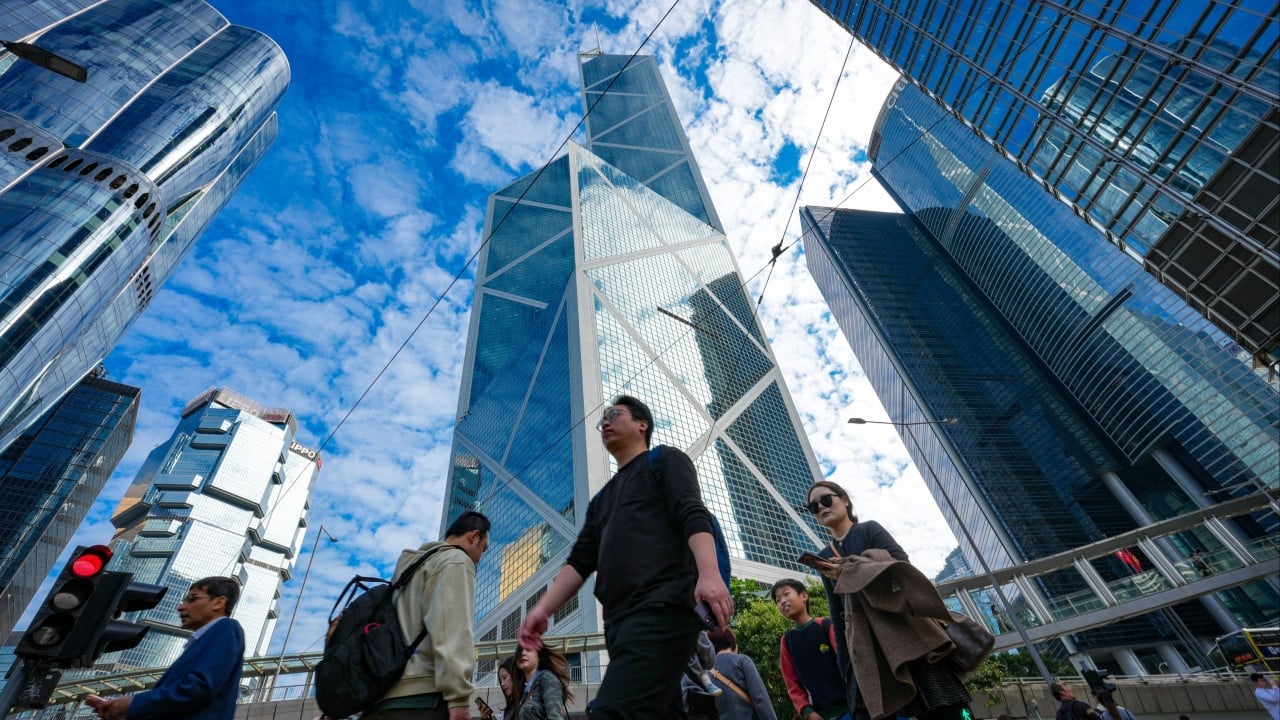
A humid breeze drifts off Victoria Harbour, carrying the scent of salt and diesel. High above the water, in the glass-and-steel canyons of Central, the lights stay on long after the commuters have crowded onto the Star Ferry. These glowing windows aren't just offices. They are the nerve endings of a massive, living organism.
Financial Secretary Paul Chan sits at the center of this web. When he speaks about Hong Kong acting as a "firewall" for China, he isn't just using a buzzword. He is describing a high-wire act. It is a performance where the safety net is made of rigorous regulation and the tightrope is woven from pure, digital innovation.
The Architect of the Buffer Zone
To understand why this matters, look at the hands of a small business owner in Kowloon. Let’s call him Mr. Lam. He exports high-end electronics. For Mr. Lam, the stability of the Hong Kong Dollar and the freedom to move capital aren't abstract economic theories. They are the oxygen his business breathes. If the system becomes too rigid, he can’t pivot to new markets. If it becomes too loose, a sudden market shock could wipe out his life’s work overnight.
Hong Kong occupies a unique space in the global psyche. It is the only place on earth where the vast, untapped potential of the Chinese market meets the established, predictable machinery of international finance. This "One Country, Two Systems" framework creates a pressurized chamber. Inside, Paul Chan and his team must manage the flow of trillions of dollars while ensuring that any fire starting in the global markets doesn't leap the fence into the mainland—and vice-versa.
The firewall is two-way. It protects the interior from external volatility, but it also provides a controlled laboratory where China can test new financial tools without risking the entire national economy.
Security is a Silent Partner
Safety is boring until it vanishes. Most people don't think about the plumbing of their house until a pipe bursts. The financial security Chan emphasizes is the plumbing of a global city. While other regions might chase growth by slashing rules, Hong Kong has leaned into the "firewall" identity.
This isn't about being a gatekeeper. It’s about being a filter.
The city has implemented some of the most stringent anti-money laundering and "know your customer" protocols in the world. To a startup founder, these might feel like hurdles. But to a global institutional investor, they are the reason they feel comfortable parking billions of dollars in a city that sits on the doorstep of a different economic system. The security provides the "Common Law" bedrock that Western markets trust, while the connectivity provides the "China Growth" that they crave.
The Digital Frontier and the Risk of Shadows
Innovation often moves faster than the ink can dry on new laws. This is the tension Paul Chan lives with every day. The rise of Web3, virtual assets, and decentralized finance (DeFi) represents a shift as profound as the invention of the stock exchange itself.
Consider the hypothetical case of a young developer in a co-working space in Cyberport. She is building a platform that uses blockchain to settle international trades in seconds rather than days. In many jurisdictions, she would be operating in a legal gray area. In Hong Kong, the government has decided that "gray" is a dangerous color.
Instead of banning virtual assets—a move that would simply drive the talent underground—Hong Kong has invited them into the light. By creating a mandatory licensing regime for virtual asset trading platforms, the city is betting that "regulated innovation" is the only sustainable path.
It is a gamble on transparency.
By forcing these new digital players to meet the same high standards as traditional banks, the city is trying to prevent a repeat of the spectacular collapses seen in other crypto hubs. They want the technology, but they refuse to accept the chaos.
The Strength of the Bridge
A bridge is only as good as its anchors. For Hong Kong, those anchors are the "Connect" schemes—Bond Connect, Stock Connect, and the burgeoning Wealth Management Connect. These are the physical pipes of the firewall. They allow international investors to buy into Chinese companies while staying within the regulatory comfort zone of Hong Kong.
But there is a human cost to maintaining this balance. It requires a constant, grueling dialogue between regulators in Beijing and bankers in New York. Paul Chan often finds himself as the translator. He has to explain the necessity of national security and financial stability to a West that is often skeptical of intervention. Simultaneously, he must demonstrate the value of an open, transparent market to a mainland that values control.
It is a thankless job. When things go well, nobody notices the firewall. They only notice it when it fails.
The Talent War and the Quiet Exodus
The most critical component of any financial center isn't capital. It's people.
Money is cowardly; it goes where it is safe. Talent is ambitious; it goes where it can grow. Recent years have seen a narrative of "brain drain" from Hong Kong, driven by political shifts and strict pandemic-era rules. Chan knows that a firewall made only of laws, without the genius of human capital, is just a tomb.
This is why the city has pivoted toward aggressive talent attraction schemes. They are looking for the next generation of "bridge builders"—people who understand Python as well as they understand the Hang Seng Index. They need individuals who can navigate the nuances of a city that is increasingly integrated with the Greater Bay Area while maintaining its international flair.
The struggle is visible in the coffee shops of Central. You hear a mix of Mandarin, Cantonese, and English. You see the traditional tailor shops sitting next to NFT galleries. This friction—the rubbing together of the old world and the digital future—is where the heat comes from.
The Weight of the Future
Looking at the skyline, it’s easy to see only the triumphs of capital. But the real story is in the restraint.
Paul Chan’s "firewall" strategy is a rejection of the idea that a city must choose between being a global hub and a national asset. He argues it can be both, provided the gate is guarded by someone who understands that a single crack in the foundation can bring down the entire tower.
The world is watching to see if this balance can hold. Can a city be a revolutionary tech hub and a conservative financial fortress at the same time? Can it be a "firewall" that also functions as a "gateway"?
The answer isn't in the statistics or the GDP growth figures. It is in the confidence of the next person who decides to move their life, their family, and their fortune to this rock at the edge of the sea.
The lights in the towers remain on. The ledgers continue to balance. The city waits, anchored to the mainland but leaning toward the horizon, proving every day that the most resilient structures are those that know exactly how much pressure they can take before they have to push back.
In the silence of the late-night trading floors, the firewall hums, a digital guardian protecting the dreams of Mr. Lam and the billions of others who rely on the stability of this singular, complicated place.