Walk into any room where the future is being built today, and you will not hear the sound of heavy machinery. You will not hear the roar of engines or the clatter of assembly lines. Instead, you will hear a rhythmic, frantic tapping of plastic keys. You will see blue light bouncing off the glasses of thirty-year-olds who are trying to code a conscience into a machine that does not know what a heart is.
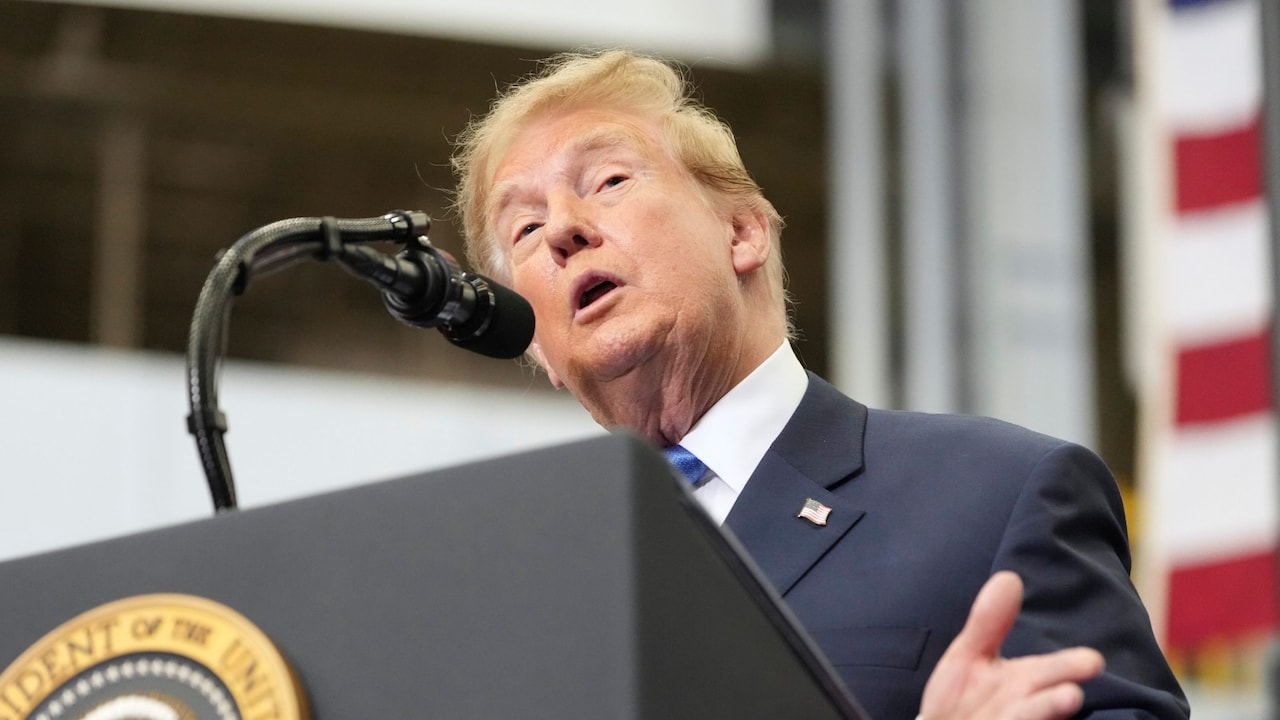
They are building tools that can write poetry, diagnose diseases before a doctor can spot a shadow on an MRI, and compose music that sounds like grief. Yet, out on Capitol Hill, the people chosen to govern this vast, unprecedented experiment are staring at each other across wide mahogany tables, realizing they are holding a map of a world that no longer exists. You might also find this related story insightful: Why Trump Says Slowing Down AI is a Massive Mistake for America.
Lawmakers agree on one terrifying truth: the thing we built is moving faster than the ink on our statute books. But when the question shifts from whether to control it to how to do it, the room fractures. Some want a heavy iron fence around every algorithm. Others want to leave the gates wide open, terrified that a single regulation might hand the crown to a foreign rival.
Consider a hypothetical afternoon in a congressional hearing room. A veteran senator leans into a black microphone, his glasses sliding down his nose. He holds up a printed page of computer code as if it were a hazardous material specimen. He wants a strict licensing board. He wants every neural network audited by a federal agency before it ever touches the public. He wants accountability carved into granite. As discussed in latest reports by TechCrunch, the results are significant.
Across the aisle, a younger representative shakes her head. She grew up writing scripts in her bedroom. She knows that code is fluid, branching, and decentralized. To her, putting a federal stamp of approval on software is like trying to nail jelly to a wall. If you slow down the domestic pioneers with bureaucratic red tape, she argues, you do not stop the technology. You simply push it into the shadows, or worse, into the hands of adversaries who care nothing for human rights.
This is the great fracture of our time. It is not a debate between Democrats and Republicans, at least not in the traditional sense. It is a collision between two fundamentally different ways of viewing human progress. One side looks at the machine and sees a wild beast that must be caged before it tears down the social fabric. The other side looks at the same machine and sees an unstoppable river, arguing that you cannot legislate the current—you can only build better boats.
The friction is palpable, and the stakes are invisible until they suddenly aren't.
Think about the quiet moments when technology intersects with real human vulnerability. Imagine a young woman sitting at her kitchen table at two in the morning. Her phone glows in the dark, reflecting off her tired eyes. She is scrolling through an AI-generated therapeutic chatbot, looking for comfort after a devastating breakup. The voice on the screen is warm, patient, and available at hours when every human friend is asleep.
It tells her what she needs to hear. But it does not have a soul. It does not know the ache of genuine loss; it only knows statistical probabilities of which words tend to follow other words in a sentence. When the algorithm makes a miscalculation—when it offers a toxic piece of advice disguised as empathy—there is no license plate to track, no malpractice insurance policy to claim, no human board of ethics to hold accountable.
That is what the lawmakers are trying to catch up to. They are chasing a ghost that wears a thousand friendly faces.
Some legislators lean toward a risk-based framework, borrowing ideas from the European Union's playbook. They want to classify artificial intelligence by the danger it poses. A generative tool that designs video game characters gets a pass. A tool that scans resumes for hiring managers or determines credit scores gets heavy scrutiny. A tool that targets critical infrastructure or autonomous weapons gets locked down completely.
It sounds pragmatic on paper. But defining where one category ends and another begins is like trying to draw boundary lines on the surface of an ocean. A simple text generator can be repurposed by a malicious actor to write devastating phishing code or generate deepfake propaganda at scale. The tool itself is neutral, but its velocity and scale turn ordinary capabilities into systemic threats.
Meanwhile, the tech companies themselves are lobbying hard, playing a sophisticated game of legislative architecture. The largest players often advocate for some degree of regulation. To the cynical observer, this looks like public-minded responsibility. To the realist, it looks like a moat. If you set the compliance bar high enough through federal oversight, you crush the startup in the garage while the trillion-dollar corporation absorbs the legal costs as a minor line item.
The public watches this theater from a distance, feeling a quiet, pervasive unease. We feel it when our voices are cloned by scammers calling our parents. We feel it when artists watch their life's work ingested by scrapers to feed a model that sells back imitations for pennies. We feel it when algorithms decide who gets an apartment, who gets a loan, and who gets a second look from a parole board.
We are living through a slow-motion transformation of reality itself. And the people we elected to steer the ship are still arguing over who gets to hold the wheel, and whether turning it left or right will cause us to capsize.
There is no neat resolution to this tension. History suggests that laws always trail innovation by a decade, scrambling to clean up the messes after the gold rush has already carved up the landscape. But this time, the gap between invention and consequence is measured in months, sometimes weeks.
The debate in Washington will continue. Committees will meet. Expert witnesses will testify with slides full of dense jargon. Press releases will be hammered out in fluorescent-lit basements.
Yet, away from the capital, the code keeps compiling. The servers keep humming in their cold, windowless rooms, drawing power from the grid, whispering calculations into the dark. The real rules are being written right now, not just by lawmakers with gavels, but by every keystroke, every prompt, and every choice we make about what kind of world we are willing to accept.