Salt crusts the windshield of a tanker creeping through the Strait of Hormuz. Dawn does not break here so much as it bleeds over the horizon, painting the Persian Gulf in bruised shades of copper and violet. Down below, deep within the humming labyrinth of the engine room, a twenty-four-year-old third engineer named Min-su wipes sweat from his forehead with a grease-stained rag. He does not know the diplomatic cables flying between Seoul and Washington. He only knows the digital gauge on the bulkhead, vibrating slightly against the hull, and the quiet, heavy knowledge that twenty percent of the world’s petroleum passes right through this narrow throat of water.
One hundred miles wide at its broadest point, pinched down to twenty-one miles of navigable shipping lanes. That is all that separates global economic stability from a sudden, choking darkness.
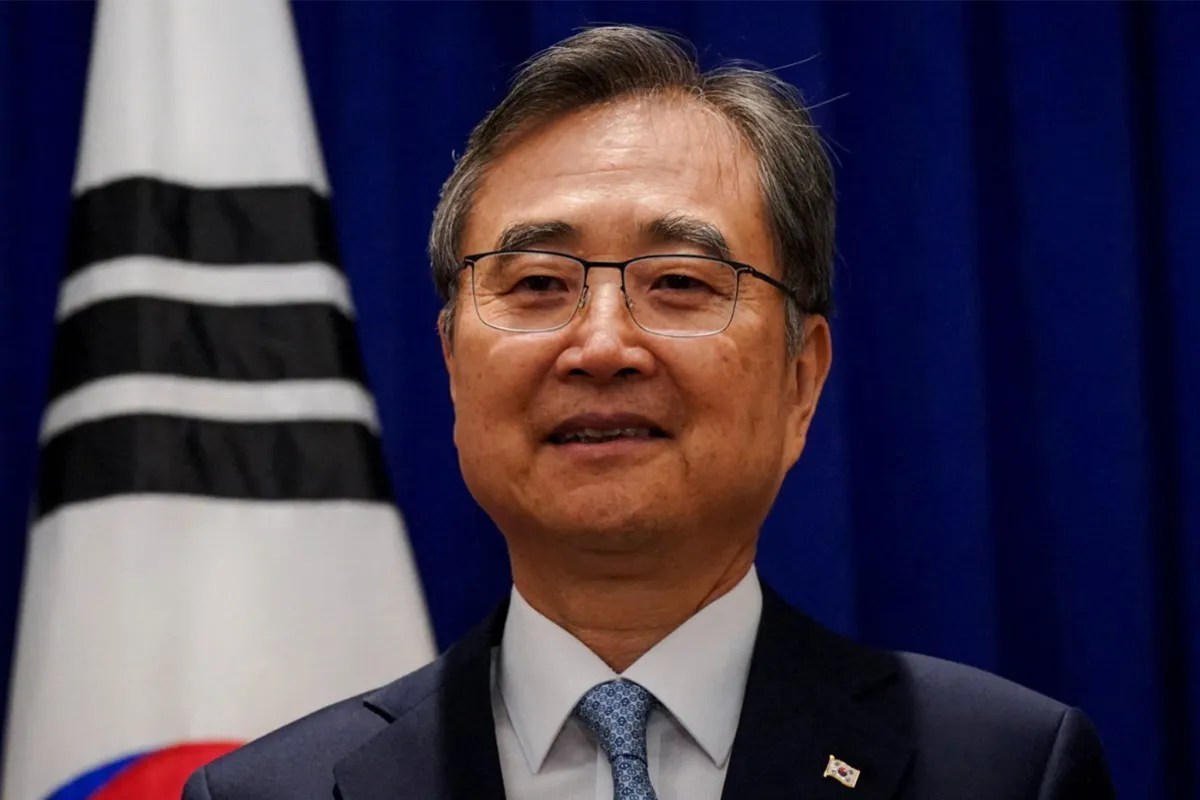
When South Korea's Foreign Minister Cho Hyun stepped before reporters just ahead of his high-stakes departure for Washington, the question hanging in the air was as sharp as a razor. Would Seoul send its naval vessels into this volatile corridor? The answer was measured, careful, and heavy with hesitation: no decision had been made.
To the casual observer scanning a morning news ticker, it sounded like bureaucratic stalling. Just another diplomatic evasion. But spend an hour talking to the men and women who manage maritime logistics in Busan, or look into the tired eyes of refinery workers in Ulsan, and you realize that hesitation is not weakness. It is terror wearing a suit.
South Korea is an industrial engine running on imported breath. More than seventy percent of its crude oil arrives from the Middle East, squeezing through the very maritime bottleneck that foreign ministers now debate patrolling. Every plastic bumper molded in an Incheon factory, every container ship gliding out toward the Pacific, every kilowatt-hour keeping Seoul’s neon districts blazing past midnight depends on the uninterrupted flow of tankers sliding past the Iranian coast.
Yet joining a multinational maritime coalition in the Persian Gulf is not like signing a trade agreement. It is stepping onto a dry-powder keg with a lit match in your pocket.
Diplomacy is often portrayed as a game of grand chess played by men in marble rooms. In reality, it is more like tightrope walking over an active volcano while someone shakes the cable. Foreign Minister Cho Hyun’s cautious stance reflects a tightrope stretched to its absolute limit. On one side sits Seoul's most critical security alliance—the decades-long partnership with Washington that demands burden-sharing and maritime security cooperation. On the other side sits economic survival, dictated by the cold reality that alienating energy suppliers in a tense region can turn the lights off across an entire industrialized nation in a matter of weeks.
Consider what happens next if a foreign warship flying the Taegeukgi flag takes up station in the Strait.
To Washington, it is a matter of collective defense, freedom of navigation, and a clear signal against maritime coercion. To Tehran, it is an unwelcome escalation, a provocative presence on their doorstep, transforming commercial sea lanes into a chessboard of rival militaries. And to the average South Korean citizen drinking morning coffee while reading headlines on their smartphone, it is a silent, creeping anxiety: Will my heating bill triple next month? Will my job at the shipyard survive a sudden oil shock?
We forget that geopolitics has a pulse. We speak of "deployments" and "coalitions" and "strategic corridors" as if they were pieces on a board, clean and weightless. They are not. They are fuel lines pumping life into hospitals, schools, and homes.
Cho Hyun’s reluctance to make a knee-jerk commitment reveals an unspoken truth of modern statecraft: sometimes, the bravest thing a leader can do is refuse to rush into a fire.
Back on the tanker, Min-su steps out onto the deck for a breath of salt air. The sea is deceptively calm, glittering under a merciless sun. There are no warships visible on the horizon just yet, only the endless expanse of blue water and the steady, rhythmic thrum of the screws pushing the vessel forward. He looks toward the northern horizon, where the jagged coastline of Iran looms like a sleeping shadow.
He cannot see the diplomats arguing in Washington. He cannot see the policy briefs stacked on mahogany desks in Seoul. But he can feel the tension in the wind.
The strait remains open. For now. But as the world watches and ministers confer, everyone on that water knows how quickly the tide can turn.


