Every evening around eight, Ramesh steps out of the suffocating heat of a commercial kitchen in New Delhi. His forearms bear the faint, silver scars of grease splatters. His fingers, calloused and stained with turmeric, scroll through a cheap smartphone. He looks at a digital screen, but his mind is three hundred miles away in a terraced village clinging to the hills of Nepal.
There, his mother is waiting. She needs medicine. His younger sister needs school fees.
For a decade, the distance between Ramesh’s sweat and his family’s survival was measured not in miles, but in percentages. To send ten thousand rupees home, he had to navigate a labyrinth. He had to take a half-day off work, losing precious wages. He had to find a brick-and-mortar agent or rely on informal, shadowy networks that operated on trust but charged a king's ransom. By the time the cash crossed the border, a chunk of it had vanished, devoured by transaction fees, conversion rates, and middleman cuts.
Money is blood to a migrant family. Watching it bleed out in transit is a quiet, recurring tragedy.
But a quiet revolution just altered the geography of the Indian subcontinent.
The Weight of the Digital Wall
To understand the magnitude of what just happened during the latest bilateral talks between India and Nepal, you have to understand how difficult we have made it to do something simple.
We live in an era where data circles the globe in milliseconds. You can stream a high-definition video from a server in Iceland while sitting on a bus in Mumbai. Yet, for years, sending legal tender across the narrow river that separates India from Nepal felt like trying to move a boulder uphill.
The old system was broken. It was an archaic remnant of a world that didn't trust digital footprints. If you were a white-collar professional with a corporate bank account, an international wire transfer was merely annoying. If you were a construction worker, a domestic helper, or a line cook, it was an insurmountable wall.
This friction created a massive parallel economy. Billions of dollars flowed through informal channels because the official channels were too slow, too expensive, or too intimidating.
Consider the mechanics of the old way. A migrant worker walks into a crowded kiosk. They hand over physical cash. The agent takes a cut. The agent contacts an associate across the border. Days pass. The family in the village travels hours by bus to a regional center to collect what remains of the money.
It was inefficient. It was insecure. Most of all, it was disrespectful to the people keeping both economies afloat.
The Day the Border Dissolved
When the foreign ministers of India and Nepal sat down recently, the headlines focused on diplomatic protocol, agreements, and regional cooperation. The standard press releases read like a manual for corporate bureaucracy. They listed bullet points of mechanisms and frameworks.
They missed the point entirely.
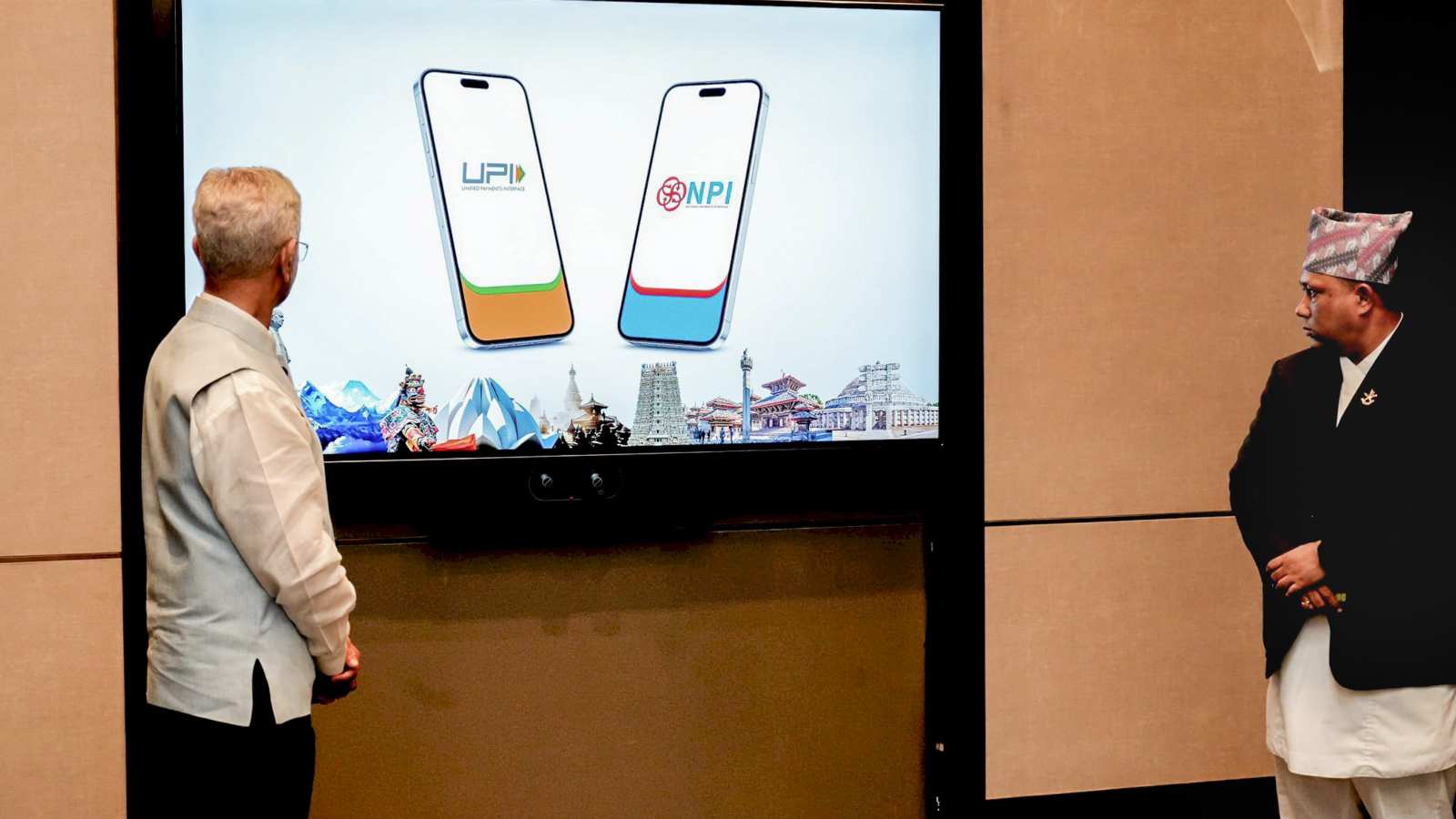
The real story wasn't the ink on the treaty; it was the digital bridge built beneath it. The two nations officially launched a unified, cross-border remittance mechanism. By linking India’s Unified Payments Interface (UPI) with Nepal’s National Payments Interface (NPI), they didn't just sign a paper. They dissolved a financial border.
Think of it as plumbing. For decades, the financial pipes between the two nations were different sizes, made of different materials, and blocked by rust. This new agreement welded them together.
Now, a phone swipe in Delhi instantly lights up a screen in Kathmandu.
The implications are staggering. This isn't about convenience for tourists. This is structural economic reform masquerading as a smartphone app. Millions of Nepali citizens working in India can now bypass the middlemen entirely. They can send money directly from their Indian bank accounts to their families’ accounts in Nepal, instantly, securely, and at a fraction of the historical cost.
The Micro-Economics of Dignity
Critics might look at this and ask why a software integration deserves such spotlighting. After all, it is just code. It is just servers talking to servers.
But look closer at the math of poverty.
When you live on the margins, a five percent fee on a remittance isn't a statistic. It is three days of groceries. It is the cost of a textbook. It is the difference between buying a winter jacket or shivering through December. By slashing the cost of sending money, this digital mechanism effectively gives millions of low-income workers an immediate raise.
It also drags a massive chunk of the economy out of the shadows. When money moves through official digital channels, it becomes part of the formal banking ecosystem.
Suddenly, that migrant worker has a financial history. They have a record of regular deposits. That record is power. It means that eventually, when they want to return home and start a small shop, buy a tractor, or build a house, they can walk into a traditional bank and ask for a loan based on years of verifiable income.
The informal networks offered speed at a terrible price: they kept the poor invisible to the financial systems that could lift them upward. The new mechanism offers visibility. It offers legitimacy.
A Map Redrawn by Code
Geopolitics is usually written in infrastructure. We measure alliances by the highways built, the ports dredged, and the railway tracks laid. These are visible markers of power and partnership.
But the most potent infrastructure of the twenty-first century is invisible.
The India-Nepal relationship is deeply historic, woven through shared culture, open borders, and familial ties. Yet, the financial systems remained stubborn outliers, frozen in a previous era. By prioritizing this digital link, both governments have acknowledged that true integration isn't just about allowing people to walk across a border; it is about allowing their livelihoods to move with them.
The bilateral talks covered many areas, from energy cooperation to trade routes. Yet, none of those macro-projects will touch the daily lives of ordinary citizens as intimately as this remittance bridge.
It sets a precedent for the entire South Asian region. It proves that the technology developed to make domestic payments easy can be exported to solve international friction. It turns a regional superpower’s internal digital success story into a shared public good for its neighbors.
Ramesh sits back against the cool concrete wall of the alleyway. The noise of Delhi traffic hums in the background, a relentless wall of sound. He opens his banking app. He types in an amount. He presses a blue button.
His phone pings. A second later, three hundred miles away, a phone on a wooden table in the hills rings with an incoming text alert.
His mother does not need to walk to the bus stop tomorrow. She does not need to wait in a line at a crowded agency. The money is already there, safe, whole, and untouched by predatory fees.
The scars on Ramesh's arms still ache from a long shift, but his shoulders feel lighter. The distance between his sacrifice and his family's survival has just shrunk to nothing.