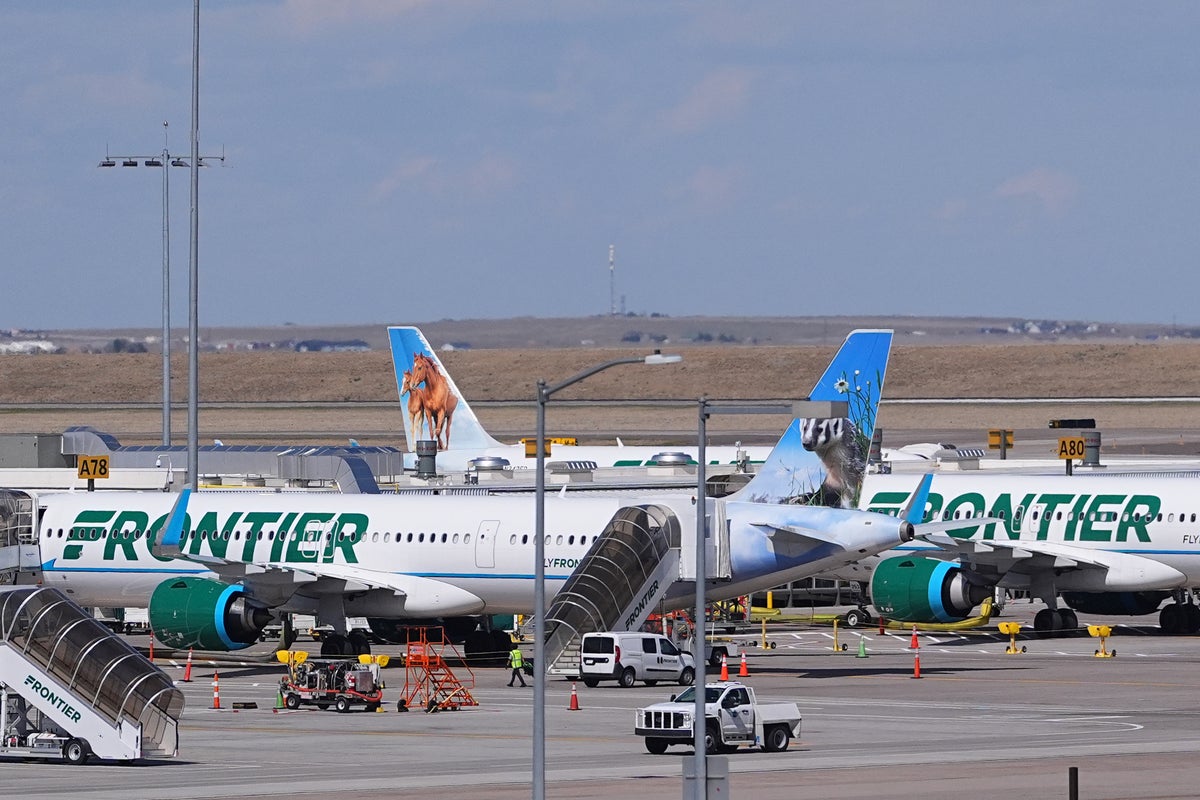
The asphalt at Denver International Airport doesn’t just end; it dissolves into a high-plains wilderness where the wind carries the scent of sage and the hum of jet engines. To a pilot, it is a grid of precision. To a passenger, it is a blurred gray ribbon seen through a double-paned window. But to the security teams tasked with guarding one of the world’s largest landmass airports, those 33,000 acres represent a terrifying paradox: a fortress with no walls.
When a man breached the perimeter and lost his life on a taxiway under the wheels of a Boeing 737, the headlines focused on the mechanical failure of a system. They talked about "security protocols" and "unauthorized access." They treated the event like a glitch in a computer program.
They missed the tragedy. They missed the silence.
The Anatomy of a Shadow
Imagine a night shift. The terminal is a cathedral of white tents and echoing announcements, but three miles away, the perimeter fence is just a chain-link suggestion against the dark. It is easy to think of airport security as the blue-uniformed officers at the magnetometers or the high-tech cameras in the lounges. We focus on the friction we can see. We complain about taking off our shoes while the real vulnerability—the vast, physical edge of the airfield—stretches out for miles in every direction.
The incident in Denver wasn't just a breach; it was a ghost in the machine. A person managed to bypass the multi-layered defenses designed to keep the runway sterile. In the industry, "sterile" is a clinical word for a place where nothing unexpected is allowed to exist. A runway must be a vacuum. No debris. No birds. Certainly no humans.
When that vacuum is compromised, the physics of aviation become a nightmare. A commercial airliner landing at 150 miles per hour is not a vehicle that can swerve. It is a kinetic force. The pilots are focused on the glide slope, the crosswinds, and the complex dance of the flight deck. They are not looking for a solitary figure on the tarmac because, according to every rule of modern society, that figure should not be there.
The Perimeter Illusion
We live under the comforting lie that a fence is a barrier. In reality, a fence is a delay tactic. At an airport like DIA, which is larger than the island of Manhattan, the "wall" is a living, breathing challenge.
Think about the sheer scale. If you were to walk the entire perimeter of the Denver airport, you would be trekking for days. Technology is supposed to bridge this gap. Fiber-optic sensors buried in the dirt are designed to feel the vibration of a footfall. Long-range thermal cameras are meant to spot the heat signature of a body against the cooling concrete.
But technology has a "noise" problem.
In the high plains, tumbleweeds trigger sensors. Coyotes dash across the sensors. The wind howls with enough force to mimic the pressure of a climbing intruder. After the thousandth "ghost" alarm, the human element—the operator sitting in a darkened room staring at a bank of monitors—begins to suffer from what experts call "alarm fatigue." The brain starts to filter out the anomalies. It assumes the vibration on Fence Section 42 is just another gust of wind. Until it isn't.
The Cost of a Three-Minute Gap
The timeline of a runway fatality is agonizingly short. From the moment a person clears a fence to the moment of impact, the window for intervention is often less than three minutes. In that time, an alert must be generated, verified by a human, communicated to Air Traffic Control (ATC), and then relayed to every cockpit in the vicinity.
It is a relay race where the baton is a human life, and the runners are hampered by bureaucracy and distance.
Consider the logistics. Even if a camera catches a movement, a security vehicle might be five miles away. By the time the tires hit the gravel, the intruder has reached the "AOA"—the Air Operations Area. This is the inner sanctum. This is where the world of civilian life ends and the world of high-velocity transit begins.
The Denver incident forced a grim realization: our current detection systems are reactive. They tell us someone has entered. They don't always give us the seconds needed to stop the wheels from turning.
The Psychology of the Breach
Why does someone climb the fence?
This is the human element that data points ignore. Sometimes it is a mental health crisis. Sometimes it is a desperate attempt to travel. Sometimes it is pure, tragic confusion. By focusing only on the "how," we ignore the "who."
When we talk about airport security, we usually talk about terrorism. We build our defenses to stop organized, malicious intent. We prepare for the professional. But the professional is predictable. The professional follows a logic of destruction.
The most difficult variable to secure against is the unpredictable human. The person who doesn't know the rules doesn't care about the signs. They aren't looking for a weak point in the sensor grid; they are just moving forward into the dark. How do you program an AI to recognize a "lost soul" versus a "threat"?
Currently, you don't. The system treats them both the same until the tragedy has already occurred.
The Tech We Trust (And Why It Fails)
We are told that the future of airport safety lies in "smart" fences and drone patrols. There is a push to implement LIDAR—the same laser-based vision used by self-driving cars—to create a digital "curtain" around the runways.
But the hardware is only as good as the response time. You can have the most sophisticated infrared array in the world, but if the airport’s layout requires a ten-minute drive to reach the furthest runway, the technology is just a high-definition witness to a catastrophe.
The Denver fatality exposed the geographic reality of modern aviation. We have built airports so large that they are effectively unpoliceable by traditional means. We have traded intimacy for capacity, and in that trade, we created "dead zones"—places where a human being can exist for several minutes in total isolation, even in one of the most heavily guarded facilities on earth.
The Burden on the Flight Deck
Spare a thought for the crew.
A pilot's job is an exercise in managed stress. They are responsible for hundreds of lives. They trust the "system" to ensure the runway is clear. When that system fails, the trauma is redirected toward the cockpit.
There is no training for the moment you realize your aircraft has become an instrument of death for someone you never saw. The legal investigations will look at logbooks and maintenance records. They will check if the lights were at the correct intensity. But they won't account for the weight of the "what if."
What if the sensor had worked? What if the patrol had been thirty seconds faster? What if the fence was six inches higher?
These questions don't have answers. They only have echoes.
A New Definition of Safety
Real security isn't a locked door. It is a shared awareness.
The aviation industry is currently at a crossroads. We can continue to add layers of wire and more megapixels to our cameras, or we can rethink the "sterile" environment entirely. This means moving toward automated, immediate interventions—systems that can automatically trigger runway stop-lights or alert cockpits directly, bypassing the game of "telephone" that currently exists between security, ATC, and the pilot.
We have to admit that the "invisible line" is currently too easy to cross.
The tragedy in Denver was a reminder that for all our talk of "seamless travel" and "cutting-edge hubs," we are still dealing with the most basic elements of survival: a person, a patch of ground, and a machine that cannot stop in time.
The asphalt is cold. The wind is indifferent. And the fence is just a row of metal diamonds, holding back a darkness that we still haven't quite learned how to see.
A single shoe left on a taxiway. A silent radio. The sudden, gut-wrenching realization that the system did exactly what it was programmed to do, and yet, it wasn't enough.