A calculator doesn’t scream. It doesn’t smell of ozone or burnt rubber, and it certainly doesn’t feel the bone-shaking thump of a ballistic missile hitting its mark. It just blinks. It waits for the next set of digits to be punched into its memory, indifferent to whether those numbers represent bags of rice or the sophisticated guidance systems of a long-range drone.
In a quiet office in Washington, or perhaps a windowless room in Tehran, someone’s job is to stare at those blinking cursors. They were told the price of the first sixty days of the conflict would be manageable. They were told it would cost a certain, tidy sum—an estimate rooted in the "knowns" of modern warfare.
They were wrong. By roughly $4 billion.
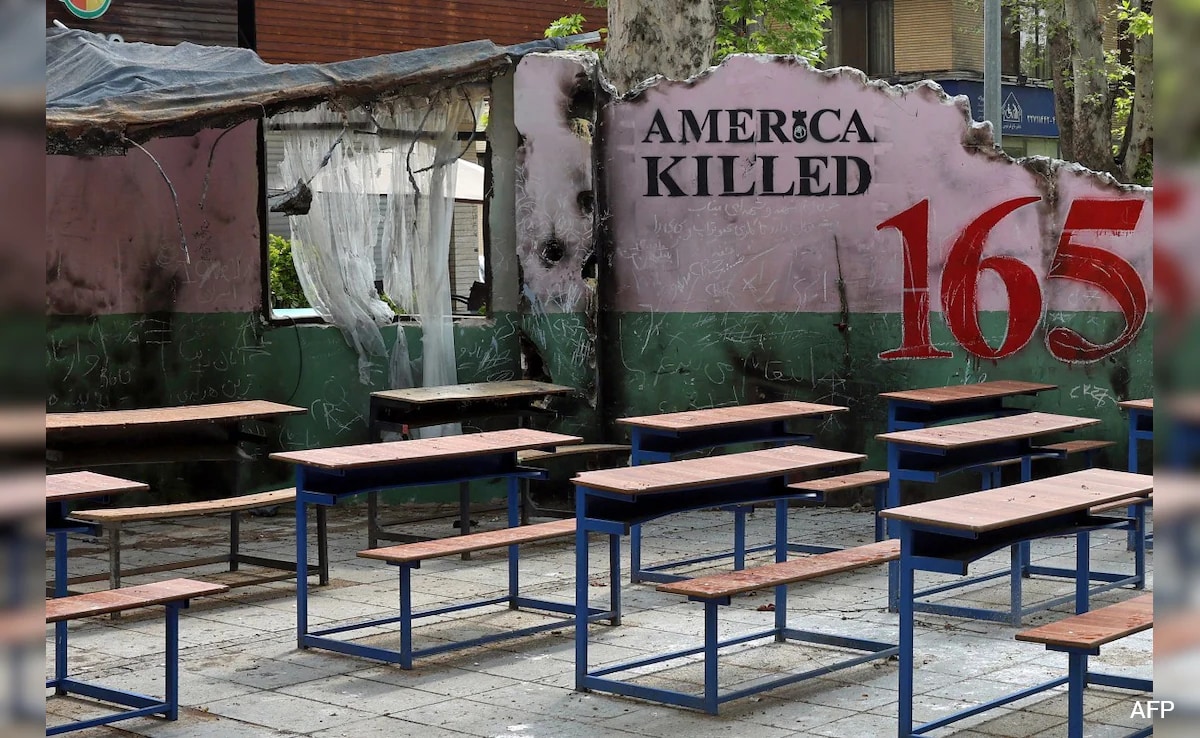
When the dust of the first two months settled, the ledger revealed a staggering $29 billion hole in the collective pocket of the global economy. That is 16% higher than the most pessimistic projections issued by US analysts. We are no longer talking about the cost of victory or defeat. We are talking about the sheer, runaway velocity of destruction.
The Ghost in the Ledger
To understand how $29 billion vanishes in eight weeks, you have to look past the headlines of troop movements and into the life of someone like Elias.
Elias is a hypothetical logistics manager for a mid-sized shipping firm. He doesn’t wear a uniform. He wears a headset and a look of permanent exhaustion. For Elias, the war didn't start with a declaration; it started with a "Risk Surcharge" notification that landed in his inbox at 3:00 AM.
Suddenly, the route his tankers took through the Strait of Hormuz wasn't just a line on a map. It was a gambling floor. Insurance premiums for a single transit spiked by 400% in a week. That isn't a "strategic cost" to Elias. It’s the reason he had to tell a fruit importer in Marseilles that their entire shipment is now a financial liability.
When we say the war cost 16% more than expected, we are talking about the cumulative weight of a million decisions made by people like Elias. The US estimate likely accounted for the fuel, the munitions, and the payroll of the active duty personnel. What it failed to capture—what it always fails to capture—is the friction of reality.
Think of it like an old engine. You can calculate exactly how much gasoline it needs to run for an hour. But you can’t easily calculate the heat. That 16% is the heat. It is the cost of diverted ships, the sudden scarcity of semiconductors, and the frantic, expensive search for alternative energy sources when the primary taps are threatened.
The Speed of Modern Ruin
War used to be slower. You marched. You dug in. You waited for the spring thaw.
Today, $29 billion moves at the speed of light. A single salvo of defensive interceptors—the kind used to swat away incoming drones—can cost more than the annual budget of a small American town. We are witnessing a terrifying inversion of economics. A drone that costs $20,000 to manufacture requires a $2 million missile to stop.
Every time a siren wails in a city, the meter doesn't just tick; it spins until the numbers blur.
Logicians call this the "attrition of the high-end." The US and its allies operate on a philosophy of technological superiority. We use the best, most expensive tools to ensure the highest probability of success. But when the volume of the conflict exceeds the estimate, that "best" becomes a crushing weight. If you plan to spend $25 billion and you end up spending $29 billion, you haven't just lost $4 billion. You have burned through your reserves at a rate that necessitates a total restructuring of domestic priorities.
Where does that extra 16% come from? It comes from the future. It is pulled from infrastructure projects, from education grants, and from the stability of the currency itself. It is a quiet theft from the next generation to pay for the immediate requirements of a firestorm.
The Human Geometry of $29 Billion
Numbers of this scale are intentionally designed to be incomprehensible. $29,000,000,000. It is a wall of zeros. To make it real, you have to break it down into the things it could have been.
Consider a small hospital in a developing nation, or even a struggling clinic in the Appalachian hills. That $4 billion "miscalculation"—the gap between the estimate and the reality—could have funded the entire global effort to eradicate several preventable diseases. Instead, it was spent on the logistical "overages" of a sixty-day standoff.
Consider the hypothetical family of Sara, living in a city far from the front lines. She doesn't follow the geopolitical nuances of Tehran or Washington. But she knows that her heating bill has doubled. She knows that the price of bread has ticked up for the fourth time this month.
The 16% error in the US estimate is the difference between Sara being able to save for her daughter’s tuition and Sara wondering if they should skip meat this week. This is the invisible stake. The war isn't just fought with lead and steel; it is fought with the standard of living of people who will never see the smoke.
Why the Estimates Always Fail
Bureaucracy loves a spreadsheet because spreadsheets are tidy. They assume that variables will behave.
The US estimate of $25 billion for a sixty-day window was likely a masterpiece of data. It factored in historical precedents from the Gulf War and the invasion of Iraq. But it couldn't factor in the psychological volatility of the market. It couldn't predict how a single viral video of a burning tanker would send oil futures into a vertical climb.
War is not a business transaction. It is a chaotic system.
When the first shot is fired, the "market" of the war zone ceases to be rational. Supply chains don't just "slow down"—they break. Skilled labor flees. Trust, the literal currency of global trade, evaporates. The US analysts looked at the price of the bullets, but they forgot to look at the price of the fear.
The fear is what costs $4 billion.
It’s the cost of a company deciding to move its entire manufacturing base out of a region "just in case." It’s the cost of a central bank raising interest rates to combat the sudden inflationary spike caused by energy shortages. These are the secondary and tertiary ripples that no algorithm has yet mastered.
The Ledger of the Unseen
There is a temptation to look at the $29 billion figure and see it as a victory for one side or a defeat for another. That is a mistake.
In the cold language of economics, this is a "deadweight loss." It is wealth that has been deleted from the world. It didn't go into a new invention. It didn't build a bridge. It was converted into heat, light, and scrap metal in the desert.
The fact that the cost exceeded the estimate by 16% suggests that our understanding of modern conflict is dangerously outdated. We are still estimating the cost of 20th-century wars while fighting 21st-century ones. The interconnectedness of our world means that a tremor in the Middle East is an earthquake in the global supply chain.
We can no longer afford to treat these "overages" as rounding errors.
Imagine that room again. The one with the blinking cursor. The person staring at the screen finally hits "Enter." The report is filed. The $29 billion is officially recorded. They get up, put on their coat, and walk out into a world that feels exactly the same as it did sixty days ago.
But it isn't.
The air is a little thinner. The margin for error is a little smaller. The world is $29 billion poorer, and the only thing we have to show for it is a deeper understanding of how quickly we can burn through everything we’ve built.
The math doesn't care about the "why." It only cares about the "how much." And as it turns out, the price of the fire is always higher than the cost of the fuel.
The cursor keeps blinking.