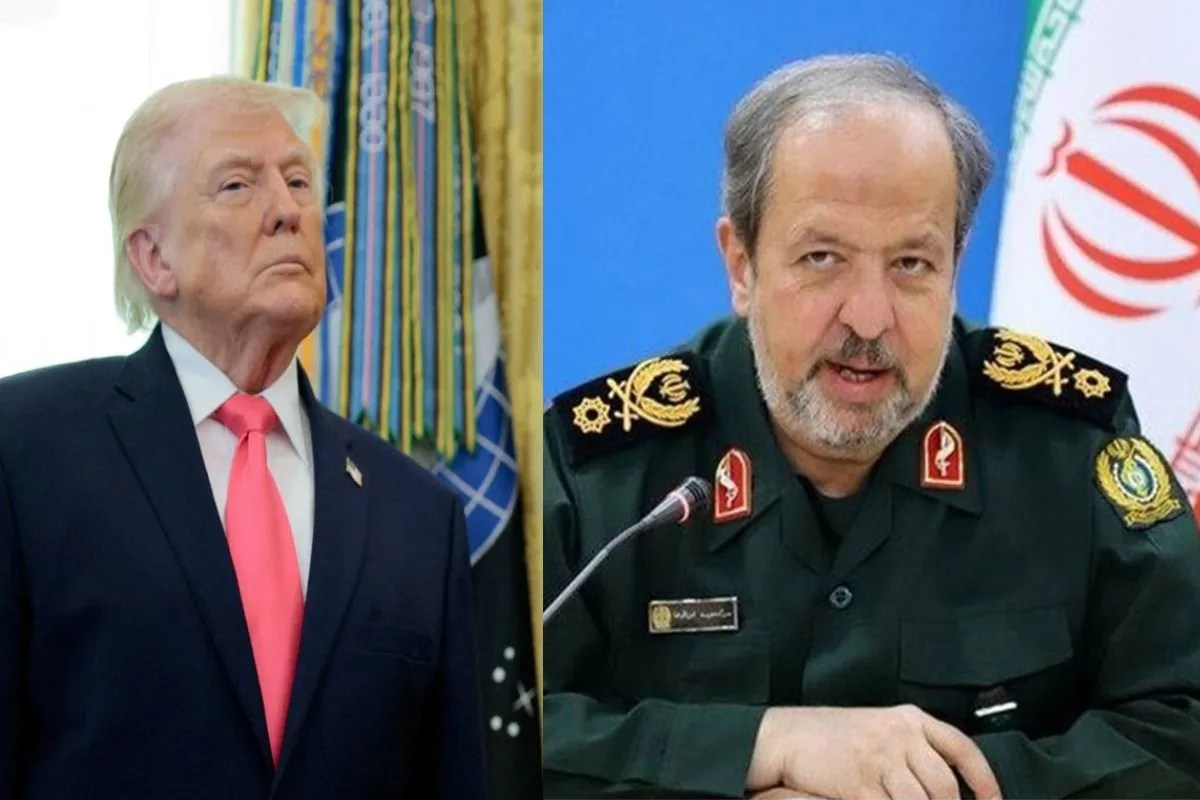
Every time Tehran drops another breathless press release claiming its armed forces stand ready to obliterate American interests, the global media machine treats it like a prelude to Armageddon. Analysts on cable news sweat through their makeup, markets twitch, and defense contractors smile all the way to the quarterly earnings call. It is a predictable, scripted ritual of geopolitical theater.
Stop buying the script.
The lazy consensus in international reporting assumes that every Iranian declaration of readiness signals an impending escalation or a genuine strategic parity. That view mistakes volume for capability. If you actually look at the structural mechanics of modern statecraft, economic gravity, and asymmetric doctrine, Tehran's latest grandstanding is not a warning of an impending strike. It is a desperate smoke screen designed to mask severe internal vulnerabilities and preserve a regime that survives by projecting an illusion of invincibility.
I have watched diplomats and desk analysts lose their minds over routine rhetoric for two decades, treating every defensive parade like the opening salvo of a world war. They miss the mundane, brutal math of national power. Let us break down why the standard narrative is fundamentally flawed.
The Myth of Symmetric Deterrence
The core error in mainstream analysis is assuming Iran fights on Washington's terms. When state media in Tehran boasts about missile inventories or naval drills, commentators map those assets onto a conventional superpower framework. That is a category error.
Iran does not possess a peer military. Its air force flies modernized versions of American hardware bought during the Nixon administration, held together with aftermarket duct tape and domestic engineering workarounds. Its conventional armor is obsolete against modern composite armor and aerial surveillance. To call this a force ready to challenge the United States globally is to fundamentally misunderstand what military readiness means in the twenty-first century.
Yet, Washington's own defense establishment quietly feeds this narrative. A bloated threat assessment justifies budget increases, aircraft carrier deployments, and regional posture adjustments. Both sides benefit from the fiction of an impending clash. Tehran gets domestic legitimacy by painting itself as David facing the American Goliath, while the Pentagon secures funding by keeping a reliable bogeyman alive in the budget committees.
Asymmetric Realities Versus Public Posturing
When Tehran says it can respond to any threat, it is not talking about carrier groups trading broadsides in the Persian Gulf. It relies entirely on a proxy network—the so-called Axis of Resistance—and asymmetric disruption tactics like fast-boat harassment, cyber operations, and drone swarms.
These tactics inflict political and economic friction, but they are defensive mechanisms dressed up as offensive prowess. They are the weapons of a secondary power that knows a direct, conventional engagement would result in the systematic dismantling of its command infrastructure within seventy-two hours.
Consider the Strait of Hormuz. For decades, headlines have warned that Iran will mine or close this vital shipping lane, choking global energy supplies. Imagine a scenario where Tehran actually attempts a total closure. Within forty-eight hours, the naval assets stationed in Bahrain and the broader region would clear the lanes with surgical efficiency, while secondary economic sanctions would tighten into a structural noose that the domestic Iranian economy simply cannot absorb. The leadership in Tehran knows this math better than anyone. That is why the threats remain verbal.
The Economic Anchor Weighing Down the Arsenal
You cannot separate military readiness from macroeconomic health. A nation suffering from chronic inflation, crumbling civil infrastructure, and widespread public dissent cannot sustain a high-intensity modern conflict.
The Iranian rial has endured historic collapses, and public subsidies for basic goods shrink year by year. When the state funnels billions into missile development and regional proxy funding while domestic water supplies dry up, it creates a fragile powder keg at home. The primary threat to the regime in Tehran has never been an aircraft carrier sitting in the Arabian Sea. It is the university student in Tehran, the merchant in the bazaar, and the oil worker striking over unpaid wages.
When state media screams about American aggression, it is an explicit deflection strategy. It is designed to redirect popular anger outward, demanding that citizens rally around the flag precisely because the flag is wrapped around a failing domestic economy.
Dismantling the Manufactured Crisis
If you want to understand the Middle East, stop listening to what governments say when they are playing to their home audiences. Look at capital flows, logistical supply chains, and quiet back-channel diplomacy.
The real policy challenge facing Western intelligence is not an imminent Iranian blitzkrieg. It is managing the slow-motion decay of a regional player that is dangerous precisely because it is cornered, erratic, and reliant on low-level provocation to stay relevant.
Treating every press release from Tehran as an existential declaration grants them an inflated leverage they have not earned. Real power does not need to scream its readiness from every rooftop. It speaks through stability, economic depth, and institutional resilience—qualities that are conspicuously absent from the current equation in Iran.
The next time a headline warns that Tehran is ready to answer every threat, remember what is actually happening behind the curtain. It is not the prelude to war. It is the sound of a regime whistling past the graveyard of its own economic reality.