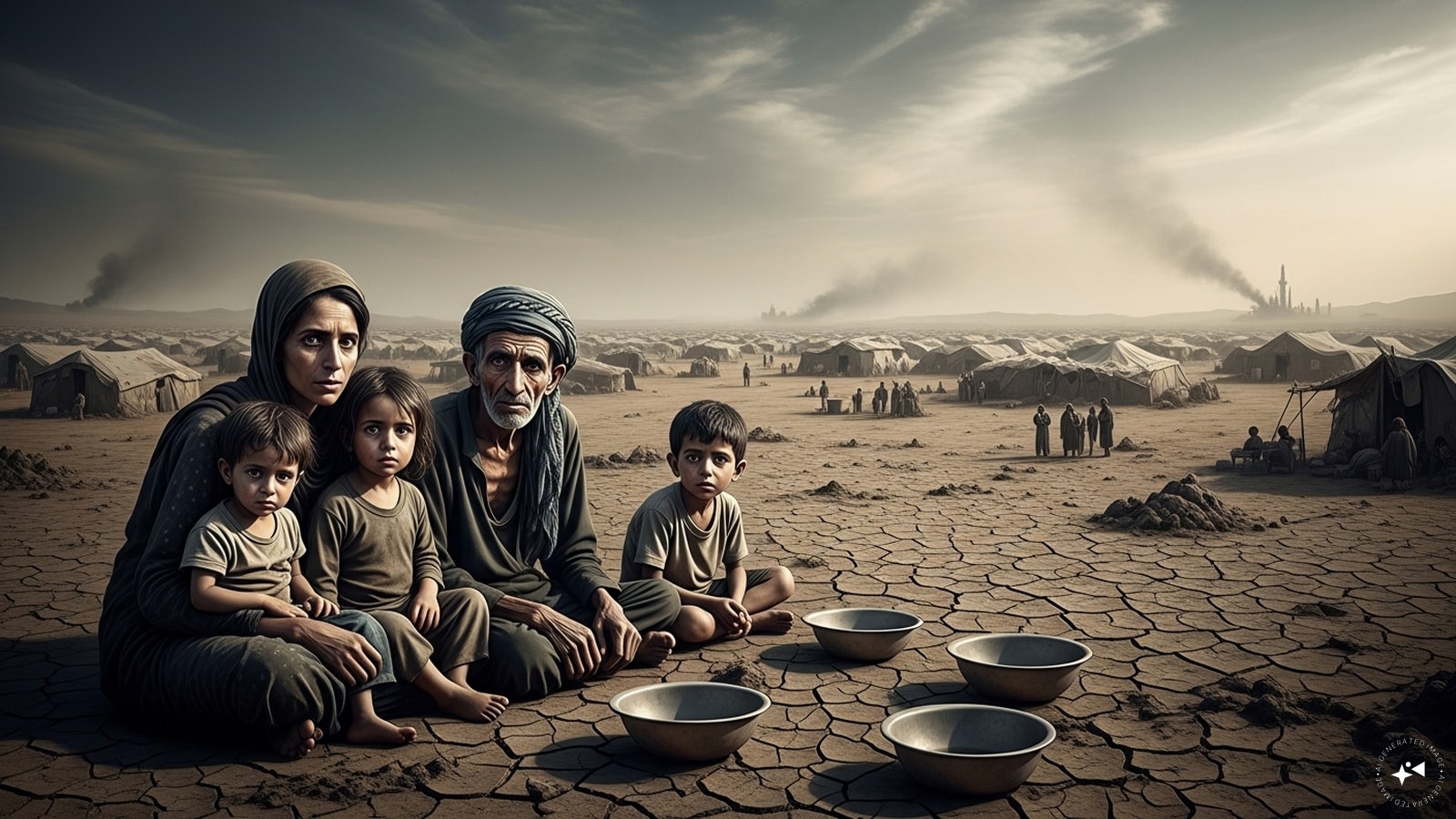
When a bomb drops in the Middle East, a family in East Africa stops eating. It sounds like a dramatic exaggeration, but it is the cold reality of global economics.
The ongoing war involving Iran, Israel, and the United States has triggered a catastrophic ripple effect. According to a grim report from the UN World Food Programme (WFP), the conflict is pushing an additional 45 million people globally into acute hunger. The terrifying part is that the hardest-hit communities aren't even near the battlefield. They are thousands of miles away, completely disconnected from the geopolitical chess match, yet paying for it with their lives.
The Hidden Connection Between Fuel Prices and Dinner Plates
Most people assume wartime hunger only happens where troops are marching. That is a massive misconception. The true villain for global food security right now is the economic shock wave traveling through trade routes.
When the war erupted, the immediate closure of the Strait of Hormuz—the vital corridor where a quarter of the world's fertilizer and a massive chunk of global oil passes through—sent energy markets into a tailspin. Brent crude soared well past $100 a barrel earlier this year. While energy prices have dipped slightly since then, they remain roughly 30% higher than their prewar average.
So, how does expensive oil translate to an empty stomach?
In the world's poorest nations, families already spend 100% of their meager income just trying to buy basic staple foods. They have zero financial cushion. When oil prices spike, shipping costs surge. WFP's own operational transport costs jumped 18% almost overnight. Local merchants have to raise their prices to cover the fuel it took to bring grain to the market.
When the price of bread goes up by 30%, a vulnerable family cannot just dip into savings. They simply eat 30% less. They skip meals. They starve.
Where the Blow Hits Hardest
The WFP recently ran an intense, focused analysis on three highly vulnerable countries to see exactly how this conflict spills over. The numbers are staggering.
- Somalia: An additional 2.5 million people are now struggling to meet basic food needs.
- Afghanistan: An extra 2.3 million people have been pushed over the edge into severe hunger.
- Sri Lanka: Another 1.3 million people can no longer afford standard daily nutrition.
Consider Afghanistan for a moment. The country was already dealing with the world's worst malnutrition crisis. The WFP can currently support only one out of every four acutely malnourished Afghan children. Now, millions more are joining the breadlines because of a war on a different side of the continent.
Logistics have become a nightmare. Carl Skau, the WFP’s acting executive director, revealed that a massive shipment of 85,000 tons of food aid meant for Afghanistan got stuck at the Pakistani border for months. It had to be rerouted to Dubai, got trapped there when the Iran war started, and finally had to travel a bizarre circuitous route through Turkey, across the Caspian Sea, and through Turkmenistan. It arrived seven months late. In a famine, seven months is a lifetime.
The Fertilizer Time Bomb
The crisis isn't just about the immediate price of grain today. It is about what happens to the crops of tomorrow.
Because the Strait of Hormuz is at a virtual standstill, global fertilizer distribution is broken. This supply crunch hit exactly as sub-Saharan Africa entered its crucial planting season.
Without fertilizer, crop yields drop drastically. Farmers harvest less, local supply plummets, and food prices climb even higher next season. It is a compounding disaster. We are essentially watching a slow-motion food security time bomb tick down, and even if the Middle East conflict de-escalates tomorrow, the agricultural damage is already done for the year.
Taking from the Hungry to Feed the Starving
The timing of this war could not be worse for humanitarian organizations. The surge in global need is happening right as major Western governments are slashing their aid budgets.
Last year, global funding for the WFP dropped by nearly 40%. The United States, historically the largest donor to global food aid, cut its contributions by more than half. The Trump administration specifically cut off emergency food funding to hot spots like Yemen and Afghanistan, forcing the WFP to lay off 5,000 staff members.
This leaves humanitarian workers facing impossible, heartbreaking moral dilemmas every single day.
"We take from the hungry to give to the starving," Skau recently stated. "That's the reality."
To keep people alive in catastrophic, active famines like Sudan and Gaza, the agency has to completely cut off food rations for millions of other people who are desperately hungry but not quite on the verge of immediate death. It is a horrific triage system.
Immediate Steps to Protect Your Supply Chain and Support Relief
If you manage a business reliant on agricultural imports, or if you are looking for direct ways to mitigate this global crisis, sitting on your hands isn't an option.
First, diversify your sourcing immediately. Relying heavily on fertilizer or grain that touches Middle Eastern transit points is a massive liability. Look toward localized or regional suppliers, even if the upfront contract costs look slightly higher. The predictability is worth the premium.
Second, if you have the means to support humanitarian relief, direct your capital where it can bypass state-level political gridlock. Focus contributions on flexible, unearmarked funding for agencies like the World Food Programme or local non-governmental organizations working directly on the ground in Somalia and Afghanistan. Unearmarked funds allow logistics teams to shift resources instantly to pay for the surging fuel costs required to bypass blockaded shipping lanes. High shipping costs are stopping aid from moving, and cash liquidity is what keeps those trucks rolling.
.jpg)