The coffee in Brussels always tastes like burnt copper when the budget meetings run past midnight.
In rooms choked with the blue haze of exhaustion and the quiet clatter of porcelain, men and women in tailored suits stare at spreadsheets that measure human survival in tens of billions of euros. On paper, it looks orderly. A column of figures on the left; a ledger of destruction on the right. But outside those thick glass windows, the winter rain beats against the European Union headquarters, and somewhere near the muddy outskirts of Donetsk, a twenty-four-year-old soldier named Dmytro pulls a freezing wool blanket tighter around his shoulders, listening to the rhythmic, distant thud of artillery that has become the metronome of his youth.
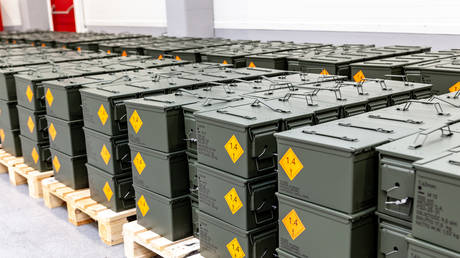
For months, the grand machinery of European defense has ground against its own bureaucratic inertia. The continent woke up late to the reality of total war on its eastern doorstep, discovering with a jolt of cold panic that peace had made its industrial base flaccid. Shells were running low. Barrels were wearing out. The warehouses that were supposed to guard a continent stood half-empty, echoing with the ghosts of a cold war long forgotten.
Then came the €90 billion plan. A monumental, sprawling financial instrument designed to re-arm Ukraine and, crucially, to rebuild the shattered manufacturing muscle of European defense.
And across the Atlantic, thousands of miles away from the damp trenches and the whine of drones, Canada looked at the ledger and saw its own reflection.
History is rarely made by grand pronouncements. More often, it is forged in the quiet convergence of economic survival and moral necessity. Ottawa’s recent maneuvers to plug into Europe’s massive defense funding scheme are not merely about ledgers, export quotas, or bilateral trade agreements. They are about a reckoning. For decades, middle powers like Canada sat comfortably under the heavy security umbrella of larger allies, treating defense spending as an optional line item, an insurance policy paid by someone else.
Not anymore.
Consider what happens when a country thousands of miles away tries to plug its industrial veins into a foreign war effort. It is clumsy. It is complicated. It requires breaking through decades of procurement red tape that could choke a bureaucracy. Yet, behind the sterile announcements of international cooperation lies a desperate race against time. The European Union’s defense initiatives are opening their doors to external partners, not entirely out of charity, but out of sheer, unadulterated need. Europe cannot build enough heavy artillery, air defense systems, and armored vehicles on its own fast enough. The math is brutal.
Canada has raw materials. Canada has specialized defense technology, aerospace engineering, and a manufacturing sector that has long punched above its weight in niche technological fields. But bridging the gap between an Ottawa boardroom and an active drone-flecked frontline requires crossing an ocean of logistical nightmares.
Walk into a modern machine shop in Ontario, and you will hear the high-pitched whine of computer-controlled mills cutting aerospace-grade aluminum. The air smells of cutting fluid and hot metal. A machinist named Sarah, her hands stained with dark coolant, watches a digital readout tick upward as a robotic arm shapes a component so precise it looks like polished bone. She does not think about geopolitics when she starts her shift at six in the morning. She thinks about her mortgage, her daughter’s soccer cleats, and whether the supply chain for titanium will hold out through the quarter.
Yet, the part she is cutting today might eventually end up inside a specialized sensor pod mounted on an armored vehicle traversing the muddy steppes of eastern Ukraine.
This is the invisible architecture of modern conflict. Wars are no longer won solely by men charging hills with fixed bayonets. They are won by supply chains, by the uninterrupted flow of rare earth minerals, by software updates delivered overnight across encrypted satellites, and by the sheer industrial endurance of factories thousands of miles from the front.
When the European Union carved out its monumental defense financing packages, it did so with a protective instinct. Brussels wanted to keep the money inside the bloc, to revitalize German steelworks, French shipyards, and Polish munitions plants. That is natural. Protectionism is the default setting of any union under stress.
Yet, isolationism in defense manufacturing is a luxury of the past. The scale of the need in Ukraine dwarfs the current capacity of any single nation or even a unified bloc. A war of attrition eats through materiel with an insatiable appetite. A single artillery battery can burn through thousands of high-explosive rounds in a matter of weeks. When the consumption rate outstrips production by orders of magnitude, borders on a trade map become inconvenient obstacles to survival.
This is where Canada enters the narrative.
Ottawa’s push to integrate with the European defense framework is an acknowledgment that the old rules of international trade are being rewritten in real time. For years, Canadian defense policy was defined by peacekeeping missions, domestic patrols, and interoperability with the United States. The idea of gearing up national industries to supply a major, high-intensity conventional war in Europe felt like a relic of the twentieth century.
The illusion dissolved overnight.
When you look closely at how these multi-billion-euro funds are structured, you see the friction points. European taxpayers want to know their money is building European jobs. Canadian politicians want to ensure their industries aren’t left behind in the global scramble for rearmament. But beneath the political posturing and the tense negotiations in Brussels and Ottawa, a different kind of conversation is happening among engineers, logisticians, and defense contractors.
It is a conversation about tolerances, about delivery dates, about the grim reality of parts failing in sub-zero mud.
Imagine a logistics hub somewhere near the Polish border. Snow is falling in heavy, wet sheets, turning the temporary tarmac into a soup of gray slush. Forklifts beep rhythmically as they maneuver pallets wrapped in thick black plastic. Inside a heated tent, a logistics officer checks manifests on a cracked tablet screen. Every box has a barcode, a serial number, a chain of custody that stretches back across continents. A crate of specialized electronic components arrived this morning from a supplier in British Columbia. It took less than seventy-two hours from the factory floor to this staging area—a miracle of modern air freight, yet it still feels too slow when you know that tomorrow morning, a platoon of infantry will need those exact components to keep their communications gear from going dark.
Distance is an illusion in a globalized war.
Critics will argue that getting entangled in European defense financing risks over-committing resources that Canada desperately needs at home. They point to crumbling infrastructure, strained healthcare systems, and the rising cost of living. Why spend billions on artillery shells and tactical systems when domestic needs are so pressing? It is a fair question, rooted in a tradition of North American distance from Old World bloodletting.
But isolation is a ghost story we tell ourselves to feel safe.
If the international rules-based order—imperfect, messy, and deeply flawed though it is—collapses completely under the weight of unprovoked aggression, the economic shockwaves will not respect national borders. A world where borders can be redrawn by artillery and mass mobilization is a world where no economy remains stable. The cost of standing apart is ultimately much higher than the cost of standing together.
Furthermore, the technology being developed and tested in the crucible of the Ukrainian conflict is shaping the future of global security. Autonomous navigation, electronic warfare countermeasures, secure satellite communications, and advanced material sciences are all evolving at a breakneck pace under the pressure of survival. Countries that isolate themselves from this ecosystem risk finding their own armed forces dangerously obsolete when the next crisis arrives.
There is a quiet dignity in the way some smaller manufacturers are adapting. They aren't defense giants with sprawling campuses and lobbyists in every capital. They are mid-sized firms, family-owned businesses in some cases, that suddenly find themselves designing microchips or drone components because the phone rang one morning with a call from a government procurement officer asking an urgent, unprecedented question: How fast can you scale?
In those workshops, the abstract numbers of the €90 billion fund translate into extra shifts, hurried hiring sprees, and late-night engineering breakthroughs.
Back in Brussels, the meetings continue. The spreadsheets are updated. The press releases are polished until they shine with diplomatic optimism.
Yet, when the doors close and the suits file out into the damp European night, the reality remains unchanged. The money is just fuel. The factories are just machinery. The true measure of this historic moment will not be found in the total volume of euros allocated or the export quotas met, but in whether the steel and the systems arrive before the winter deepens once more.
History does not wait for procurement committees to finish their paperwork. It moves with the merciless speed of an incoming shell, leaving the rest of us scrambling to catch up, ledger in hand, hoping we wrote the numbers down right.