The air smells of JP-5 fuel, ozone, and boiling seawater.
On the flight deck of a Nimitz-class aircraft carrier, silence does not exist. There is only a spectrum of noise: the low, vibrating thrum of four nuclear reactors deep in the ship's belly, the sharp snap of salt wind over the bow, and the sudden, deafening roar of an afterburner tearing the night sky open.
Standing on that deck is less like visiting a workplace and more like standing inside a living, breathing machine that hates you. Every square inch is slick with grease and hydraulic fluid. The wind across the bow strips the breath right out of your lungs. And hovering over every single operation, every launch, every recovery, and every calculation is a brutal, unyielding tyrant: math.
Specifically, the math of fuel.
For nearly a century, naval aviation has lived under a severe geometric curse. A carrier air wing is an apex predator, but it has a very short leash. Its primary strike fighters—the magnificent, multi-million-dollar jets that form the tip of the nation's spear—suffer from a quiet, crippling vulnerability. They burn through their propellant at terrifying rates. To push deep into contested territory, strike fighters need to be refueled in mid-air.
And for decades, the Navy solved this problem by doing something absurdly wasteful. They took their best strike fighters, loaded them down with external fuel tanks, and used them as flying gas stations.
Imagine taking a Ferrari, filling the passenger seat and trunk with jerry cans of gasoline, and driving it ahead of a convoy just to pour fuel into a delivery truck. It is inefficient. It is punishing on airframes designed for dogfights and precision bombing. Every hour a Super Hornet spends leaking fuel into another fighter's drogue basket is an hour its airframe life is ticking away, strained by the relentless G-forces of carrier catapult launches and arrested landings. The deck crew calls it buddy refueling. The pilots call it a necessary evil.
The strategy worked, but it was a trap. It capped the operational reach of the carrier strike group. It forced floating cities worth billions of dollars to sail closer to danger than they ever wanted to go, simply because their planes couldn't reach deep enough inland and make it back without a drink.
Then came the phantom.
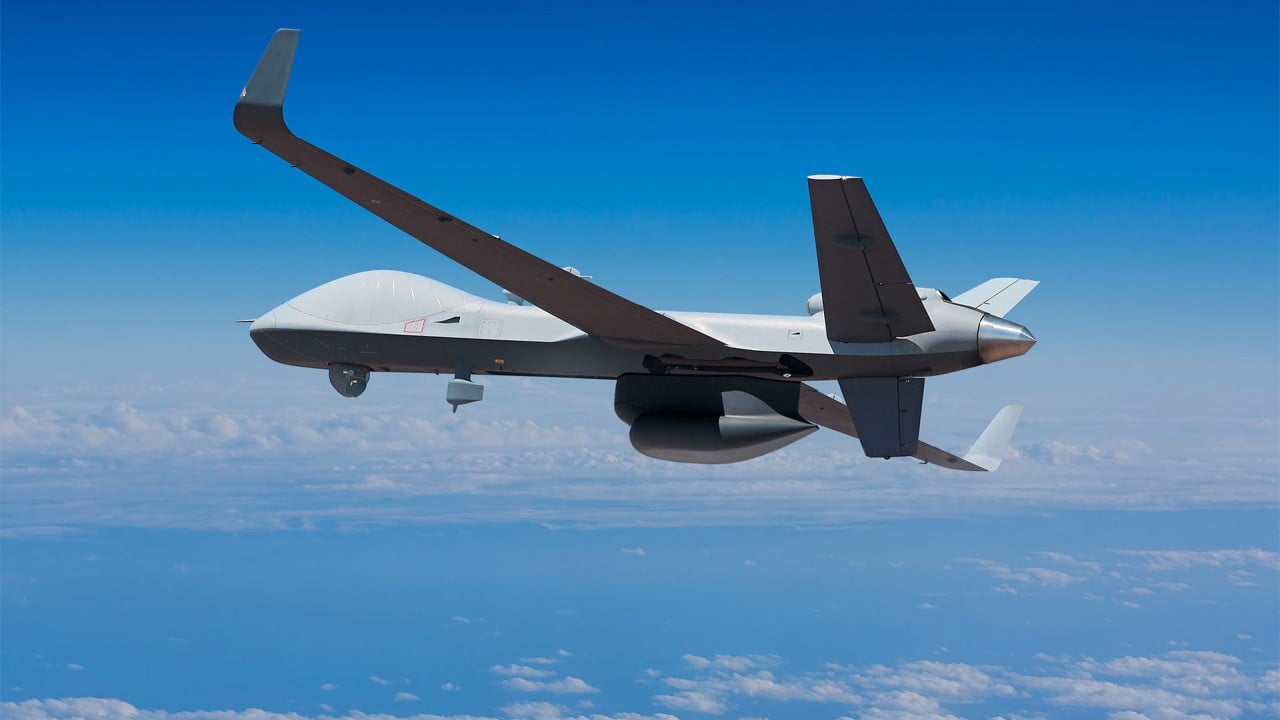
Deep inside a nondescript hangar in St. Louis, away from the salt spray and the roar of the sea, a different kind of aviation history was being quietly written. Engineers at Boeing were building something that looked less like a fighter jet and more like an aquatic creature from the deep ocean floor. It had a sleek, hunched fuselage, a high-aspect-ratio wing designed for long, fuel-efficient loiters, and a complete absence of a cockpit.
There was no glass canopy. No ejection seat. No oxygen mask. Just banks of fiber-optic cables, redundant flight control computers, and an internal fuel cell cavernous enough to quench the thirst of an entire squadron.
This was the MQ-25 Stingray.
When the U.S. Navy officially awarded Boeing the production contract for the carrier-based drone tanker, the headlines in defense journals were dry and corporate. They spoke of low-rate initial production milestones, fiscal year appropriations, and baseline cost curves. They treated it like any other bureaucratic procurement win.
They missed the entire point.
This was not just another contract. It was the moment naval aviation quietly severed its umbilical cord.
To understand why this matters, you have to watch a carrier recovery at three o'clock in the morning. The sea is a black, churning void. The ship's island is a monolithic shadow blotting out the stars. A pilot descending toward that deck is flying into a cave. They are tracking the optical landing system, fighting fatigue, vestibular disorientation, and the sickening realization that a mistake means slamming a multi-ton aircraft into a wall of solid steel.
Now, imagine doing that while nursing a jet that is practically vibrating apart from structural fatigue because it spent the last four hours hauling heavy fuel pods through violent jet streams.
The MQ-25 removes that burden from the human mind and the human machine.
Uncrewed aviation is often sensationalized in the media as weaponized autonomy—drones hunting targets in distant skies with cold algorithmic precision. But the Stingray is something radically different. It is a beast of burden. It is an industrial workhorse built with wings. It is designed to launch off a catapult, climb to altitude, circle quietly in a predetermined orbit hundreds of miles away from the carrier, and wait for thirsty fighters to come knocking.
When a weary Super Hornet approaches from the dark, low on fuel and miles from home, it doesn't look for a human-piloted tanker with a buddy-poker waving a green light. It connects with a machine whose only purpose in existence is to give.
Building a drone that can fly autonomously is one thing. Building a drone that can survive the violent, corrosive, metal-fatigue nightmare of an aircraft carrier flight deck is an engineering odyssey of staggering proportions.
A modern aircraft carrier is arguably the most hostile environment on earth for sensitive electronics. The air is saturated with salt. The deck moves in three dimensions simultaneously, pitching, rolling, and heaving beneath the weight of ocean swells. The electromagnetic interference from onboard radars, communication arrays, and nuclear propulsion is staggering. Hydraulic fluid, jet exhaust, and soot coat every surface.
When Boeing's engineering teams set out to design the Stingray, they had to solve problems that had never been encountered in aviation history. How do you fold wings automatically in a confined hangar bay without a human pilot verifying the clearance? How does an uncrewed aircraft taxi across a deck crowded with shouting flight deck personnel, spinning propellers, and roaring jet blasts, guided only by hand signals from eighteen-year-old sailors known as yellowshirts?
The answer required a profound shift in how machines and humans share physical space.
The Stingray does not replace the deck crew; it integrates with them. It relies on deck-mounted optical tracking systems, wireless deck-control units, and advanced autonomous taxiing algorithms that allow it to read human body language and hand gestures. When a yellowshirt motions for the drone to turn left, the machine responds with the exact, measured creep of a seasoned taxi driver.
During early flight tests, skeptics wondered if an uncrewed tanker could handle the chaotic choreography of carrier integration. Can a computer truly understand the instinctive, split-second decisions made by a flight deck officer when a sudden squall hits the ship? Can a drone adapt when a catapult fails mid-launch cycle?
The answer arrived incrementally, flight by flight, test by test.
The prototype took to the skies, proved it could dock with a Navy F/A-18 mid-flight, transferred thousands of pounds of fuel while flying at high sub-sonic speeds, and then navigated the complex approach back to a moving carrier deck. It proved that autonomy at sea is not just about flying straight lines; it is about situational fluidity.
Winning the production contract means the experimentation phase is over. The blueprint has graduated to the assembly line.
In the grand sweep of military history, true revolutions in warfare are rarely loud. They do not arrive with the dramatic explosion of a new weapon or the sudden shock of a surprise invasion. They arrive in the quiet adjustments of logistics. They arrive when someone figures out how to extend the reach of an army by fifty miles, or how to keep a ship at sea for an extra week without pulling into port.
The MQ-25 does something extraordinary: it gives the aircraft carrier its wings back.
By taking over the refueling mission, the Stingray instantly frees up an estimated twenty to thirty percent of the carrier air wing's strike fighters. Think about that for a moment. That is not just a statistical upgrade. That is the equivalent of adding an entirely new deck of aircraft to the fleet without having to build a new ship.
Suddenly, the strike fighters can do what they were actually built to do. They can carry more ordnance. They can fly farther inland. They can loiter over a crisis zone longer. They can project power across vast maritime expanses like the Western Pacific, where distances are measured in thousands of miles of empty, unforgiving blue water.
The geopolitical implications are profound, but on the deck of the ship, the changes are intensely personal.
Ask any veteran maintainer what it takes to keep a carrier air wing flying through a six-month deployment. They will tell you about bruised knuckles, twelve-hour shifts spent crawling inside fuel tanks with flashlights, and the constant, crushing anxiety of fatigue. They will tell you about the planes that came back with their airframes warped by the strain of missions they were never quite optimized to fly.
When the Stingray finally deploys operationally aboard a carrier strike group, those maintainers will have one less impossible demand placed upon their exhausted shoulders.
Of course, the transition will not be without friction. Sailors are a notoriously superstitious and traditional tribe. They trust the steel they can touch, the pilots they can share a cup of coffee with in the mess decks, and the mechanical constants of cables and hydraulics. Trusting an autonomous creation of artificial intelligence and advanced aerodynamics to taxi within feet of multi-million-dollar fighter jets requires a cultural leap.
Yet, trust is earned through repetition. Once the deck crews see the iron phantom slip effortlessly into its designated parking spot, fold its massive wings with mechanical precision, and prepare for its next sortie without complaint or fatigue, the skepticism will melt away.
Technology at sea has always followed a brutal Darwinian filter. If it is too fragile, the salt air destroys it. If it is too complex, a sleepless sailor fixes it with a wrench or throws it overboard. If it doesn't pull its weight, it is abandoned.
The MQ-25 survived that filter before it ever touched a flight deck.
As the production lines spin up and the first operational airframes roll out toward the flight lines, a quiet transformation is taking place across naval aviation. The horizon is expanding. The leash is getting longer.
Somewhere out in the middle of the Pacific, beneath a sky choked with salt and storm clouds, a carrier turns into the wind. The steam catapults hiss, ready to hurl the future into the air. And this time, when the strike fighters launch into the dark to chase the horizon, they won't have to carry their own weight. The phantom will be waiting for them in the quiet dark, keeping watch over the vast, lonely sea.