Warfare on the roof of the world has a distinct geometry. When your frontier is etched across jagged mountain passes and oxygen-starved ridges where valleys drop away into absolute nothingness, heavy armor loses its traditional dominion. Tanks slide, struggle, and choke on the thin air. For decades, the defense of these high-altitude borders relied on old mathematics: mass, fortified concrete emplacements, and the grim calculus of infantry holding a line against mechanized columns rolling through the passes below.
Then the geometry shifted. Discover more on a related topic: this related article.
The recent signing of a Letter of Offer and Acceptance between the Indian Army and the United States for the FGM-148 Javelin anti-tank guided missile system is more than a line item in a defense budget. Valued initially around $45.7 million for a targeted tranche of systems and command launch units, this acquisition marks a psychological and tactical pivot. It tells a story about how modern nations prepare for conflicts they hope will never materialize, putting a weapon known for its brutal efficiency directly into the hands of infantrymen stationed where trucks cannot tread.
To understand why this specific shoulder-fired tube carries such heavy symbolic and strategic weight, you have to picture the alternative. Additional journalism by Reuters delves into related perspectives on this issue.
Imagine a young infantry soldier—let us call him Rifleman Vikram—pinned behind an outcrop of shale at fourteen thousand feet. Below him, the engine roar of an enemy mechanized column reverberates up the gorge. In an older era, Vikram’s defense would involve tethering himself to heavy, wire-guided hardware or praying that artillery fire coordinates arrived before the armored vehicle crested the ridge. He would have to stay exposed, tracking the target manually, hand shaking against the cold, praying the guidance wire does not snap in the howling mountain wind.
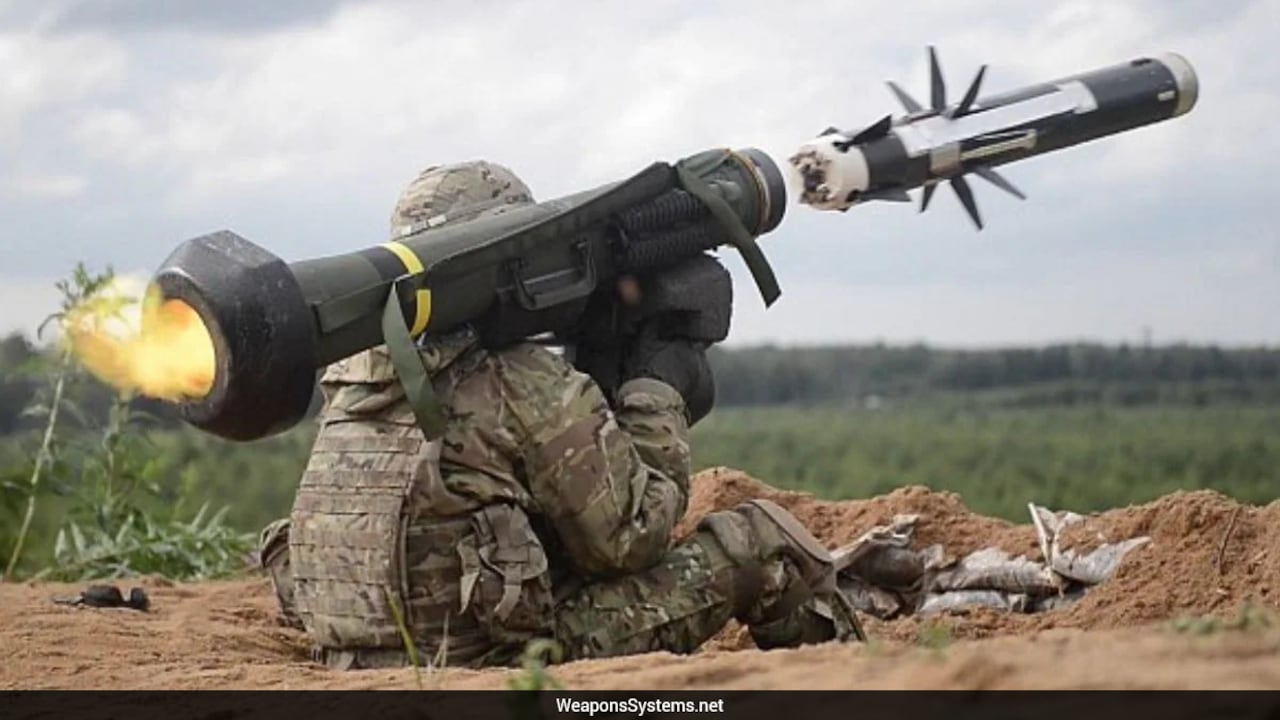
The Javelin rewrites that desperate script through a principle military engineers call fire-and-forget.
A complete system weighs roughly fifteen kilograms, split between a disposable launch tube and a reusable Command Launch Unit equipped with advanced thermal imaging. Vikram places a crosshair over the distant silhouette of a tank glowing white-hot on his thermal screen. He pulls the trigger.
What happens next is governed by physics and microprocessors, not human nerves. The missile utilizes a soft-launch mechanism—expelling itself safely from the tube before the main rocket motor ignites, a vital safety feature preventing a back-blast from incinerating a soldier trapped inside a bunker or a rocky crevice. Once clear, an imaging infrared seeker locks onto the thermal signature of the target.
Vikram does not need to stay put. He does not need to track the vehicle's movement, maintain a laser designator, or expose himself to incoming machine gun fire. The moment the missile clears the tube, he can roll backward into cover, pack up his launch unit, and vanish into the rocks before the enemy crew even realizes they have been hunted.
This anonymity is the true currency of modern infantry survival. The missile climbs in an arched top-attack trajectory, soaring above the thick frontal composite armor of a main battle tank before plunging vertically downward to strike the thin, vulnerable steel of the vehicle's roof. It turns multi-million-dollar armor into scrap from miles away.
While the initial procurement—featuring over a hundred missile rounds and lightweight command launch units—serves as an immediate, emergency-window infusion of firepower, the invisible stakes of this agreement reach far beyond a single arms contract. This is a bridge between two massive defense ecosystems. Talks between New Delhi and the Javelin Joint Venture—the partnership between Lockheed Martin and RTX—point toward an eventual horizon of domestic co-production.
For India, the ambition has long moved past buying off the shelf. The goal is manufacturing capability, building an indigenous industrial ecosystem where these sophisticated imaging seekers and flight control systems can eventually be assembled on home soil. It is the difference between being handed a tool and being given the blueprint to forge your own anvil.
When the snows melt across the northern passes and the wind cuts through the tactical gear of the patrols scanning the horizon, the silence is absolute. But beneath that quiet lies an unyielding deterrent. The iron tube resting on the soldier's shoulder is a quiet promise that the high ground has a new, unyielding guardian.