The strategic calculus in the Middle East has moved beyond mere containment. Recent diplomatic communications between Jerusalem and Washington indicate that Israel is now prepared to target Iran’s energy infrastructure as a primary objective in any renewed or expanded conflict. This shift represents a departure from the traditional shadow war of cyberattacks and targeted assassinations. By signaling an intent to dismantle the Iranian energy sector, Israel is effectively telling the United States and the global community that the era of measured escalation is over.
Israel’s message to Washington is clear. If the current regional instability crosses a specific threshold, the Israel Defense Forces (IDF) will move to cripple the economic lifeblood of the Islamic Republic. This is not just a threat of tactical strikes; it is a declaration of intent to induce state-level economic paralysis.
The End of the Shadow War Paradigm
For decades, the friction between Israel and Iran operated within a set of unwritten rules. Both sides engaged in "gray zone" warfare—clashes that remained below the level of full-scale conventional war. Israel focused on the "War Between Wars" campaign in Syria, while Iran utilized its network of regional proxies to pressure Israeli borders.
That paradigm was shattered on October 7. The subsequent months of multi-front engagement have convinced the Israeli security establishment that the head of the "snake"—Tehran—can no longer be ignored while its tentacles are fought in Gaza, Lebanon, and Yemen. The threat to destroy Iranian energy facilities is the first public manifestation of this "Octopus Doctrine," where the focus shifts from the proxies to the patron.
Energy infrastructure is the most vulnerable and valuable target within Iran. Unlike underground nuclear facilities, which are heavily fortified and difficult to destroy without specialized bunker-busting munitions, oil refineries, pumping stations, and export terminals are "soft" targets. They are large, flammable, and impossible to hide.
Why Energy Targets Matter Now
The logic behind targeting energy assets is rooted in economic warfare. Iran’s economy is fragile, propped up largely by oil exports that have managed to bypass international sanctions through various "ghost fleet" operations. If these facilities are leveled, the Iranian government loses its primary source of hard currency. Without that revenue, the ability to fund the Revolutionary Guard (IRGC) and regional militias like Hezbollah evaporates.
The Export Bottleneck at Kharg Island
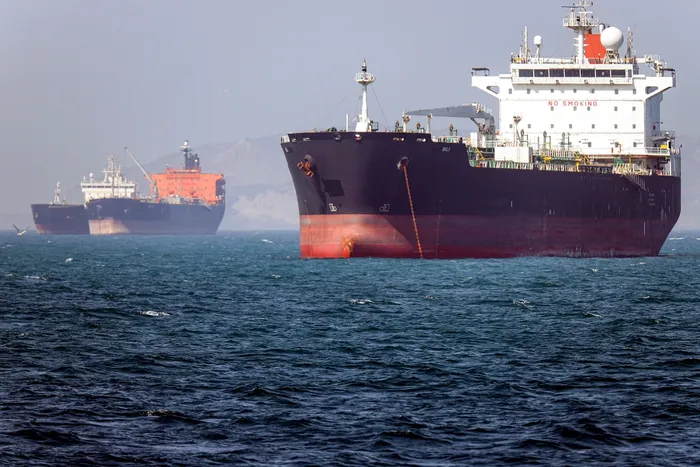
Most of Iran’s oil exports flow through a single point: Kharg Island in the Persian Gulf. Approximately 90% of Iranian crude leaves from this terminal. For Israeli military planners, this represents a single point of failure for the entire Iranian state. A sustained strike on Kharg Island would not just disrupt the oil market; it would effectively bankrupt the Iranian regime overnight.
Washington has historically been hesitant to support such a move. The White House fears the immediate impact on global oil prices, which would likely spike in the wake of such an attack. However, the Israeli position is that the long-term cost of a nuclear-armed Iran or a permanently destabilized Middle East far outweighs a temporary surge in gasoline prices.
A Diplomatic Warning Shot to Washington
By informing Washington of these plans, Israel is performing a complex diplomatic dance. This is as much a message to President Biden’s administration as it is to Supreme Leader Ali Khamenei. Jerusalem is signaling that it will no longer be restrained by American calls for "de-escalation" if it perceives an existential threat.
The timing of this communication suggests that Israel is seeking to gain leverage in ongoing negotiations regarding regional security. It tells the U.S. that if diplomacy fails to push Hezbollah back from the northern border or stop the Houthi attacks in the Red Sea, Israel will take the fight directly to the source of the funding.
The Risk of Regional Contagion
The danger of this strategy is the potential for a "tit-for-tat" energy war. Iran has long threatened to close the Strait of Hormuz, a narrow waterway through which 20% of the world’s oil supply passes. If Israel hits Iranian refineries, Tehran might retaliate by attacking Saudi or Emirati oil fields, or by mining the strait to choke off global supply.
This would drag the United States into the conflict whether it wants to be there or not. The U.S. Navy is committed to maintaining freedom of navigation in the Persian Gulf. If Iran attempts to shut it down, a direct kinetic clash between the U.S. and Iran becomes almost inevitable. Israel knows this. By putting energy facilities on the table, they are forcing the U.S. to take a more active role in neutralizing the Iranian threat before it reaches that breaking point.
Technical Feasibility of the Strike
The IDF has spent years preparing for long-range missions. The acquisition of F-35 stealth fighters and the development of specialized long-range fuel tanks for their F-15 fleet are specifically designed for missions into Iranian airspace.
Iranian air defenses, centered around the S-300 system and indigenous platforms like the Bavar-373, are formidable but not impenetrable. Israeli electronic warfare capabilities have consistently proven capable of blinding or deceiving these systems. In a concentrated strike, the goal wouldn't be to destroy every refinery in the country, but to hit the critical infrastructure—the control rooms and specialized pumping equipment—that cannot be easily replaced due to sanctions.
A single strike on a refinery's distillation unit can take the entire plant offline for months, if not years. These are precision operations, not carpet bombing.
The Internal Iranian Pressure Cooker
Beyond the physical damage, Israel is betting on the internal instability of Iran. The country has been rocked by protests and economic discontent for years. High inflation and a collapsing currency have already pushed the population to the edge. If the lights go out and the fuel runs dry because the government provoked a war, the IRGC may find itself fighting a domestic uprising at the same time it is trying to fend off a foreign military.
This "regime pressure" strategy is a gamble. Historically, external attacks can sometimes cause a population to rally around the flag. However, the Israeli assessment appears to be that the disconnect between the Iranian people and their clerical rulers is now so wide that a massive military failure would lead to collapse rather than cohesion.
The Absence of Red Lines
The most concerning aspect of this development for international observers is the apparent disappearance of "red lines." For years, the red line was nuclear enrichment. Then it was the transfer of precision-guided missiles to Lebanon. Now, the boundaries have blurred.
Israel’s communication to the U.S. suggests that the new red line is the status quo itself. Jerusalem no longer views the "containment" of Iran as a viable strategy. The cost of maintaining a defensive posture against multiple proxies is becoming unsustainable, both economically and socially, for the Jewish state.
The threat to destroy energy facilities is a pivot toward a "decisive victory" mindset. It acknowledges that as long as the Iranian regime has the financial means to export its ideology and its weapons, Israel will never be secure.
Global Economic Implications
While the focus is on the military and political fallout, the economic reality cannot be ignored. The global energy market is already on edge. China, the primary buyer of Iranian oil, would be significantly impacted by a strike on Iranian facilities. This adds a layer of Beijing-led diplomacy to the mix.
If Israel moves forward, it risks alienating China, a country it has tried to maintain functional trade relations with. However, the Israeli security cabinet has shown an increasing willingness to prioritize immediate survival over long-term diplomatic niceties.
The shift in rhetoric indicates that the planning for these strikes is not merely theoretical. It is operational. The target lists are drawn, the pilots are trained, and the diplomatic groundwork—however uncomfortable it may be for Washington—is being laid.
Israel is no longer asking for permission to change the rules of the game. It is informing its allies that the game has already changed. The vulnerability of Iran’s energy sector is now the primary lever in a conflict that is rapidly moving toward a definitive climax.
The Iranian leadership now faces a stark choice. They can continue to push their proxies toward a full-scale regional war and risk the total destruction of their industrial base, or they can find a way to pull back from the brink. The problem is that in the Middle East, pulling back is often perceived as weakness, and weakness is an invitation for further aggression.
By putting the Iranian oil industry in the crosshairs, Israel has simplified the conflict into a question of economic survival. If the tankers stop moving and the refineries stop burning, the Islamic Republic as it currently exists ceases to function. Jerusalem is betting that this reality will force a change in Tehran that years of sanctions and "gray zone" operations could not achieve.
The move marks the end of the era of containment and the beginning of a far more dangerous phase of the conflict. The world is now watching to see if this threat acts as a deterrent or as the first shot in a war that will reshape the energy map of the globe. If the IDF jets eventually take off for Kharg Island, they won't just be dropping bombs; they will be dismantling the financial foundations of an entire regional order.
Jerusalem has signaled its move. The burden of the next step now rests on Tehran and the uneasy mediators in Washington. In this high-stakes environment, the distance between a diplomatic warning and a kinetic reality has never been shorter.