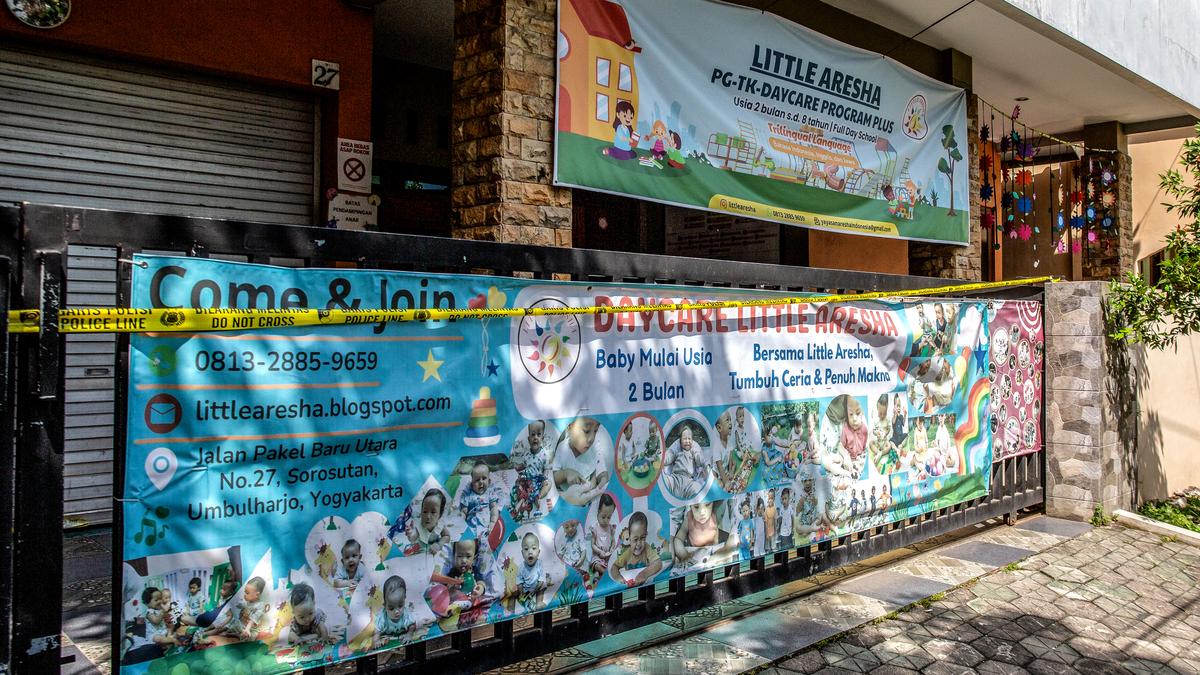
Thirteen arrests in an Indonesian daycare center don't signify a victory. They signify a systemic collapse. The headlines are screaming about "justice" because police charged a dozen-plus staff members for the abuse of toddlers, but this is the easy way out. Charging individuals is a convenient sedative for a public that wants to feel like the problem is solved once the handcuffs click. It isn't.
The "lazy consensus" here is simple: bad people did bad things, and putting them in a cage makes children safe. This perspective is dangerously shallow. If you focus entirely on the cruelty of a few underpaid workers, you ignore the market forces and regulatory voids that make such environments inevitable. We are treating the tumor by putting a Band-Aid on the skin.
The Myth of the Monster
Mainstream media loves the "monster" narrative. It's easy to digest. You look at the grainy CCTV footage of a staff member mistreating a child and you label them a villain. While their actions are indefensible, focusing solely on their morality misses the structural rot.
In high-growth economies like Indonesia, the demand for childcare has outpaced the infrastructure to support it. Parents are forced back into the workforce, and the "daycare" industry has exploded to meet that need. Most of these centers are essentially unregulated parking lots for humans. When you combine high-stress environments, zero training, and poverty-level wages, you don't get a nurturing sanctuary. You get a pressure cooker.
I’ve seen this play out in corporate restructuring for years. If you set up a system where the incentives are skewed—where the goal is maximum occupancy at minimum cost—the human element will always degrade. These thirteen arrests are just the statistical inevitability of a broken business model.
CCTV is a False Security Blanket
The public outcry often demands "more cameras." This is the ultimate red herring. Cameras don't prevent abuse; they merely record it. They offer a retrospective autopsy of a tragedy that has already occurred.
Relying on surveillance is a confession that you don't trust the humans in the room. And if you don't trust them, why are they there? The obsession with digital oversight creates a sterile, high-tension environment that further alienates caregivers from the children. It turns a place of growth into a panopticon.
True safety isn't found in a hard drive. It's found in the ratio of staff to children and the professionalization of the workforce. If a center is running at a 1:15 ratio with staff who haven't had a break in eight hours, a camera won't stop a snap. It will just give the police evidence for the trial next year.
The High Cost of Cheap Care
Let’s be brutally honest about the economics of this scandal. Quality childcare is expensive because labor is expensive. When parents seek out the lowest possible price point, they are indirectly subsidizing the conditions that lead to burnout and abuse.
- Vetting is a luxury. Thorough background checks and psychological evaluations cost money.
- Training is an overhead. Teaching a worker how to manage a screaming toddler without losing their temper takes time and resources.
- Retention is the only metric that matters. High turnover is a massive red flag. If the faces in a daycare change every three months, the children are never safe.
The Indonesian authorities can arrest thirteen people today, but until the cost of entry for opening a daycare includes mandatory, rigorous certification and livable wages for staff, those thirteen seats will be filled by thirteen more people under the same crushing pressures by next week.
Decoupling Punishment from Prevention
People often ask, "How do we stop this from happening again?" The honest answer is one that most people hate: we have to pay more and regulate harder.
The current "People Also Ask" logic suggests that more severe prison sentences act as a deterrent. This is a fallacy. Abuse in these settings isn't a premeditated crime committed by "criminals" who weigh the legal risks. It’s a breakdown of impulse control in a chaotic environment. No one enters a daycare thinking, "I'll hit this child because the sentence is only two years." They do it because the system has stripped them of their humanity and patience.
If we want to protect children, we should stop talking about the police and start talking about the Ministry of Education and the Ministry of Manpower.
- Mandate a 1:4 ratio for toddlers. No exceptions.
- Require a license for every individual employee, not just the facility. - Set a floor for wages that reflects the gravity of the responsibility.
The Accountability Trap
The owners of these facilities often hide behind the "rogue employee" defense. It’s the oldest trick in the book. They claim they had no idea what was happening on the floor.
In any other industry—finance, aviation, medicine—the leadership is held vicariously liable for systemic failures. If a plane crashes because of poor maintenance, the CEO doesn't get to say, "I didn't personally loosen the bolts." Yet, in childcare, we allow owners to walk away while the low-level staff takes the fall.
Charging thirteen workers is a start, but if the owners of that daycare aren't facing the same consequences for creating that environment, then the "scandal" is just a performance. It’s theater for the masses.
The reality is that we treat childcare as a private convenience rather than a public necessity. As long as it remains a dark corner of the "informal" economy, these headlines will keep repeating. You can build more prisons, or you can build better systems. You cannot do both with the same dollar.
Stop looking for monsters. Start looking at the balance sheet.