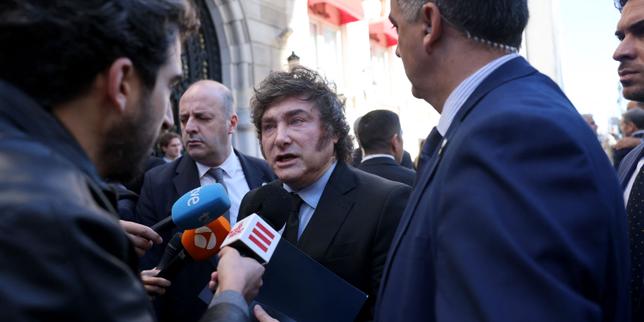
Javier Milei didn't fly to Madrid for quiet diplomacy. He came to pick a fight right in the middle of Spain's election campaign.
Speaking at a Nueva Economía Fórum breakfast on October 21, 2026, Argentina's president called Spanish Prime Minister Pedro Sánchez a "dictator," a "thief," and a "corrupt" leader, urging Spanish voters to kick the socialists out of office ahead of the November 29 snap general election. With less than six weeks left until Spaniards head to the ballot box, Milei made his preference for the Spanish right unmistakable.
Honestly, this wasn't a slip of the tongue. It was calculated political theater designed to feed polarization on both sides of the Atlantic.
How Javier Milei Turned Madrid Into a Campaign Stop
Walk into a political forum in Madrid with an Argentine president who loves a confrontation, and you know fireworks are coming. Milei framed Spain as the "cradle of liberalism" and told the room that ousting the socialists was a debt of honor.
His critique went far beyond name-calling. He blamed European left-wing parties for economic stagnation across the continent and attacked Madrid's immigration policy, claiming the government encourages an "invasion" around the North African enclave of Ceuta for electoral gain. Whether you agree with that framing or find it reckless, Milei clearly knows how to hijack headlines in a crowded election cycle.
At the same time, he didn't arrive in a vacuum. During his trip, Milei met behind closed doors with Isabel Díaz Ayuso, the conservative president of the Madrid region, and connected with Vox leader Santiago Abascal. Ayuso publicly praised her affection for Argentina and welcomed Argentines to Madrid, while keeping their sit-down away from cameras and press conferences. That quietness says a lot. Conservative figures often welcome ideological backing from abroad, yet they also know that an unvarnished foreign firebrand can cut both ways with undecided voters.
What Pedro Sánchez and Spanish Diplomacy Hit Back With
Sánchez and his government didn't sit quietly and take the insult. Spain's diplomatic apparatus slammed Milei's visit as undignified, accusing him of trying to stir up polarization and violence among Spaniards.
Sánchez himself leaned into irony. The Socialist Party put up banners welcoming Milei with a sarcastic nod to his favorite insult for opponents, calling Spain "the fastest-growing country in Europe". Sánchez also mocked the optics around Madrid's conservative leadership, brushing off the theatrics while leaning on his government's economic record and progressive positioning.
If you've followed the friction between these two leaders over the past couple of years, none of this feels brand new. Back in 2024, Milei's attacks on Sánchez's wife, Begoña Gómez, triggered a serious diplomatic rift that kept Spain's ambassador out of Buenos Aires for months. So when Milei calls Sánchez a dictator in October 2026, it isn't a one-off clash. It's another chapter in a bitter transatlantic feud that keeps getting rolled into domestic Spanish politics.
Why This Matters Ahead of the November 29 Election
Spain's November 29 snap election puts Sánchez's eight-year premiership on the line. Polls and political analysts point to a tight, high-stakes race in which the conservative Partido Popular (PP) is projected to finish first without necessarily winning an outright majority, potentially leaving far-right Vox with major leverage in forming the next government.
In a race that close, foreign voices rarely decide everything on their own. Spaniards vote on housing, jobs, cost of living, and governance. Still, Milei's intervention sharpens the ideological lines. For voters who see Sánchez as overreaching or stalled after eight years in power, Milei's blunt attack validates their frustration. For voters who recoil at aggressive rhetoric or distrust far-right alliances, it gives the left a convenient villain to rally against.
Here's a mistake many commentators make: assuming a viral quote automatically shifts votes in the right direction. Loud rhetoric energizes your base fast. It can also turn off moderate swing voters who prefer stability over shouting matches.
Separating Political Firepower From Real Policy
When a leader like Milei talks about economic stagnation, migration, and liberal reform, it's worth looking past the slogans. Milei frequently points to his own efforts in Argentina—such as bringing country risk down dramatically from 3,000 basis points to around 400—as proof that tough, market-oriented medicine works. Supporters see bold results. Critics point to severe social strain, ongoing economic pressures, and an aggressive style that alienates traditional partners.
Likewise, Sánchez has built a profile as a prominent European progressive voice while facing tough domestic headwinds, including housing pressures and fierce opposition scrutiny. Calling a democratically elected prime minister a "dictator" makes for punchy television, yet it stretches the word way past its real meaning. Real dictatorships don't face competitive snap elections or opposition rallies. Hyperbole sells clicks. Accuracy helps you actually understand what's happening.
If you're tracking this story leading into the November 29 vote, don't stop at soundbites from either side. Read Spanish polling breakdowns across key provinces, compare the economic and housing proposals from the PSOE, PP, and Vox, and watch how mainstream Spanish conservatives handle Milei's embrace. That's where the real story of the election lives.
Argentina's Milei calls Spain PM Sánchez a 'dictator' in Madrid visit
Spain's Sanchez gives Milei ironic welcome as Argentine leader calls him 'unpresentable dictator'
Milei intervenes in Spain election, calls PM Sánchez 'a dictator'
Milei attacks PEDRO SÁNCHEZ during the 11/29 PRE-CAMPAIGN
This video shows coverage of Milei's confrontation with Sánchez during Spain's November 29 election pre-campaign, adding visual context to how the clash played out in the media.