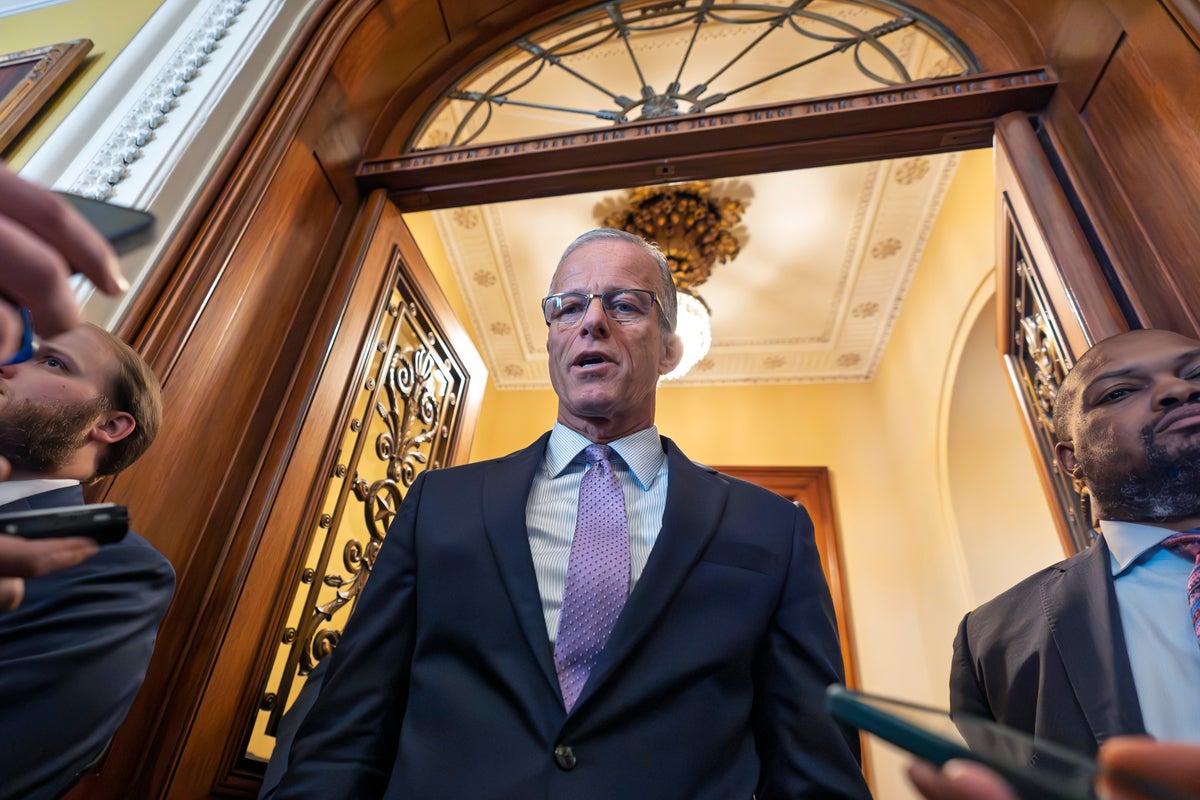
The honeymoon is officially over. Senate Majority Leader John Thune just delivered a quiet, devastating blow to the executive branch's latest pet project.
On Monday, the Justice Department rolled out a stunning announcement. It's establishing a $1.776 billion "Anti-Weaponization Fund" designed to compensate individuals who claim they were politically targeted and victimized by "lawfare" under the Biden administration. The dollar amount is a glaring, symbolic nod to American patriotism, but the funding mechanism is raising serious fiscal eyebrows.
By Tuesday morning, Thune didn't hold back. When reporters pressed him on the multi-billion-dollar pool of cash, he was incredibly blunt.
"I’m not a fan," Thune said. "I’m not sure exactly how they intend to use it, but yeah, I don’t see a purpose for that."
This isn't just a routine policy disagreement. It is the first major structural crack in the relationship between the newly minted Senate Majority Leader and the Trump White House.
The Art of the Government Settlement
To understand why Thune is digging his heels in, you have to look at where this money is coming from. This isn't a fresh appropriation bill that cleared Congress. It didn't go through a committee, and it wasn't debated on the Senate floor.
Instead, the fund is the result of a settlement. President Donald Trump, along with his sons Donald Jr. and Eric, dropped their massive $10 billion lawsuit against the Internal Revenue Service. That lawsuit stemmed from a 2019 incident where former IRS contractor Charles Littlejohn leaked Trump’s confidential tax records to the media. Littlejohn pleaded guilty in 2023 and is serving a five-year prison sentence.
Facing an upcoming May 27 federal court hearing in Miami, where a judge openly questioned whether the lawsuit was a conflict of interest given Trump's authority over the agencies he was suing, the Trump family dropped the suit.
In exchange, the Justice Department—now led by Acting Attorney General Todd Blanche—announced the $1.776 billion compensation fund. Trump and his immediate family won't get a dime of it directly. But the money is being drawn from the federal Judgment Fund.
Why the Judgment Fund Has Capital Hill Furious
The Judgment Fund is essentially an unlimited, permanent administrative pot of money managed by the Treasury Department. Congress set it up decades ago so the executive branch could quickly settle legitimate legal claims and court judgments against the federal government without needing a new act of Congress every time.
Tapping that fund for nearly $1.8 billion to create an ongoing administrative payouts board is a massive stretch of its original intent. It completely bypasses the constitutional power of the purse.
Republican Senator Bill Cassidy of Louisiana layout the problem clearly, stating there's absolutely no legal precedent for this. He warned that the executive branch can't just make up things whole piece.
Thune is looking at this from a legislative defense standpoint. If the White House can bypass Congress to create a $1.776 billion fund through a settlement with an agency it controls, the Senate's power to control federal spending evaporates. Thune already confirmed that Senate appropriators will give this arrangement a full vetting later this year. The blowback is real, and it's coming from inside the party.
Who Actually Gets Paid
The sheer ambiguity of who qualifies for these payouts is making lawmakers nervous. Acting Attorney General Todd Blanche defended the fund during a fiery congressional hearing, refusing to rule out specific controversial groups.
When asked directly if the roughly 1,500 individuals prosecuted or convicted in connection with the January 6 Capitol riot would be eligible, Blanche wouldn't rule it out. He stated that anyone can apply if they believe they were a victim of weaponization. Even more surprising, Blanche noted that the fund isn't technically restricted by political party, suggesting even Hunter Biden could theoretically apply based on his tax and gun prosecutions.
The decisions will rest with a five-member commission appointed by the Attorney General. The fund is scheduled to sunset on December 1, 2028, with any leftover cash reverting to the federal government.
Democrats are predictably furious, calling it a blatant theft of public funds. But the real story is that traditional institutionalist Republicans aren't buying it either.
The Next Moves for Congress
If you are tracking how Washington will operate over the next two years, watch how this budget fight plays out. Thune's public skepticism means the administration will face a wall when trying to protect this money from legislative clawbacks.
Here is what needs to happen next to keep tabs on this situation:
- Watch the upcoming Senate Appropriations Committee hearings, where lawmakers will try to place restrictive riders on the Judgment Fund to prevent these payouts.
- Keep an eye on the specific guidelines the DOJ's new five-member commission releases, which will define what legally constitutes government weaponization.
- Monitor federal court filings to see if outside watchdog groups sue to block the distribution of these funds on constitutional grounds.
DOJ creates $1.8 billion fund that could compensate 'targeted' Trump allies
This video provides essential broadcast coverage detailing the mechanics of the settlement and how the Justice Department plans to structure the multi-billion-dollar lawfare compensation fund.