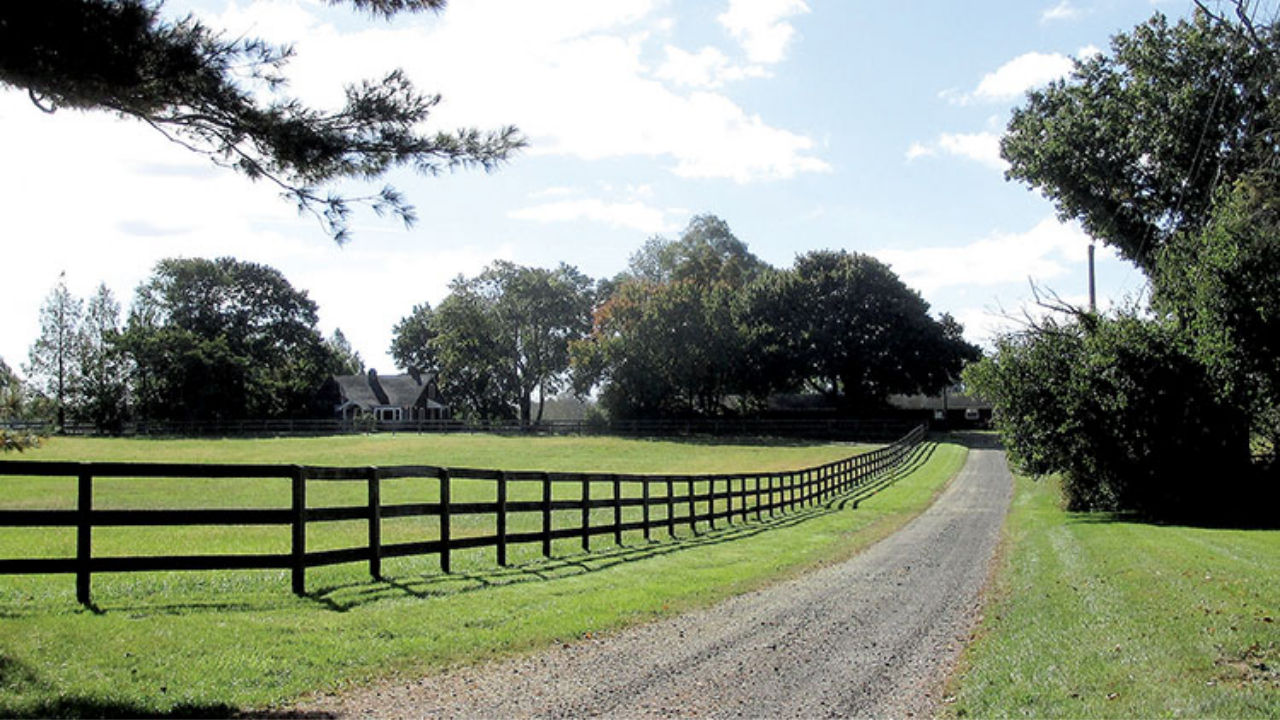
Famous people buying massive chunks of land usually goes one of two ways. They either build a compound with high walls and private security gates to keep the rest of the world out, or they turn it into a vanity project where they visit twice a year for Instagram photos. Jon Stewart and his wife, Tracey, chose a much messier, much louder path. Back when they dropped $4 million on a 45-acre farm in New Jersey, they didn't just buy real estate. They bought a second full-time job covered in mud and manure.
Most celebrities who talk about sustainability are fronting. They buy carbon offsets while flying private or pose with an organic tomato for a magazine spread. The Stewarts actually rolled up their sleeves. That 45-acre plot in Middletown, New Jersey, transformed into Hockhockson Farm Foundation, and later became a physical extension of Farm Sanctuary. It's a working farm, an educational center, and a safe house for abused farm animals who would otherwise be headed for a slaughterhouse floor.
Let's look past the celebrity headlines and break down why this specific project stands out, how animal rescue operations actually function at this scale, and what people constantly get wrong about trading Hollywood clout for agricultural grit.
What Most People Get Wrong About Celebrity Animal Rescues
When a famous name attaches itself to an animal rescue, skepticism is entirely fair. Too many public figures slap their names on a board, write a check for a tax write-off, and let hired staff do the heavy lifting while they swoop in for a photo op with a baby lamb.
Tracey Stewart didn't take the backseat approach. She became a certified veterinary technician, trained intensively, and wrote a practical guide to compassionate living called Do Unto Animals. She didn't just want to own a farm; she wanted to understand the microbiology of the soil and the emotional inner lives of the cows, pigs, and turkeys they brought home.
Running a 45-acre sanctuary is a logistical nightmare. You deal with zoning boards, feed supply chains, vet bills that would bankrupt a small business, and the endless physical labor of mucking stalls at five in the morning. When Jon Stewart joked about living in a pile of shit during his stand-up sets, it wasn't hyperbole. It was the daily reality of caring for animals saved from factory farming, hoarding situations, and live-market auctions.
The farm isn't a petting zoo for VIP guests. It operates with strict biosecurity and welfare standards. The goal isn't entertainment. The goal is rehabilitation. Animals that arrive terrified of human touch learn that hands can bring food instead of harm. That kind of behavioral turnaround takes months of patience, consistency, and professional veterinary oversight.
The Economics of a 45 Acre Rescue Operation
Buying the land for $4 million is the easy part. Anyone with a late-night television salary can stroke a check for real estate. The real challenge is keeping the lights on, the animals fed, and the medical staff paid year after year.
Farming in New Jersey comes with unique pressures. Land taxes are notoriously high. Weather patterns can swing wildly from freezing nor'easters to brutal summer humidity. Growing crops sustainably on a commercial-to-rescue transition plot means rejecting synthetic pesticides and artificial fertilizers. You have to build soil health naturally through cover cropping, composting, and rotational grazing.
Here is how a project like this sustains itself without turning into a bottomless money pit:
- Strategic Partnerships: Collaborating national organizations like Farm Sanctuary provides institutional knowledge, rescue networks, and emergency placement protocols when large-scale cruelty cases break out.
- Educational Programming: Shifting public perception requires bringing people onto the land. Workshops, school programs, and community outreach turn passive fans into active advocates.
- Regenerative Agriculture: Growing crops that feed both the rescued residents and local communities creates a closed-loop system where the farm begins to offset its own operational overhead.
You can't just throw animals into a field and hope for the best. Pasture management requires calculating animal units per acre to prevent overgrazing, which destroys root systems and turns green fields into mud pits. The Stewarts had to learn agronomy on the fly. They figured out which forage crops thrive in Northeast soil and how to store hay efficiently to get through harsh winters without breaking the budget.
Why This Move Defined Jon Stewarts Second Act
Timing matters. When Jon Stewart left The Daily Show in 2015, the media landscape was shifting toward hyper-partisan outrage. Everyone expected him to immediately jump to another network, launch a digital media empire, or chase prestige streaming deals. Instead, he bought a tractor.
That retreat wasn't an accident. Burnout in political satire is real. When you spend decades tearing down the hypocrisy of Washington every single night, your brain starts to rot around the edges. You need a physical anchor. You need tangible results. If you write a joke, someone laughs, and the world keeps spinning off its axis. If you pull a neglected pig out of a cramped crate, feed it, and watch it run across a grassy field for the first time, you have changed that specific animal's entire universe. That kind of direct impact heals a specific kind of professional fatigue.
Of course, Stewart eventually returned to television with The Problem with Jon Stewart, proving he couldn't stay away from the microphone entirely. But his relationship with the media had changed. He wasn't living in the New York bubble anymore. He was splitting his time between a television studio and a barnyard. That duality grounded him. When you spend your morning wrestling a stubborn goat and your afternoon dissecting systemic economic inequality, your perspective stays sharp. You see through the artificial urgency of cable news because you know what actual, physical survival looks like.
Practical Lessons From the Farm
You don't need 45 acres and millions of dollars to apply the principles driving the Stewart family's project. Most of us live in apartments, suburban lots, or small townhomes where keeping a rescued steer is entirely out of the question.
Yet, the core philosophy translates directly to everyday life. You can change how you consume. You can support local regenerative farms that treat livestock with dignity instead of supporting industrial meat production lines that treat sentient creatures like assembly-line widgets. You can volunteer at a local animal shelter or wildlife rehabilitation center this weekend.
Real change doesn't happen because a celebrity buys an estate. It happens when that purchase serves as a megaphone for a larger cultural shift. The Stewarts took their capital and pointed it directly at a broken food system. They proved that you can step away from the spotlight, get your hands dirty, and build something that outlasts your time on screen.
Stop waiting for permission to care about where your food comes from or how your community treats its most vulnerable creatures. Look up local rescues near you. Donate your time, your skills, or a few spare dollars. Get outside, touch some dirt, and start building something real.


