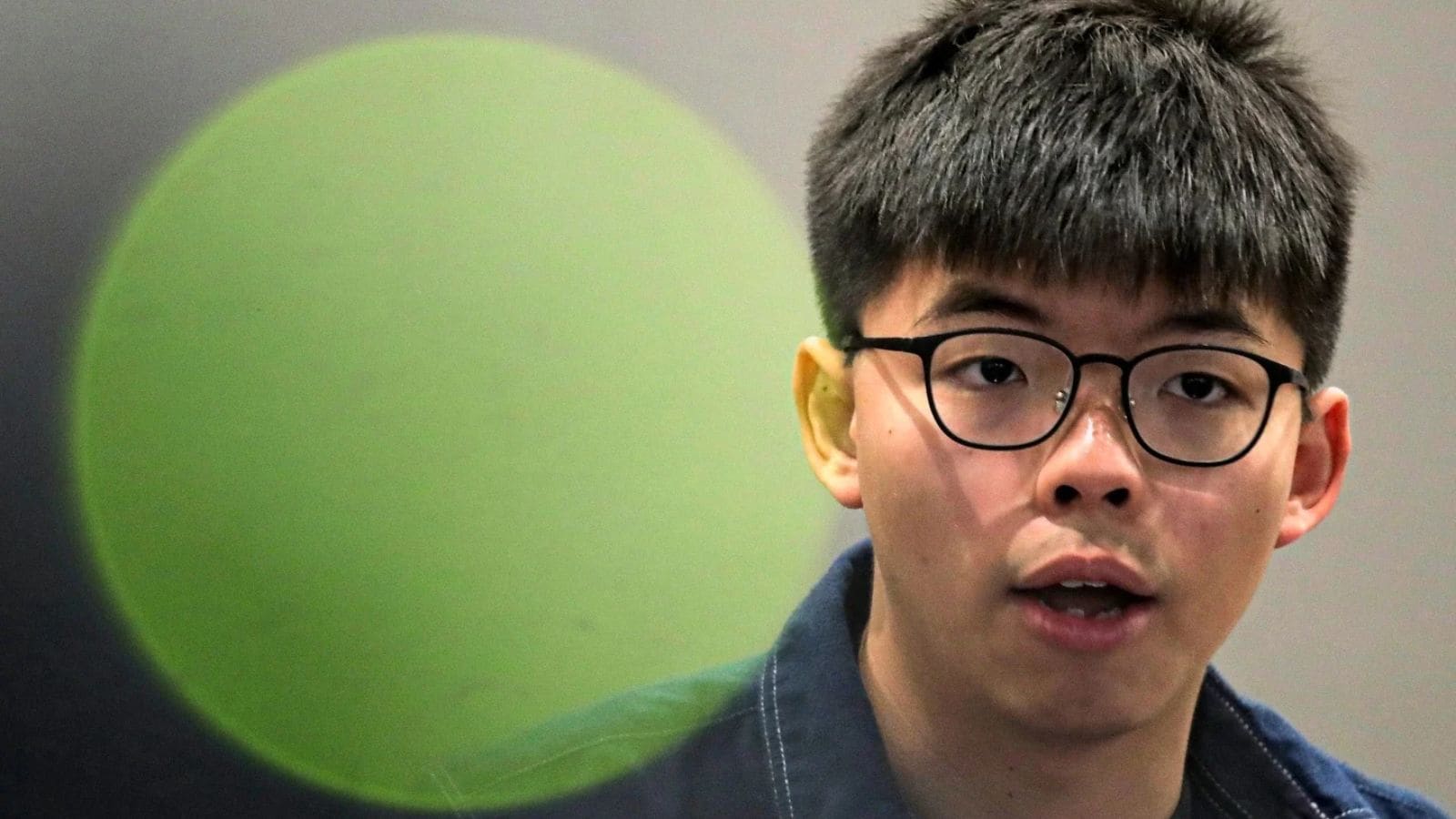
Ten years. That's the latest prison term handed down to Hong Kong activist Joshua Wong in his second national security case, and it changes the math on what dissent actually costs in the city today.
If you've followed Hong Kong's political collapse since 2019, you already know Wong isn't new to courtrooms or prison cells. He was already serving a 56-month sentence from the massive "Hong Kong 47" subversion trial before this second ruling hit. Now, with a fresh 10-year sentence stacked onto his record, the message from Beijing and the Hong Kong judiciary couldn't be clearer. The era of symbolic slaps on the wrist is dead.
Most headlines treat this as just another depressing update in a long string of crackdowns. They're missing the bigger picture. This specific case shows how prosecutors are reaching back into history, using new legal tools retroactively in spirit if not in strict technicality, and systematically erasing an entire generation of opposition leaders from public life.
Why Joshua Wong Faced a Second National Security Trial
People often get confused about why Wong is being tried again when he's been behind bars since early 2021. How do you commit a national security offense from inside a maximum-security prison?
You don't. Prosecutors went back to actions taken before his incarceration, specifically focusing on allegations of conspiracy to collude with foreign forces under the Beijing-imposed National Security Law (NSL) enacted in June 2020.
In his first major NSL case—the sweeping "Hong Kong 47" trial—Wong pleaded guilty to conspiracy to commit subversion for his role in organizing an unofficial 2020 legislative primary election. That netted him four years and eight months in November 2024, after judges shaved time off for his early guilty plea.
This second prosecution targeted a completely different set of behaviors. Authorities zeroed in on international lobbying, calls for foreign sanctions, and overseas advocacy carried out through groups and networks linked to the pro-democracy movement. Even though much of that political campaigning happened around the 2019 protests, prosecutors argued the conspiracy continued after the NSL took effect on June 30, 2020.
It's a legal strategy that leaves zero room for maneuver. Once you're in the crosshairs, the state doesn't just prosecute you once and move on. They slice your past activism into separate indictments, ensuring that even when one sentence ends, another decade-long term is waiting right behind it.
Breaking Down the Sentence and Legal Mechanics
Let's look at how Hong Kong's national security courts operate now, because the mechanics matter just as much as the verdict.
Under the 2020 National Security Law, offenses like collusion with foreign forces carry tiered sentencing guidelines:
- Grave offenses: 10 years to life imprisonment for principal offenders or those involved in major conspiracies.
- Other participants: 3 to 10 years for active participants.
- Minor roles: Up to 3 years of fixed-term imprisonment, short-term detention, or restriction.
By handing Wong 10 years, the court placed him squarely at the threshold of a "grave" offense.
Notice also who decided his fate. There was no jury. Under Article 46 of the National Security Law, the Secretary for Justice can bypass a jury trial entirely and hand the case to a panel of three judges handpicked by Hong Kong's Chief Executive. Critics—including legal scholars at institutions like Georgetown University's Center for Asian Law—have pointed out for years that this setup fundamentally alters the presumption of innocence and judicial independence that once defined Hong Kong's common law system.
Of course, Hong Kong officials and Beijing's Liaison Office view this completely differently. Their position is straightforward: Wong actively lobbied foreign governments, including the United States, to impose sanctions on Hong Kong and Chinese officials, which they classify as a direct threat to national sovereignty and stability. From their perspective, a 10-year sentence isn't political persecution; it's standard punishment for treasonous behavior.
You don't have to agree with Beijing's framing to see how consistent their legal logic has become. In their eyes, the 2019 protests were an attempted color revolution, and anyone who asked Washington or London for help crossed an unforgivable red line.
From Teenage Icon to Permanent Prisoner
To understand why this sentence carries so much weight, you have to remember who Joshua Wong was a decade ago.
In 2012, he was a skinny 15-year-old kid wearing oversized glasses, leading a student group called Scholarism against Beijing-backed "patriotic education" in Hong Kong schools. He won. The government backed down. Two years later, at 17, he became the international face of the 2014 Umbrella Movement, landing on the cover of Time magazine and drawing praise from Western lawmakers.
Back then, the worst consequence for civil disobedience in Hong Kong was usually a few weeks in jail, community service, or a suspended sentence. Activists treated arrests almost like badges of honor. Nobody imagined 10-year prison terms for political speech or international lobbying.
Everything changed after the massive, often violent anti-government protests of 2019. Beijing decided that Hong Kong's local government couldn't maintain control on its own. So they bypassed the city's legislature entirely and imposed the National Security Law in June 2020, followed later by the local Article 23 legislation (the Safeguarding National Security Ordinance) in March 2024.
Wong's trajectory mirrors the city's transformation:
- 2012–2014: Street protests actually forced policy reversals from the Hong Kong government.
- 2016–2019: Courts began handing down multi-month sentences for unlawful assembly, disqualifying pro-democracy lawmakers like Nathan Law and Wong's party colleagues in Demosisto.
- 2020–2024: Demosisto disbanded hours before the NSL took effect, yet its former leaders were still rounded up, denied bail for years before trial, and hit with multi-year subversion sentences.
- 2025–2026: Secondary national security prosecutions pile on decade-long terms, effectively removing key figures from society until the mid-2030s.
When Wong finally walks out of prison, he won't be a student leader in his twenties anymore. He'll be approaching middle age, emerging into a city that barely resembles the place he grew up in.
What Most Commentators Miss About Beijing’s Strategy
If you read standard Western news coverage, you'll see plenty of outrage from foreign ministries in Washington, London, and Brussels. They'll call the sentence unjust, demand his immediate release, and warn about the erosion of the "One Country, Two Systems" framework.
Honestly, Beijing doesn't care anymore.
Five years ago, Chinese officials worried about international backlash, trade status, and foreign investment fleeing Hong Kong. Today, that calculation has flipped. Security overrides economics every single time.
Here's what's actually happening on the ground that gets lost in diplomatic statements:
Total Deterrence Through Attrition
The goal isn't just punishing Joshua Wong. It's making an example out of him so terrifying that no university student in Hong Kong even thinks about organizing a protest again. When young people see someone lose their entire twenties and thirties to concrete cells across multiple overlapping trials, self-censorship becomes automatic. You don't need riot police on every corner when fear does the policing for you.
Severing Diaspora Ties
By targeting "foreign collusion" relentlessly, authorities have turned international advocacy into a radioactive liability. Activists living in exile in the UK, Canada, Taiwan, or the US now know that contacting friends, family, or former colleagues back in Hong Kong puts those people at risk of 10-year sentences. It isolates the overseas diaspora from the domestic population.
Rewriting the Legal Baseline
Every conviction sets a binding precedent in Hong Kong's courts. Because Hong Kong still uses a common law system, judges rely heavily on case law. Every time a national security panel defines peaceful lobbying or political organizing as a "grave" conspiracy, that definition becomes baked into the city's permanent legal architecture.
Common Misconceptions About Hong Kong’s National Security Cases
Whenever a high-profile verdict like Wong's hits the news, several myths immediately start circulating online. Clearing them up helps you read the situation accurately.
Misconception 1: He got 10 years just for posting on social media.
That's an oversimplification. While social media posts and media interviews are routinely entered as evidence by prosecutors, the core of these "foreign collusion" cases rests on documented meetings with foreign politicians, formal testimony before overseas legislative bodies, and organized campaigns requesting sanctions against Chinese and Hong Kong officials. Prosecutors treat those actions as concrete operational steps in a conspiracy, not casual speech.
Misconception 2: Sentences in Hong Kong always run concurrently.
Not necessarily. While courts often run sentences concurrently when offenses stem from the exact same incident, separate indictments covering distinct criminal conspiracies frequently result in consecutive or partially consecutive terms. Even when partial concurrency applies, a fresh 10-year sentence pushes an inmate's actual release date years further into the future.
Misconception 3: International sanctions will force Hong Kong to release him.
They won't. In fact, foreign sanctions frequently backfire inside the courtroom. Prosecutors point to new Western sanctions as proof that the threat of foreign interference is real and ongoing, reinforcing the state's argument that harsh deterrent sentences are necessary.
How Businesses, Journalists, and Researchers Should Respond
If you operate in Hong Kong, cover the region, or work with organizations connected to Greater China, Joshua Wong's 10-year sentence isn't just abstract political news. It's a flashing red warning light regarding compliance and personal risk.
First, audit your digital footprint and historical communications immediately if you travel through Hong Kong or mainland China. Border officials and national security police routinely examine devices, and under the National Security Law, extraterritorial jurisdiction applies—meaning actions taken outside Hong Kong can still trigger arrest upon arrival.
Second, treat political risk assessments in Hong Kong the exact same way you treat mainland China. Stop relying on pre-2020 assumptions that Hong Kong's independent judiciary will shield foreign nationals, NGOs, or researchers from politically sensitive investigations. Legal protections for national security defendants are drastically narrower than in standard commercial or criminal cases.
Third, follow primary legal reporting from specialized outlets like Hong Kong Free Press or academic trackers like Georgetown's Hong Kong National Security Law database rather than relying solely on brief wire summaries. The specific sentencing remarks from the three-judge panel dictate where the red lines sit for everyone else in the city.


