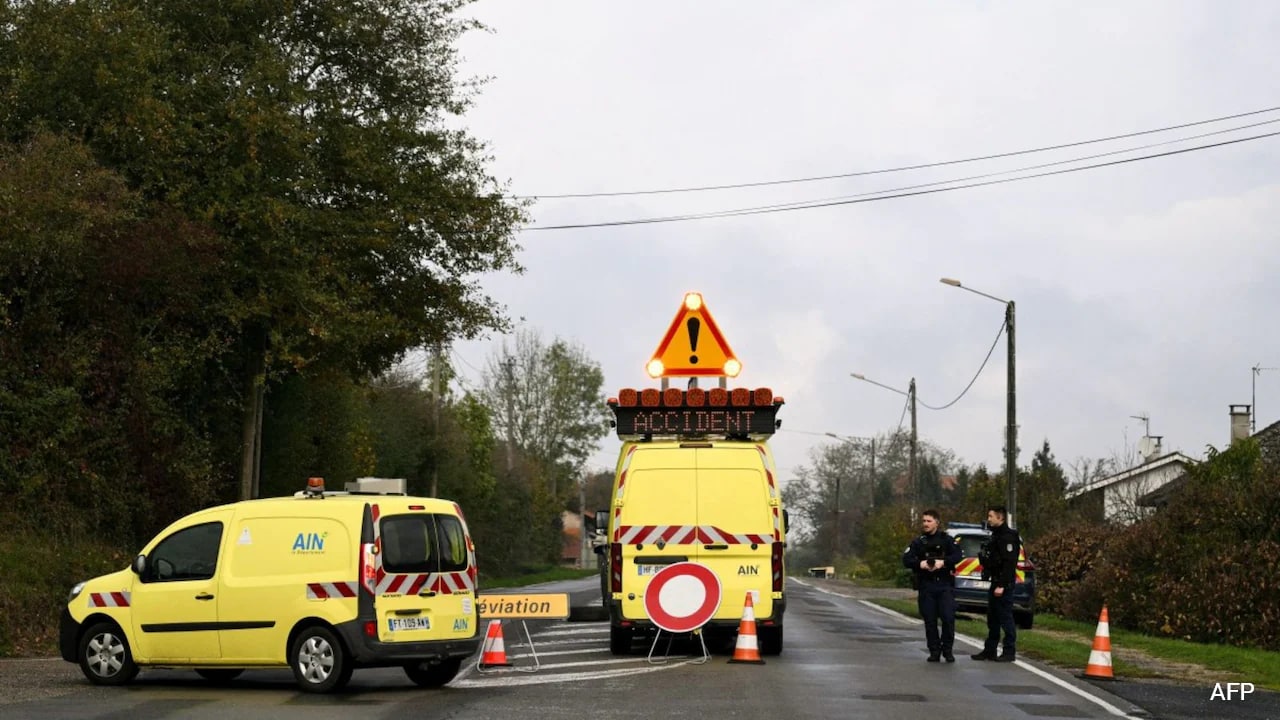
When a British citizen dies under unexplained circumstances in Spain, the resulting investigation rarely fails due to a single catastrophic error; it degrades through structural friction between two incompatible legal systems. The decision by a United Kingdom coroner to re-examine a mysterious 2024 death in Spain exposes the exact mechanics of this cross-border evidentiary gap. Standard media coverage frames these events as human-interest anomalies or isolated bureaucratic delays. In reality, a UK inquest following a foreign fatality operates as an institutional audit designed to correct the evidentiary deficits inherent in overseas policing, divergent autopsy standards, and transnational chain-of-custody bottlenecks.
The Structural Divergence Between Spanish Judicial Investigations and UK Coronial Inquests
To understand why a UK inquest must re-examine a fatality already processed by Spanish authorities, one must map the operational mandates of both systems. They do not share the same objective, burden of proof, or evidentiary threshold. Discover more on a connected topic: this related article.
In Spain, a sudden, violent, or suspicious death triggers an instrucción—a judicial investigation overseen by an investigating magistrate (Juez de Instrucción). The primary mandate of this phase is to determine whether a criminal offense (delito) occurred. If the initial forensic pathology report (autopsia médico-legal) and Guardia Civil or Policía Nacional field inquiries do not yield immediate indicators of third-party criminal liability, the magistrate frequently issues a provisional dismissal (sobreseimiento provisional). Once criminality is ruled out or deemed unprovable within local resource constraints, the investigative apparatus stops. The system is binary: it filters for prosecutable crime, not exhaustive causal reconstruction.
The UK coronial system operates on an entirely different axis. Governed by the Coroners and Justice Act 2009, a UK inquest is an inquisitorial, fact-finding process rather than a criminal or civil trial. Under Section 5 of the Act, the coroner is legally obligated to answer four specific statutory questions: More reporting by Reuters delves into related views on the subject.
- Who the deceased was.
- How, when, and where the deceased came by their death.
- The particulars required by the Births and Deaths Registration Act 1953 to be registered concerning the death.
- In cases engaging Article 2 of the European Convention on Human Rights (the right to life), the broader circumstances in which the death occurred.
The critical friction point lies in the word how. Under UK case law (R v HM Coroner for North Humberside and Scunthorpe, ex parte Jamieson), "how" means "by what means." When a body is repatriated to England or Wales, Section 1 of the Coroners and Justice Act 2009 mandates that a senior coroner conduct an investigation if the body lies within their area and there is reason to suspect the death was violent, unnatural, or of unknown cause. The prior completion of a Spanish judicial inquiry does not extinguish this statutory duty. Because Spanish authorities close files once criminality is discounted, they routinely leave the exact mechanism of an "unnatural" or "unknown" death unresolved, forcing the UK coroner to reconstruct the timeline from fragmented foreign records.
The Three Pillars of Evidentiary Degradation in Repatriated Fatalities
When a 2024 fatality in Spain is reopened in a UK coroner’s court months or years later, the court is battling severe information decay. Three systemic bottlenecks drive this degradation.
1. Pathological and Toxicological Asymmetry
The physical examination of the body is the single most time-sensitive variable in death investigation. In Spain, forensic institutes (Institutos de Medicina Legal) conduct the primary autopsy prior to repatriation. However, embalming procedures required for international air transport permanently alter tissue histology and destroy or dilute volatile toxicological compounds.
When a UK Home Office-registered forensic pathologist conducts a secondary post-mortem upon repatriation, they are examining an altered biological specimen. If the initial Spanish toxicology screen tested only for standard panels (ethanol, common illicit narcotics, basic pharmaceuticals) and omitted specialized compounds, novel psychoactive substances, or specific cardiac biomarkers, the secondary UK autopsy faces severe diagnostic limitations. Organ retention policies also diverge; tissue samples taken in Spain rarely accompany the repatriated body automatically, requiring formal diplomatic and judicial requests to transfer glass slides or paraffin blocks for independent histological review.
2. Chain-of-Custody and Digital Evidence Decay
In domestic UK investigations, police immediately secure CCTV footage, mobile device data, and financial transaction logs under strict preservation protocols. In cross-border incidents, local Spanish police often treat an apparent accident or sudden medical event with low investigative priority.
Commercial CCTV systems in tourist municipalities typically overwrite data within 7 to 30 days. By the time a repatriated body reaches the UK, a secondary autopsy reveals an unexplained anomaly, and the UK coroner formally requests local footage via consular or judicial channels, the primary visual evidence has been permanently erased. Similarly, securing telecom metadata or cloud records from devices left in Spain requires navigating international legal assistance frameworks rather than standard domestic production orders.
3. Translation Distortion and Terminology Loss
Medical and legal concepts do not map one-to-one between Spanish and English. A Spanish death certificate or preliminary autopsy summary might list parada cardiorrespiratoria (cardiorespiratory arrest) or edema agudo de pulmón (acute pulmonary edema). In UK coronial practice, these are mechanisms of dying, not underlying causes of death. When Spanish judicial files are translated—often by non-specialist translators or summarized through consular reporting—nuances regarding trauma patterns, lividity, or scene positioning are flattened. The UK inquest must therefore spend substantial court time interrogating the exact clinical meaning of translated Spanish forensic terms before establishing a narrative of events.
The Post-Brexit Legal Mechanism for Evidence Acquisition
A major driver behind the prolonged timelines in re-examining a 2024 death in Spain is the structural shift in UK-EU judicial cooperation following the United Kingdom's exit from the European Union.
Prior to 2021, UK authorities utilized the European Investigation Order (EIO) to compel the gathering and transfer of evidence across EU member states under strict statutory deadlines. The UK is no longer party to the EIO framework. Consequently, a UK coroner has zero extraterritorial jurisdiction in Spain. A coroner cannot issue a binding summons to a Spanish police officer, compel a Spanish hotel manager to produce guest logs, or order a Spanish forensic institute to release toxicology raw data.
To obtain primary evidence from Spain in 2026, the UK coronial system must rely on two slower, indirect channels:
- Letters of Request (Rogatory Letters): Under the European Convention on Mutual Assistance in Criminal Matters 1959 and the Trade and Cooperation Agreement (TCA), requests for evidence must be routed through central authorities—specifically the UK Home Office (UK Central Authority) and the Spanish Ministry of Justice. However, mutual legal assistance treaties are designed primarily for criminal investigations and prosecutions. Because a UK inquest is a civil, inquisitorial proceeding rather than a criminal prosecution, Spanish judicial authorities frequently question the legal basis for executing compulsory measures on behalf of a UK coroner, resulting in months of diplomatic correspondence or outright refusal.
- Consular and Family-Led Retrieval: Because formal state-to-state channels suffer from high latency, UK inquests increasingly depend on evidence gathered directly by the bereaved family's legal representation in Spain. Under Spanish criminal procedure, next of kin can register as a parte perjudicada (injured party) or acusación particular (private prosecutor) in the local Spanish court, granting their Spanish lawyers access to the sumario (case file). These documents are then privately translated and submitted to the UK coroner. This creates an asymmetric burden: the completeness of a UK public inquest often depends on the private financial capacity of the family to fund parallel legal action in Spain.
Distinguishing Known Investigative Triggers from Analytical Hypotheses
When a 2024 death in Spain is scheduled for a full UK inquest in 2026, the timeline itself reveals specific operational realities. Separating established procedural facts from analytical hypotheses prevents misinterpretation of why the case is being re-examined.
Established Procedural Facts:
- Jurisdictional Trigger: The body was repatriated to the UK, automatically activating the local coroner's statutory duty under Section 1 of the Coroners and Justice Act 2009 because the death occurred abroad and lacked a definitive, natural cause verified to UK standards.
- Pre-Inquest Review (PIR) Latency: A gap of roughly two years between a 2024 fatality and a substantive 2026 inquest hearing aligns with standard cross-border processing times. This duration reflects the multi-stage cycle of secondary post-mortem reporting, formal requests to Spanish courts for the autopsia file, certified translations, and Pre-Inquest Review hearings to determine the scope of the inquiry.
- Inconclusive Foreign Findings: A UK coroner does not hold a full public inquest with witness testimony if the Spanish documentation conclusively proves a natural cause of death (such as a verified myocardial infarction supported by clear medical history and unequivocal pathology). Scheduling a re-examination confirms that the Spanish records left critical causal variables open.
Analytical Hypotheses (Pending Evidentiary Disclosure):
- Pathological Discrepancy: The UK secondary post-mortem likely identified either physical trauma incompatible with the initial Spanish hypothesis (e.g., an accidental fall) or an absence of natural disease sufficient to explain sudden death, pointing toward an undetected toxicological, environmental, or third-party factor.
- Scope Expansion (Article 2 Engagement): If the death occurred in a setting involving state agents (such as Spanish police custody or a public healthcare facility) or systemic safety failures, the UK coroner may be evaluating whether the procedural obligations of Article 2 of the ECHR are triggered, which requires a broader investigation into systemic failures rather than just the immediate medical cause of death.
- Incomplete Witness Canvassing: The re-examination strongly suggests that key individuals—travel companions, hotel staff, emergency responders, or bystanders—were either not interviewed under oath in Spain or provided statements containing unresolved contradictions that require examination under Rule 23 of the Coroners (Inquests) Rules 2013.
The Structural Limitations of the UK Inquest Mechanism
While a UK inquest provides a rigorous public forum for scrutinizing a cross-border death, the mechanism operates under hard structural constraints. Treating an inquest as a substitute for a primary homicide or major incident investigation leads to predictable disappointment.
First, the bar on determining liability strictly limits the outcome. Under Section 10(2) of the Coroners and Justice Act 2009, a inquest determination may not be framed in such a way as to appear to determine any question of criminal liability on the part of a named person, or civil liability. Even if a UK coroner uncovers glaring omissions in the Spanish police inquiry or identifies suspicious trauma, the court cannot indict a suspect or award damages. The standard of proof for all conclusions—including unlawful killing and suicide—is the civil standard (the balance of probabilities), following the UK Supreme Court ruling in R (Maughan) v HM Senior Coroner for Oxfordshire (2020). While this lower threshold makes it easier to record an "unlawful killing" conclusion than under the old criminal standard (beyond reasonable doubt), that conclusion carries no automatic prosecutorial weight in Spain.
Second, witness compellability stops at the UK border. A UK coroner can compel any witness residing in England or Wales to attend court and give evidence under Schedule 5 of the 2009 Act. They cannot compel a Spanish police officer, a Spanish forensic pathologist, or a non-UK resident witness to attend a UK hearing or testify via video link. If Spanish witnesses decline to cooperate voluntarily, the coroner is forced to rely entirely on written statements admitted under Rule 23, which cannot be cross-examined—a severe handicap when testing the credibility of an initial foreign investigation.
Third, Prevention of Future Deaths (PFD) reports lack extraterritorial enforcement. Under Paragraph 7 of Schedule 5 to the 2009 Act, if a UK coroner identifies systemic risks—such as inadequate safety standards at a Spanish resort or flaws in consular emergency protocols—they have a statutory duty to issue a PFD report. While UK government departments (such as the Foreign, Commonwealth & Development Office) must respond within 56 days, foreign corporations and Spanish municipal authorities are under no legal obligation to acknowledge or implement a UK coroner's recommendations.
Operational Protocol for Cross-Border Death Investigations
For legal practitioners, consular caseworkers, and families navigating a sudden or unexplained death in Spain, waiting for the UK coronial system to passively request foreign files guarantees evidentiary loss. The optimal strategy requires aggressive, parallel intervention across both jurisdictions within the first 72 hours of the fatality.
- Halt Premature Embalming and Repatriation: Before authorizing international transport, instruct a UK-based forensic pathologist to review the preliminary Spanish post-mortem findings. If the Spanish institute has not secured comprehensive blood, urine, vitreous humor, and stomach content samples prior to embalming, formal legal intervention in Spain must occur immediately to preserve unembalmed biological specimens.
- Execute Immediate Dual-Track Legal Representation: Retain a Spanish criminal defense or litigation lawyer (abogado) in the specific judicial district (partido judicial) where the death occurred before the investigating magistrate issues a sobreseimiento provisional. Entering an appearance as an injured party prevents the file from being quietly archived and enables immediate petitions to preserve perishable local evidence—specifically municipal and commercial CCTV, mobile phone triangulation logs, and witness depositions.
- Establish a Standardized Evidentiary Transfer Pipeline: Do not rely solely on diplomatic channels to transmit the Spanish sumario to the UK coroner. Obtain certified copies of all Spanish forensic, toxicological, and police reports directly through Spanish counsel, commission certified forensic-grade translations in the UK, and submit the complete indexed bundle to the UK coroner’s officer prior to the first Pre-Inquest Review. This forces the UK inquest to focus immediately on substantive causal discrepancies rather than spending 18 months overcoming administrative latency.