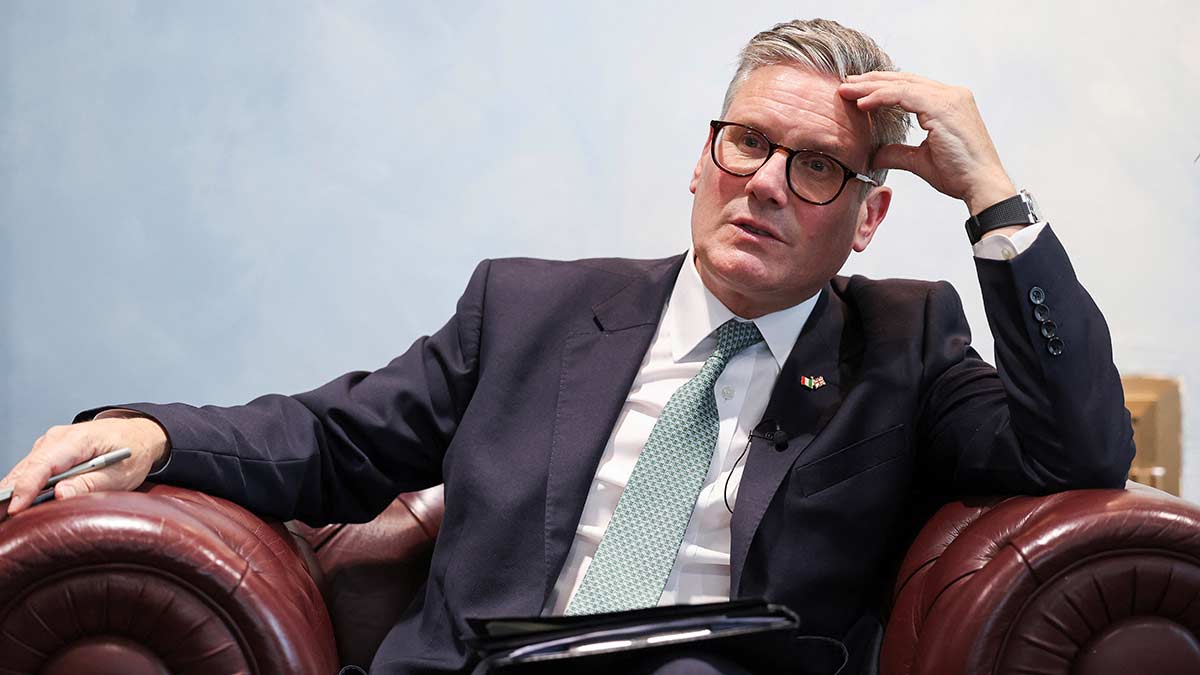
The rumors circulating Westminster aren't just empty noise anymore. British politics moves fast, but the speed at which the wheels are coming off Keir Starmer’s premiership is staggering. Just two years after a historic landslide victory in 2024, the Prime Minister is holed up at Chequers, facing an institutional mutiny that feels impossible to survive.
Let's look at the facts directly. More than 100 Labour MPs are openly demanding his exit. High-profile figures like Scottish Labour leader Anas Sarwar and former Home Secretary Alan Johnson have publicly pulled the rug from under him. The weekend papers are full of reports that Starmer is preparing an orderly exit timetable as early as Monday. His position isn't just shaky. It’s fundamentally broken.
The catalyst for this final meltdown happened on Friday, June 19, 2026. Andy Burnham won the Makerfield by-election, securing a direct route back into the House of Commons. Burnham isn't coming back to Westminster to sit quietly on the backbenches. He's coming to take the top job. With his swearing-in scheduled for Monday, the countdown to a formal leadership challenge has officially reached zero.
The Broken Promises That Wrecked A Landslide
You can't govern a country when three-quarters of the public actively dislike you. Recent polling paints a grim picture. YouGov placed Starmer’s net favorability at a dismal minus 57. That puts him in the same territory as Liz Truss, the shortest-serving Prime Minister in British history. For a leader who won a 174-seat majority in 2024, falling this far this fast takes a special mix of policy failures and unforced errors.
Voters feel cheated. The government ran on a platform of stability and economic growth, but the daily reality for millions has been a relentless cost-of-living crisis. Instead of fixing public services, the administration stumbled into immediate controversy. Cutting winter fuel payments for pensioners alienated core voters. Failing to bring down NHS waiting lists eroded whatever goodwill remained from the election.
The political damage goes deeper than just bad economic numbers. A stunning 77% of voters say they don't trust Labour to keep its promises. When a government loses its economic credibility, it can sometimes hide behind moral authority. Starmer managed to lose both.
The Scandals That Drained Downing Street Of Authority
If the policy failures laid the dry kindling, a series of bizarre political decisions lit the match. No single event did more damage to Starmer's personal brand of "clean politics" than his decision to appoint Peter Mandelson as the UK Ambassador to the United States.
Mandelson’s historical ties to Jeffrey Epstein triggered instant outrage across the parliamentary party. It wasn't just an optics problem. It looked like the ultimate symptom of an out-of-touch, elite operation that ignored public sentiment. Anas Sarwar didn't hold back, holding a press conference in Glasgow to demand Starmer resign, explicitly citing the Mandelson scandal as a tipping point that was actively sabotaging the party's future.
The internal collapse followed quickly. The Prime Minister's team has seen an unprecedented wave of ministerial departures. Over 20 ministers have quit since the 2024 election. That’s a higher churn rate than almost any recent predecessor at this stage. Last month, Health Secretary Wes Streeting walked out, explicitly criticizing the lack of direction at the top. Junior ministers like Jess Phillips and key ministerial aides followed him through the door.
When you lose your Health Secretary and a quarter of your backbenchers, collective responsibility dies. Foreign Secretary Yvette Cooper reportedly told Starmer face-to-face that his time was up. Lord Falconer summed up the mood perfectly by stating the Prime Minister has absolutely no authority left because everyone assumes he's done.
Enter Andy Burnham and the Coronation Plot
The arrival of Andy Burnham changes everything. The former Mayor of Greater Manchester has spent years building a brand as the "King of the North," positioning himself as a champion of ordinary people against an insular Westminster elite. His by-election victory in Makerfield gives him the parliamentary platform required to trigger a leadership challenge under party rules.
To force a contest, a challenger needs the signatures of 20% of the Parliamentary Labour Party, which translates to 81 MPs. Burnham’s camp is rumored to be aiming much higher, pulling together a list of up to 200 backers to present to Starmer on Monday. The goal is simple. They want an immediate, bloodless handover to avoid plunging the country into deeper chaos.
Burnham’s acceptance speech on Friday night didn't bother with the usual diplomatic niceties. He openly stated that politics isn't working and called the night a turning point for the country. His allies are already briefing the press on what a Burnham administration would look like. Word is already out that Chancellor Rachel Reeves would be sacked immediately, with Burnham's team concluding her economic strategy represents more of the same failed status quo.
There's still a chance of a wider fight. Wes Streeting has made it clear he has enough backers to run if a full leadership race happens. But backbenchers are terrified of prolonged infighting. Reform UK has led in hundreds of consecutive national polls, and Labour MPs see a clear existential threat. If they spend the summer tearing each other apart, Nigel Farage could be walking into Downing Street at the next election. That fear is driving a massive push for a swift Burnham coronation.
What Happens Over The Next Twenty Four Hours
Starmer spent the weekend at Chequers with his family and closest advisers, reportedly weighing whether to fight a brutal, losing battle or negotiate a dignified exit. Publicly, Downing Street insists he is focused on the job and will stand his ground in any challenge. Privately, senior allies admit the odds are heavily against him, with one telling reporters there’s only a 25% chance he chooses to fight on.
Business Secretary Peter Kyle chose his words carefully on television, acknowledging the harsh political realities without confirming an imminent resignation. He noted that Starmer is a leader who puts the country first, a phrase that usually precedes a polite departure speech.
If Starmer steps down, the UK will welcome its seventh Prime Minister in a decade. That kind of institutional instability was supposed to end when the Conservatives left office. Instead, the cycle of rapid-fire leadership changes is starting all over again.
If you're watching this unfold, don't look at the official statements coming out of Number 10. Watch the doors of the House of Commons on Monday afternoon. When Andy Burnham is sworn in as an MP, the real power shifts. If you want to see where British politics is going next, keep your eyes on the text of the letters being handed to the Chairman of the Parliamentary Labour Party over the next 24 hours. The transition has already begun, whether Starmer wants to admit it or not.