Power is brutal. It isolates you.
When Keir Starmer stood outside 10 Downing Street on June 22, 2026, his voice cracked. His eyes welled up. We rarely saw that version of him during his twenty-four months in office. Critics often called him mechanical or overly legalistic. Yet, in those final moments at the podium, beside his wife Victoria, the armor cracked.
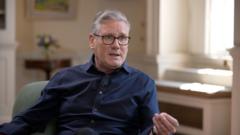
He had just returned from a quiet weekend with his family at Chequers. That was where the decision solidified. In his first major interview since throwing in the towel, Starmer described the choice to step down as "intensely personal."
It was. But it was also completely inevitable.
The reality behind the sudden departure isn't just about a stressful weekend or family pressure. The true narrative centers on a dramatic loss of support from his own parliamentary colleagues. Just two years after securing a historic landslide election victory, the silence from his cabinet was deafening. No one stepped up to defend him. Nobody begged him to stay. The party machine wanted him gone, and Starmer knew it.
Now, as the Labour Party prepares for a summer leadership transition, the outgoing prime minister is leaving behind a sharp warning for whoever takes his place.
The myth of separating domestic and foreign policy
The chief complaint against Starmer during his short-lived premiership was that he spent way too much time playing the global statesman. Opponents mocked him as "Never Here Keir." They claimed he ignored the immediate crises hitting British living rooms while jetting off to international summits.
His likely successor, Greater Manchester Mayor Andy Burnham—who just won his way back into Parliament in a high-stakes by-election—has based his entire pitch on fixing the home front. Burnham wants to focus heavily on local, domestic issues.
Starmer thinks that approach is completely detached from modern reality.
In his BBC interview, Starmer directly challenged this strategy. He argued that you can't fix household energy bills without addressing the conflict in Ukraine. You can't secure trade or stabilize the economy without managing chaos in the Strait of Hormuz.
The idea that a British prime minister can simply choose to ignore global diplomacy to focus on domestic policy is a pipe dream. Starmer didn't hold back. He flatly stated that trying to split the international from the domestic "just doesn't make sense" and "isn't true."
How a historic majority evaporated in two years
How does a leader go from a massive parliamentary majority to an emotional resignation in twenty-four months?
The downfall wasn't caused by a single scandal. It was a slow, agonizing accumulation of internal friction, policy reversals, and a defensive strategy that collapsed from within. Just weeks before his resignation, Defence Secretary John Healey walked out, exposing massive underfunding and outdated assumptions in the government's military planning. Starmer tried to put on a brave face, telling reporters "I will fight" and "I'm not going away."
But the floor fell out from under him.
His former chief of staff, Morgan McSweeney, recently admitted that the party simply failed to properly prepare for power. They designed a governing blueprint built for the stable economic era of the late 1990s. Instead, they inherited a volatile, fractured world shaped by deep fiscal constraints and intense geopolitical friction. When the public demanded immediate, radical change, the government offered cautious, incremental shifts. The parliamentary party panicked as polling plummeted, and the internal rebellion solidified overnight.
What happens next for the government
Starmer will stay on as a caretaker prime minister through the summer months to keep the ship steady while Labour runs its leadership contest.
This isn't going to be a long, drawn-out civil war. The contest is already shaping up to be a straightforward coronation for Andy Burnham. Burnham has built immense popularity as a regional champion, and his rapid return to Westminster puts him in the driver's seat to take over No. 10.
But taking the job is the easy part. Managing it is different.
The next leader inherits the exact same global realities that sank Starmer's administration. The incoming prime minister faces a stagnant economy, a crumbling public infrastructure, and a defensive posture that requires massive funding it doesn't currently possess. If Burnham or anyone else thinks they can ignore the international stage to focus solely on domestic fixes, they will run into the exact same wall.
The immediate next steps for the incoming administration require an aggressive reality check.
- Audit the national defense budget immediately to address the structural gaps that forced Healey's exit.
- Link international trade agreements directly to local regional development, proving to voters why foreign diplomacy matters to their wallets.
- Ditch the outdated 1990s policy playbook and adjust the government's strategy to match a high-inflation, high-conflict global landscape.
Starmer's exit proves that a massive majority won't save a leader who loses the confidence of their own benches. The job isn't just about managing the country; it's about managing the global forces that dictate modern life, whether the public likes it or not.
Starmer's voice breaks as he announces resignation plan
This short video captures the emotional moment Keir Starmer announced his decision to step down as prime minister and shift his focus back to his family.