The scent of crushed banana leaves and roasted spices does not belong in the middle of a Mediterranean autumn, yet there it was, cutting through the dry evening air of Tel Aviv like a sharp memory.
Outside, the city hummed with its usual kinetic urgency. Inside, twelve hundred souls had just pressed pause on the world.
Distance is a strange architect. It stretches language, blurs borders, and turns the ordinary sounds of a childhood street into quiet ghosts that visit you when the apartment is dark. For the Indian diaspora gathered by the embassy, home was not a coordinate on a map tonight. It was an arrangement of marigold petals on a concrete floor. It was the rhythm of a drumbeat echoing off modern walls. It was Onam.
To understand what happened in that hall, you have to understand what it means to be far away. Not just geographically, but culturally. When you live inside a language that is not your mother tongue, part of you goes quiet. You translate your thoughts before you speak them. You file away your idioms. But once a year, the harvest festival of Kerala offers a rare permission slip: the right to be entirely, unapologetically yourself, surrounded by people who understand the exact weight of a longing you cannot easily name.
Think of Priya, a hypothetical nurse who has spent the last decade navigating the demanding wards of an Israeli hospital. Her days are measured by monitor beeps, sterile hallways, and instructions shouted in Hebrew. She is respected, capable, and entirely exhausted. When she walked into the celebration, she did not walk in as an immigrant worker trying to fit into the margins of a foreign society. She walked in as a daughter of the backwaters.
As she looked down at the Pookkalam—the intricate floral carpet taking shape near the entrance—something in her shoulders dropped. The colors were exact. The symmetry was deliberate. It required patience, hours of kneeling and pinching petals, a communal ritual where nobody checked their watch.
Twelve hundred people. Think about that number for a moment. In a world defined by political fractures and headlines that scream of division, twelve hundred individuals crowded into a single space, bound not by proximity, but by a shared inheritance of monsoon rain, coconut palms, and the legend of a generous mythical king named Mahabali.
The Indian Embassy had orchestrated the gathering, but government bodies do not create joy; they merely provide the roof under which joy is allowed to happen. The real architecture of the evening was built by the attendees themselves. They wore kasavu saris woven with threads of pure gold that caught the fluorescent lights and turned them into warm fire. They carried the cadence of Malayalam on their tongues, rolling the vowels with a familiarity that felt like cool water on a hot day.
There is a specific kind of bravery required to build a life in a country you were not born in. It requires trading the known for the unknown, the comfort of family dinners for the uncertainty of a solitary apartment, the predictable rhythm of home for the high-stakes dance of adaptation. Most days, that bravery looks quiet. It looks like paying utility bills in a strange script. It looks like learning to navigate public transit while your heart is three thousand miles away.
Then comes the feast. The Sadya.
To the uninitiated, it is simply a meal served on a plantain leaf: rice, sambar, avial, payasam, dozens of distinct dishes demanding a specific order of consumption. To those who grew up with it, the Sadya is an emotional map. Every bite tells a story of geography, of an ecosystem shaped by water and sun. Eating it with your hands—fingers touching rice and curry—is an act of radical intimacy. It strips away pretense. You cannot rush a Sadya, and you certainly cannot eat it with detachment. You must sit, you must focus, and you must surrender to the experience.
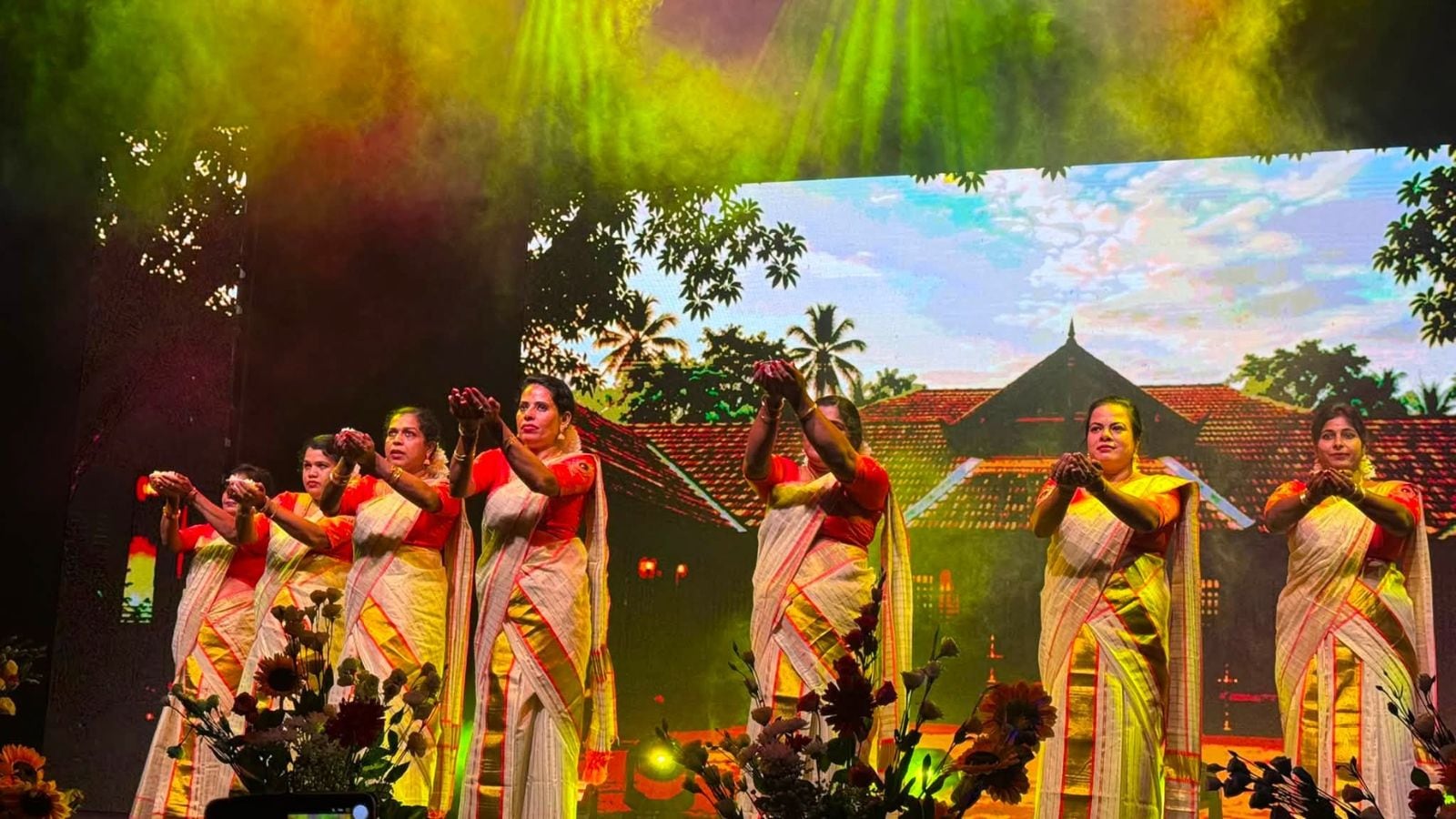
As the plates were cleared and the rhythmic clatter of spoons gave way to laughter, the cultural performances began. Dancers moved with precision, their eyes telling ancient stories of love, betrayal, and divine grace. The audience watched not as passive consumers of entertainment, but as active participants in a living tradition. Every time a familiar rhythm dropped, a collective ripple went through the room—a nod, a smile, a shared look that said, Yes, remember this?
We often talk about international relations in terms of trade agreements, diplomatic cables, and strategic defenses. We measure diplomacy by what happens in mahogany-paneled boardrooms between men in dark suits. But true diplomacy—the kind that actually endures—happens on the floor of a crowded community hall when people from different backgrounds break bread, share stories, and recognize their own humanity in the eyes of a stranger.
Israel and India share deep technological and strategic ties, but on this night, the metric of connection was entirely different. It was measured in the number of smiles exchanged, the volume of laughter bouncing off the ceiling, and the quiet comfort of feeling seen in a room full of people who knew your story before you even spoke it.
By the time the evening drew to a close, the marigold petals near the entrance were slightly crushed, scattered by the footsteps of a community refusing to let go of its roots. Outside, the Tel Aviv night was waiting with its familiar noise and its steady, relentless pace.
Priya stepped back out into the cool air. The city was the same as it had been hours before. The street signs were still in Hebrew. The distance to home was still measured in thousands of miles.
Yet something had shifted. Her footsteps felt lighter against the pavement. Inside her coat pocket, she carried a single, dried petal that had fallen from the floral carpet—a small, stubborn piece of Kerala, safely tucked away against the world.