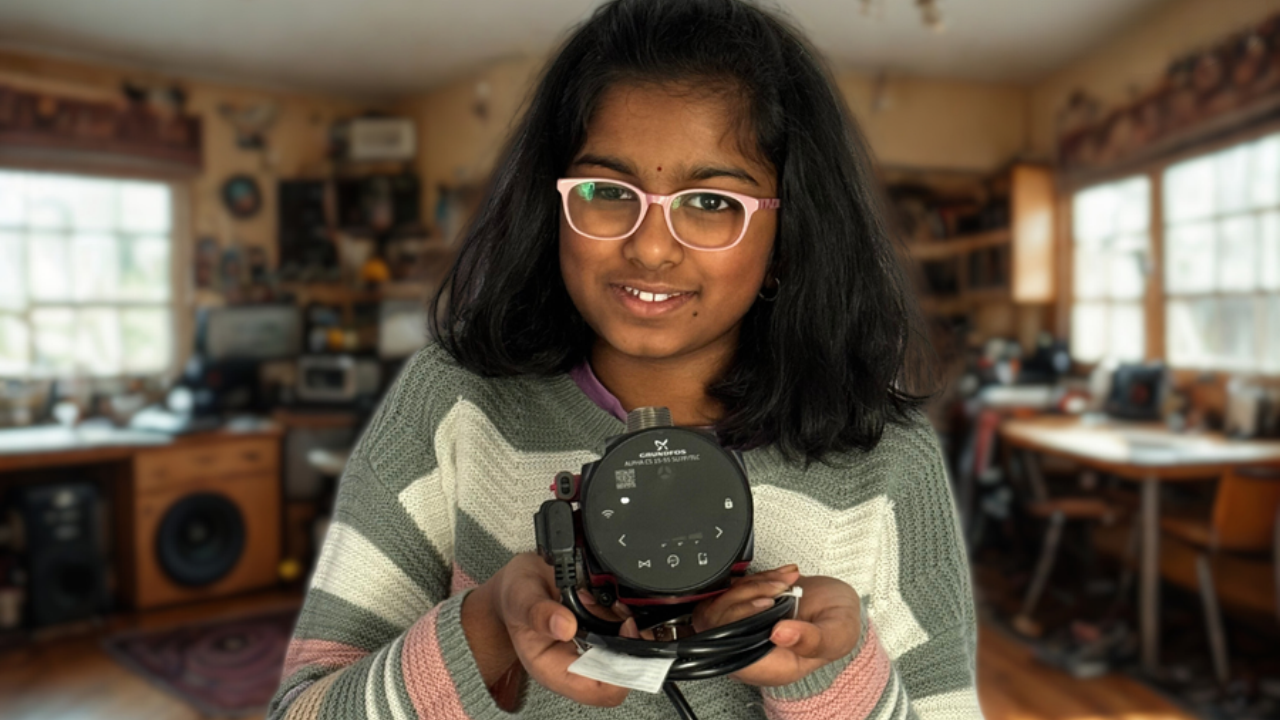
Most people wait for adults to fix broken infrastructure. Eleven-year-old Nithya Tammana decided not to wait.
When you look at aging public school systems across the country, lead contamination isn't a distant hypothetical. It's an active hazard. Heavy metals leach from corroded pipes into drinking fountains every single day. Commercial filtration systems cost thousands of dollars, putting safe hydration out of reach for underfunded communities.
Nithya looked at this massive systemic failure and built a working solution for under thirty-eight bucks.
How the Moss Filter Actually Works
You don't need a multi-million-dollar laboratory to engineer a functional water purifier. You just need to understand natural biological properties.
Nithya developed a system named BioLayer, which harnesses the natural absorption capabilities of moss. Moss acts as a natural biosorbent. It binds to heavy metal ions present in flowing water.
Instead of relying on proprietary synthetic membranes or complex electronics that break down over time, the design uses accessible, organic materials. Laboratory testing and project evaluations showed that the setup can strip up to 95 percent of lead out of targeted water sources.
Building it didn't require industrial manufacturing tools. The entire framework relies on components that regular people can source locally. That choice changes everything. When a blueprint is open-source, corporate gatekeeping collapses. Anyone can replicate it, test it, and deploy it where it's needed most.
Moving Past Local Fixes Into Mass Action
An invention sitting on a workbench doesn't change public health outcomes. Scaling does.
Realizing that individual filtration devices only scratch the surface, Nithya built a youth-led conservation network called Save Drop. It grew past a simple science fair project into a collective comprising over 450 active members.
This network focuses on two fronts simultaneously:
- Eliminating everyday water waste through behavioral shifts at home and in public spaces like restaurants.
- Mobilizing young advocates to pressure local decision-makers on drinking water safety and infrastructure updates.
Too often, environmentalism gets trapped in academic silos or corporate greenwashing campaigns. This grassroots model bypasses the noise. Kids and teens are organizing locally, testing water quality, and sharing low-cost purification blueprints with communities facing contamination crises.
What You Can Learn From This Breakthrough
You don't have to be an adult engineer to challenge bad systems. Real innovation starts with a simple observation.
For Nithya, it started by watching clean tap water run down a drain while waiting for a shower to warm up. That initial curiosity expanded into questioning why clean drinking water remains a luxury tied to postal codes and school district budgets.
If you want to make an actual impact in your own community, stop waiting for permission from institutional boards. Look at a tangible local problem, research open-source alternatives, and build a prototype. Share your findings openly. Real change happens when communities stop outsourcing their survival to bureaucracy and start building decentralized tools themselves.



