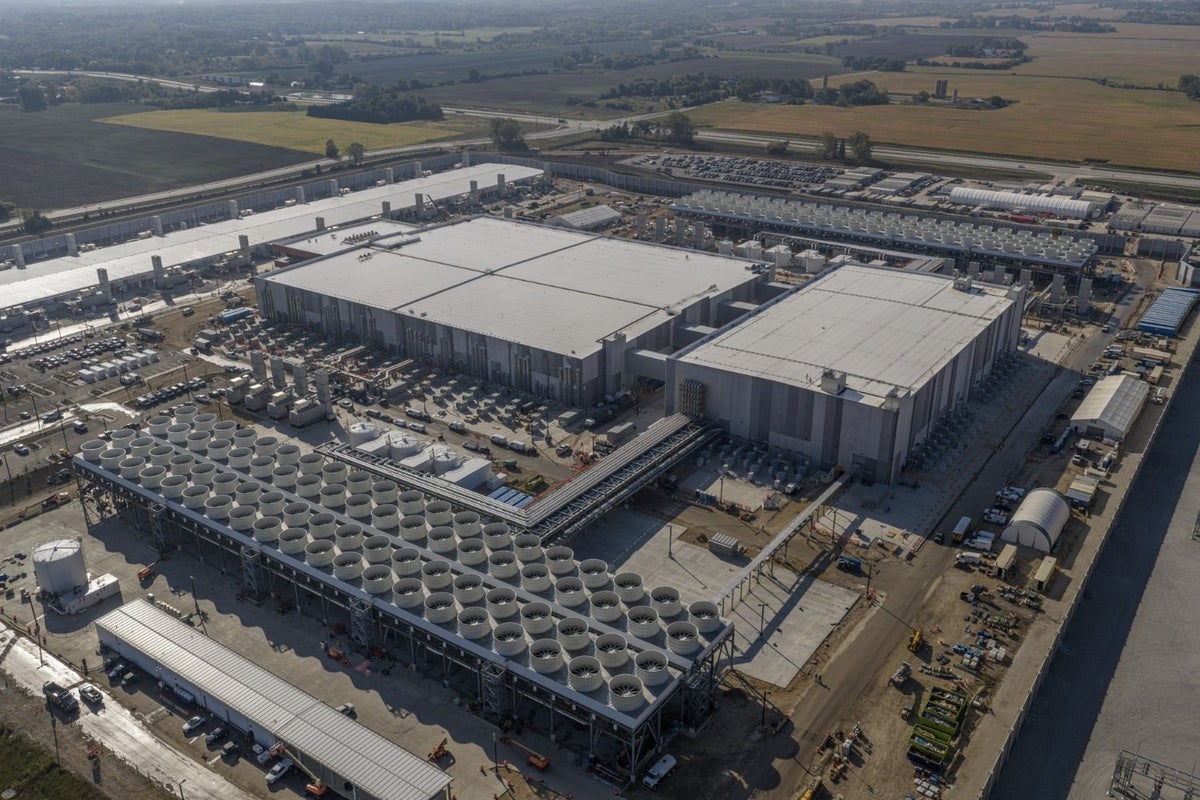
The kinetic targeting of three Amazon Web Services (AWS) hyperscale facilities in the United Arab Emirates and Bahrain by Iranian Shahed-136 loitering munitions exposed a structural vulnerability in modern military architecture: the centralized cloud is a single point of failure in high-intensity state conflict. Modern defense doctrines rely on algorithmic target generation, multi-sensor data fusion, and near-real-time command systems. However, these systems create a highly centralized data profile. When the physical nodes processing these workloads are tied to fixed, capital-intensive geographic coordinates, they become high-priority targets for low-cost, precision-guided adversarial munitions.
This friction accelerates a fundamental shift in military logistics. Defense infrastructure must transition from centralized, static regional cloud architectures to distributed, mobile, and ruggedized edge compute units. This transformation is governed by strict physical constraints: energy density, localized cooling capacities, network bandwidth variability, and transport kinetics.
The Fragility of Centralized Hyperscale Architecture
The physical targeting of commercial hyperscale infrastructure in the Persian Gulf demonstrates that the distinction between civilian commercial infrastructure and military operational infrastructure has collapsed. Under international humanitarian law, a data center processing dual-use workloads—such as commercial banking alongside state logistics or contractor-managed military data—constitutes a legitimate military objective if its destruction offers a definite military advantage.
Adversaries maximize strategic disruption by exploiting the asymmetric economics of data center targeting. A single drone costing less than $50,000 can cause hundreds of millions of dollars in structural damage, disrupt local macroeconomic systems, and force military workloads into high-latency backup loops.
The systemic vulnerability of the fixed data center is defined by three interconnected dependencies:
- The Grid Dependency Function: Hyperscale facilities require continuous, high-voltage electrical inputs. High-performance AI training and inference workloads utilizing modern GPU and Neural Processing Unit (NPU) architectures demand up to 100 kilowatts per rack. This forces reliance on fixed regional electrical grids and large, vulnerable localized substations.
- Thermal Management Constraints: Dissipating the heat generated by dense compute clusters requires industrial cooling infrastructure, often consuming millions of gallons of water daily or relying on extensive chilled-water piping networks. Rupturing these cooling lines causes rapid thermal throttling or catastrophic equipment failure without directly compromising the server racks.
- The Fiber Bottleneck: While data center networks are built with internal redundancies, their external terrestrial and undersea fiber optic routes converge at highly predictable landing stations and transit corridors. Severing these physical bottlenecks isolates the facility, rendering its massive compute capacity useless to forward-deployed units.
The Architecture of Mobile Tactical Compute
To mitigate the vulnerability of fixed infrastructure, modern forces are deploying containerized, mobile edge data centers directly to the tactical theater. These systems do not merely duplicate cloud functions; they reorganize the compute pipeline to maximize survivability and minimize operational latency.
A premier example of this architecture is the collaboration between Anduril Industries and AWS, deploying the Menace-I platform within standardized shipping container form factors. These mobile modules are designed to run AWS Outposts hardware, integrating specialized ultra-low-latency server racks directly into austere field environments.
+------------------------------------------------------------+
|                TACTICAL MOBILE COMPUTE NODE                |
+------------------------------------------------------------+
| [Physical Enclosure] ISO Standard Container (Sling-Load)   |
+------------------------------------------------------------+
| [Compute Layer]     40 to 168 Low-Latency Server Blades    |
|                     Integrated GPUs / NPUs                 |
+------------------------------------------------------------+
| [Network Layer]     Multi-Transport WAN (SATCOM / Line-of- |
|                     Sight Radio / Ad-Hoc Mesh)             |
+------------------------------------------------------------+
| [Support Layer]     Ruggedized HVAC / Closed-Loop Liquid   |
|                     Cooling / Local Diesel Generation      |
+------------------------------------------------------------+
To evaluate the operational utility of these units, planners must quantify performance across three distinct hardware tiers:
- Core Modules: Optimized for maximum portability. Typically housed in compact, rugged enclosures, these units deploy between 40 and 42 servers. They are engineered for rapid displacement, allowing field teams to establish a local cloud node within minutes of arriving at a tactical location.
- Command Modules: Matching the server density of Core modules but integrating local communication suites and human-machine interfaces. These serve as localized tactical operations centers, combining processing power with direct battlefield command capabilities.
- Enhanced Modules: Designed for heavy processing workloads at echelon. These larger configurations support up to four integrated server racks, totaling up to 168 high-performance servers. They trade immediate mobility for the raw computing power required to run complex targeting software like Palantir’s Tactical Intelligence Targeting Access Node (TITAN).
Operational Dynamics and Logistics Kinetic Constraints
Deploying high-density compute capabilities to the tactical edge introduces harsh physical and operational constraints that do not exist in traditional data center management.
Kinetic Mobility and Weight Distribution
Survivability at the edge depends on tactical displacement speed. If a mobile data center remains stationary long enough for an adversary to complete a target-acquisition loop, it will be destroyed. Therefore, these systems must conform to standard military transport mechanisms.
The physical integration must support sling-load operations by rotary-heavy-lift assets, such as the Sikorsky CH-53K King Stallion. This certification allows the compute node to be rapidly inserted into unimproved clearings, forward operating bases, or island positions in contested maritime environments. Weight distribution, structural tie-downs, and shock-absorption frames must protect sensitive silicon wafers from the high G-forces encountered during transport and off-road movement.
The Thermal and Power Trade-off
At the edge, power availability dictates compute capacity. While a domestic data center draws megawatts from a municipal grid, a mobile unit relies on tactical generators. Running 168 high-performance servers alongside the necessary environmental control units requires substantial fuel logistics.
Furthermore, cooling systems must operate via closed-loop liquid or ruggedized air-conditioning units capable of filtering out fine desert dust, high humidity, and salt spray. If the ambient operating temperature exceeds the cooling system's capacity, hardware self-preservation algorithms automatically reduce processor clock speeds, severely degrading target-processing throughput.
Bandwidth Asymmetry and Degraded Operations
A primary justification for edge deployment is the reduction of latency. For automated targeting systems, routing data back to a continental data center introduces unacceptable delays. Mobile data centers provide single-digit millisecond latency locally.
However, these units must still periodically synchronize with broader strategic networks via satellite communications (SATCOM) or line-of-sight networks. In high-intensity conflict, these links are frequently degraded by electronic warfare or atmospheric conditions. Mobile architectures must therefore utilize decentralized software stacks designed to operate in a completely disconnected state, executing local data fusion and target prioritization independently before syncing when the network link restores.
The Strategic Shift in Force Structure
The transition to mobile military data centers forces an operational recalculation for modern militaries. It requires a fundamental shift in personnel allocation and technical dependencies.
First, the requirement for technical maintenance shifts directly to the forward line of troops. Software engineers, cloud architects, and hardware technicians must be embedded within tactical units to manage physical component failures, security patches, and localized network reconfigurations. This creates a new class of forward-deployed technical personnel who must operate under standard military protection doctrines.
Second, the reliance on automated systems requires rigid data-curation models. If an edge data center processes outdated or corrupted localized sensor feeds, the algorithmic output will be flawed. This risk was underscored during operations in the Middle East, where outdated location datasets led to catastrophic targeting errors on non-military structures. The responsibility for data accuracy shifts from centralized strategic commands down to the tactical operators managing the edge node.
Rather than relying on a small number of easily targetable megacampuses, resilient force design demands the deployment of dozens of smaller, highly mobile compute nodes. If an adversary destroys one mobile unit, the broader network automatically routes processing workloads to adjacent nodes, maintaining localized targeting capabilities and preserving command continuity across the theater.