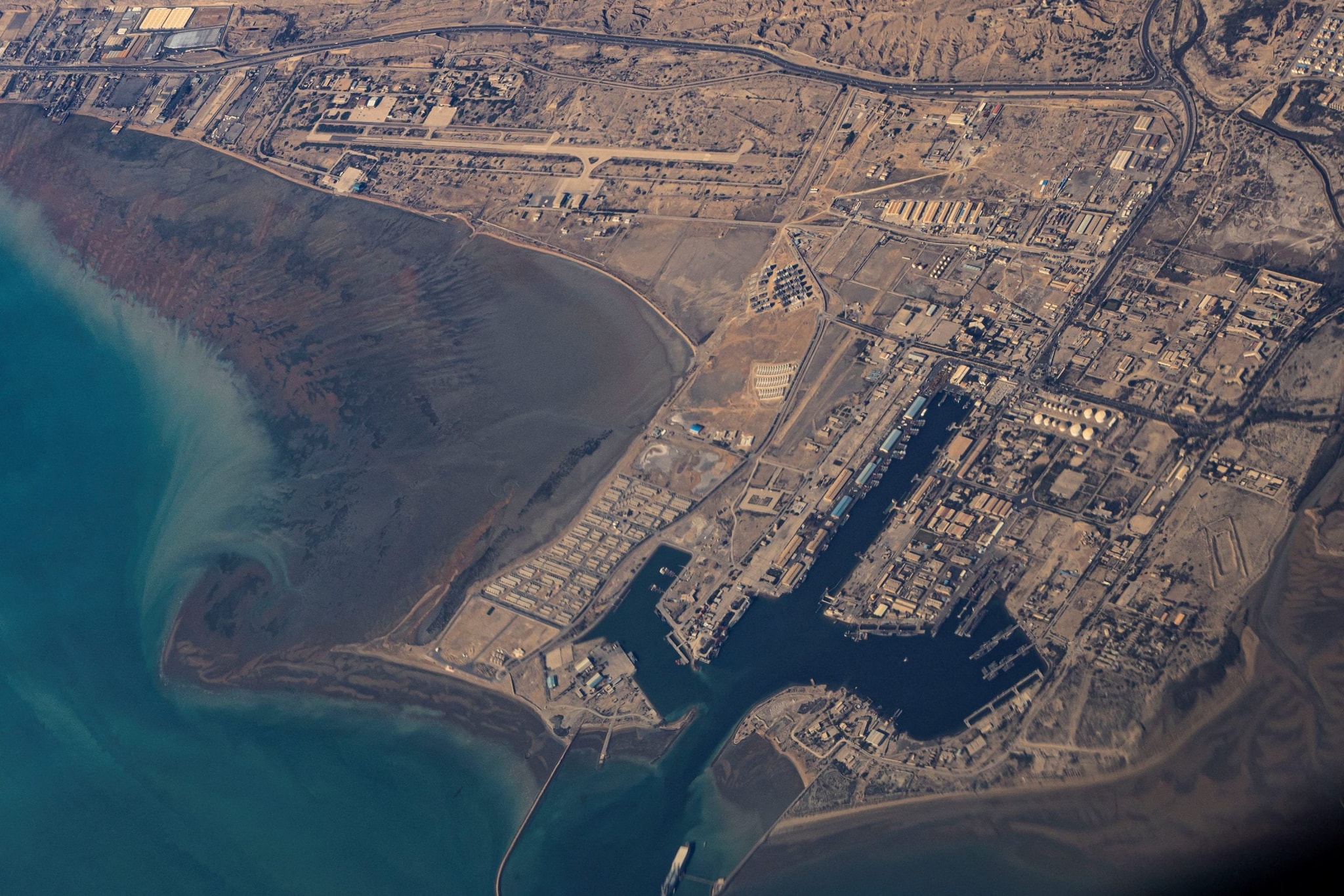
A total maritime blockade of Iran is not a singular military event but a sustained exhaustion of naval readiness, global shipping liquidity, and energy market stability. While political rhetoric often frames a blockade as a binary switch—on or off—military reality dictates that such an operation is a function of geographic bottlenecks and the specific physics of Anti-Access/Area Denial (A2/AD) environments. Effectively sealing the Iranian coastline requires the United States to solve for three intersecting variables: the density of the Strait of Hormuz, the attrition rates of littoral combat, and the systemic fragility of the global tanker fleet.
The Geography of Asymmetric Leverage
The Strait of Hormuz represents a unique tactical nightmare where the traditional advantages of a blue-water navy—standoff range and maneuverability—are neutralized by proximity. At its narrowest point, the shipping lanes are only two miles wide in each direction, separated by a two-mile buffer zone. This creates a predictable transit corridor that functions as a kill zone for land-based ballistic missiles and fast-attack craft. For a deeper dive into similar topics, we recommend: this related article.
Iran’s defensive strategy relies on geographic depth. By utilizing its 1,500-mile coastline and numerous islands (Abu Musa, the Tunbs, Qeshm), Tehran can distribute its sensory and strike assets. A blockade force cannot simply sit at the mouth of the Persian Gulf; it must actively suppress mobile coastal batteries and "swarm" drone launch sites that are integrated into civilian and industrial infrastructure. This necessitates a high-frequency reconnaissance-strike loop that most modern navies are not currently equipped to maintain over a multi-month timeline.
The Three Pillars of Interdiction Failure
Executing a blockade against a nation with Iran's specific military doctrine faces three structural failures in traditional naval planning. For further information on this topic, comprehensive analysis can be read on The Washington Post.
- The Saturation Threshold: A blockade requires "persistent presence." However, the proximity of Iranian soil to the shipping lanes allows for the use of low-cost, high-volume munitions. If Iran launches a swarm of 50 One-Way Attack (OWA) drones and 10 anti-ship cruise missiles (ASCMs) simultaneously, the cost-exchange ratio favors the defender. A single Standard Missile-2 (SM-2) interceptor costs over $2 million, while the drones it intercepts may cost less than $30,000. The blockade fails when the interceptor magazines of the fleet are depleted faster than they can be replenished by logistics ships, which are themselves vulnerable targets.
- The Detection-to-Engagement Gap: Iran’s use of "gray zone" assets—converted fishing dhows, civilian-flagged vessels carrying mines, and semi-submersibles—complicates the Rules of Engagement (ROE). A blockade commander must distinguish between a legitimate commercial tanker and a disguised platform for a suicide boat attack. The time required to verify a target's intent often exceeds the time required for that target to reach a lethal distance.
- The Sub-Surface Mine Trap: The Persian Gulf is shallow, averaging only 50 meters in depth. This environment is ideal for bottom-moored and "smart" mines. Clearing a minefield is a slow, methodical process that requires specialized vessels (MCMs) that lack heavy armor or defensive armament. To protect the minesweepers, the U.S. must commit high-value assets to a static position, making them easy targets for land-based artillery.
The Cost Function of Global Insurance and Logistics
A blockade is not only a military maneuver; it is a direct intervention in the global insurance market. The moment a blockade is declared, "War Risk" premiums for the Persian Gulf skyrocket. This creates a de facto blockade of all regional ports, including those of U.S. allies like the UAE and Kuwait.
The economic fallout is dictated by the vessel wait-time exponent. If a blockade slows tanker transit by even 20% due to inspection requirements and convoying, the global supply of "Available Ton-Miles" shrinks. This triggers a nonlinear spike in charter rates. The global economy cannot absorb the loss of the 21 million barrels of oil that pass through the Strait daily. Therefore, the U.S. would be forced to provide "Sovereign Guarantees" to shipping companies, essentially assuming the financial risk for every hull in the Gulf. The fiscal burden of such a guarantee, combined with the daily operational cost of a Carrier Strike Group (approximately $6-8 million per day), makes the blockade an unsustainable long-term strategy.
The Kill-Chain Bottleneck
The primary limitation of a U.S. blockade is the VLS (Vertical Launch System) Reload Problem. U.S. destroyers and cruisers cannot reload their missile tubes at sea; they must return to a specialized port or a tender.
In a high-intensity conflict, a destroyer could empty its magazine in a single afternoon of intense defensive operations. If the nearest secure port for reloading is outside the Persian Gulf (such as Diego Garcia or a heavily fortified base in the UAE), the blockade force experiences a "rotating vacancy." For every three ships on the blockade line, two are either in transit or reloading, effectively tripling the number of hulls required to maintain the interdiction. Given the current size of the U.S. Navy's surface fleet and the competing requirements of the Indo-Pacific theater, maintaining a 24/7 airtight blockade of Iran would require nearly 60% of the active-duty destroyer force.
The Strategic Shift to Kinetic Denial
If the objective is to stop Iranian exports, a traditional naval blockade—boarding and searching ships—is the least efficient method. It exposes sailors to small-arms fire and kidnapping, and it creates legal quagmires in international maritime law.
A more effective, albeit more escalatory, strategy is Kinetic Point Denial. Instead of stopping ships at sea, the focus shifts to the destruction of the fixed infrastructure required to load those ships. This involves targeting:
- The Kharg Island Oil Terminal: Responsible for over 90% of Iran’s crude exports.
- Pumping Stations and Pipeline Hubs: Non-redundant nodes in the energy supply chain.
- Port Control Centers: The digital and human infrastructure that manages maritime traffic.
By shifting from a blockade (a naval barrier) to a targeted strike campaign (infrastructure neutralization), the U.S. avoids the magazine depletion and cost-exchange issues of the Strait of Hormuz. However, this moves the conflict from "containment" to "total war," likely triggering a response against desalination plants and oil refineries across the Arabian Peninsula.
The Logistics of Localized Escalation
The risk of a blockade is not merely Iranian retaliation, but the exhaustion of U.S. precision-guided munitions (PGMs). Strategic modeling suggests that in a high-intensity theater-wide conflict, stocks of long-range anti-ship missiles would be depleted within weeks. Iran’s strategy is designed to capitalize on this by utilizing a "tiered defense" where the lowest-value assets (small boats and basic drones) are used first to bait out high-value U.S. interceptors.
The operational success of any blockade depends on the ability to maintain a localized air-superiority bubble. Without constant E-3 Sentry (AWACS) coverage and combat air patrols (CAP), the naval force is blind to low-flying cruise missiles that hug the coastline. The density of Iranian electronic warfare (EW) systems along the coast further degrades the GPS and communication links necessary for coordinated fleet defense.
The definitive strategic play for a maritime interdiction of Iran requires an immediate pivot away from the "Suez-era" model of naval cordons. Success depends on the deployment of unmanned underwater vehicles (UUVs) for autonomous mine hunting and the integration of land-based "Long-Range Precision Fires" (LRPF) from the western side of the Gulf to provide a counter-battery capability that doesn't rely on carrier-based aircraft. Any plan that relies solely on surface hulls within the Persian Gulf is a plan for attrition, not victory. The operational goal must be the systematic dismantling of the Iranian coastal radar network prior to any attempt at shipping interdiction, effectively turning the "Strait of Hormuz" from a trap for the blockade force into a void for the defender.