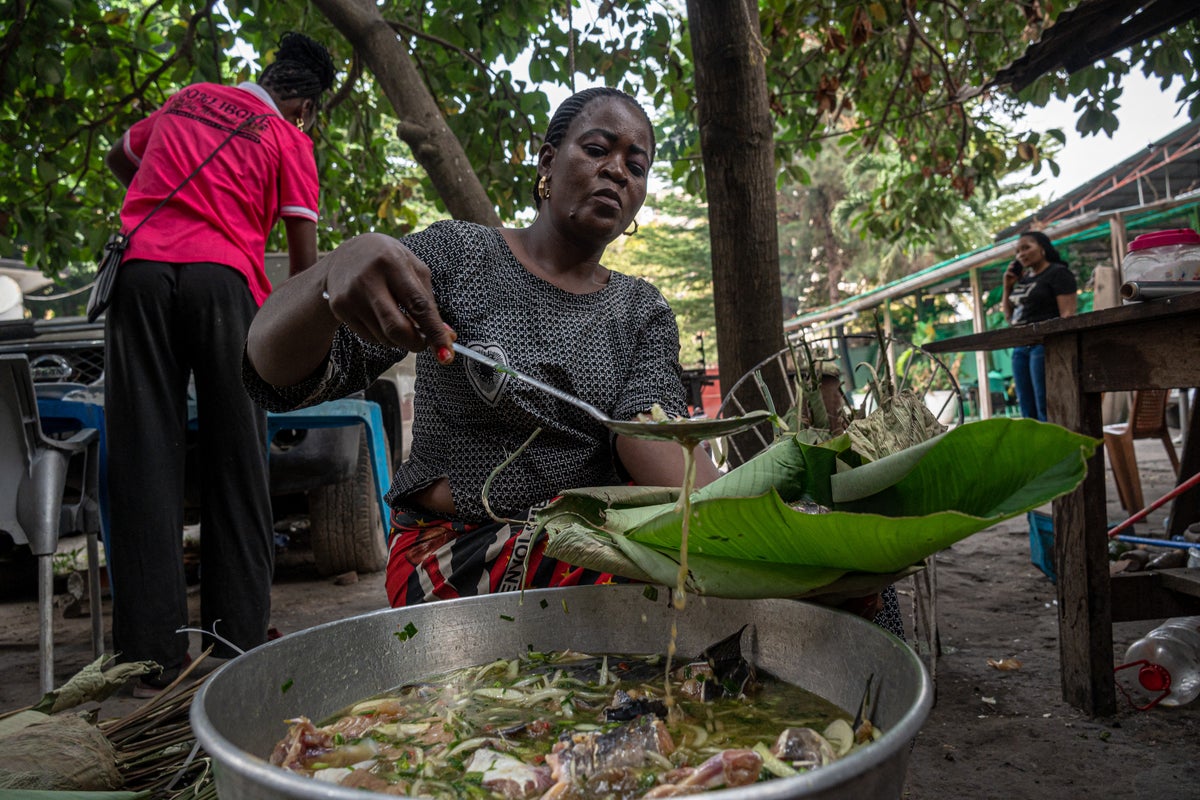
Kinshasa is a ticking time bomb. While global headlines focus on the frontlines of Eastern Congo, the capital city—a massive, sprawling urban center of 17 million people—is quietly sliding into a catastrophic hunger crisis. We aren't talking about a "challenge" or a "developing situation." We're talking about millions of people skipping meals for days on end because the price of basic staples like cassava and maize has skyrocketed beyond any reasonable reach.
If you think this is just another story of poverty, you're missing the point. The crisis in Kinshasa is unique. It's the result of a perfect storm where displacement, crumbling infrastructure, and a brutal conflict 1,500 miles away have collided to create an urban nightmare. Families who moved to the city for safety now find that safety doesn't include the ability to eat.
The supply chain collapse killing Kinshasa
Most people don't realize how fragile a megacity’s food supply is until it snaps. Kinshasa doesn't grow its own food. It relies on a network of broken roads and the Congo River to bring in produce from the provinces. But right now, those lifelines are failing.
Armed conflict in the east has displaced millions of farmers. When farmers flee their land, they aren't planting crops. When crops aren't planted, the national surplus vanishes. What little makes it to the capital is taxed by informal checkpoints or simply rots because a truck got stuck in a mud pit that hasn't been paved since the sixties.
Inflation in the Democratic Republic of Congo (DRC) has hit the poorest hardest. The Congolese Franc has lost significant value against the dollar, making imported food—which the city increasingly relies on—too expensive for the average street vendor or laborer. When a bag of flour costs more than a week's wages, the math simply stops working.
Why the Eastern conflict is a Kinshasa problem
It's easy to look at the maps and assume the war with M23 and other armed groups is a localized problem. That's a mistake. The instability in the east creates a massive internal migration. People aren't just moving to Goma; they're moving to Kinshasa.
This influx of internally displaced persons (IDPs) puts an unbearable strain on the city’s resources. We're seeing neighborhoods that were already struggling now forced to absorb thousands of new residents who arrived with nothing but the clothes on their backs.
- Competition for low-wage jobs: More people means lower wages for manual labor.
- Housing density: Slums are expanding into flood-prone areas, increasing disease risk.
- Reduced aid: Humanitarian organizations are so focused on the war zones that they've neglected the urban poor.
I’ve seen how this plays out. When the World Food Programme (WFP) or CARE International warns about DRC, they usually show photos of camps in North Kivu. But the hunger in the back alleys of Kinshasa’s Lemba or Masina districts is just as lethal. It’s just less "cinematic" for the evening news.
The myth of the fertile land
You'll often hear people say that DRC is the most fertile place on earth and shouldn't be hungry. That’s technically true but practically irrelevant. Potential doesn’t fill a stomach.
The gap between the DRC’s agricultural potential and its reality is a result of decades of underinvestment. Less than 10% of the country’s arable land is actually cultivated. In Kinshasa, people try to garden on tiny plots of contaminated urban soil, but it’s a drop in the bucket. Without industrial-scale logistics and security for rural farmers, Kinshasa remains a hostage to global commodity prices and erratic local supply.
What the data tells us about the hunger gap
The Integrated Food Security Phase Classification (IPC) recently indicated that millions in the DRC are in "emergency" levels of hunger. In Kinshasa, the sheer density makes this dangerous. In a rural village, you might find a wild fruit tree or a neighbor with a small garden. In a concrete jungle like Kinshasa, if you don't have cash, you don't eat. Period.
Recent reports suggest that at least one-third of the city's population is facing severe food insecurity. That's over five million people. Children are the first to show the signs. Chronic malnutrition—stunting—is becoming the norm in the capital’s outskirts. This isn't just a temporary hunger pang. It's a permanent reduction in the cognitive and physical potential of an entire generation of Congolese citizens.
The failure of the international community
Let's be blunt. The international response has been pathetic. The humanitarian response plan for the DRC is consistently underfunded. Donors are tired. They’re looking at Ukraine, they’re looking at Gaza, and they’ve decided that Congo’s "slow-motion" crisis can wait.
But it can't. A starving megacity is an unstable megacity. When people can't feed their children, they don't sit quietly. They protest. They riot. They become easy recruits for anyone promising a way out. The hunger crisis in Kinshasa is a security threat to the entire Central African region, yet the world treats it like a localized welfare issue.
Breaking the cycle of urban starvation
Fixing this isn't just about sending bags of grain. That's a band-aid on a gunshot wound. We need a fundamental shift in how the city is fed.
First, the "breadbasket" provinces near Kinshasa, like Kongo Central, need massive investment in feeder roads. If a farmer can get their tomatoes to the city in four hours instead of four days, the price drops and the farmer actually makes a profit.
Second, we have to talk about cash transfers. In an urban environment, giving people money is often more effective than giving them food. It supports local markets and allows families to buy what they actually need.
Third, urban farming isn't a hobby here; it’s a necessity. We need to see large-scale support for hydroponics and vertical farming within the city limits. It sounds futuristic, but when you have 17 million people and no roads, you have to grow where you live.
What you can actually do
If you're reading this and feeling helpless, don't just close the tab. The situation is dire, but it’s not hopeless.
- Support organizations on the ground: Look for groups that have a permanent presence in Kinshasa, not just those that fly in for emergencies. Organizations like Action Against Hunger and MSF (Doctors Without Borders) are doing the heavy lifting in urban clinics.
- Advocate for debt relief: The DRC spends a massive portion of its budget servicing international debt. That’s money that should be going into agricultural infrastructure.
- Pressure for peace: The hunger in Kinshasa won't end until the war in the East ends. Demand that your representatives take the conflict in the DRC seriously.
Kinshasa is a vibrant, creative, and resilient city. But resilience has a breaking point. We are currently testing that point every single day. If we don't act now, we won't be talking about a "crisis" anymore. We'll be talking about a famine that could have been prevented. Stop waiting for the photos of the fallout to start caring. The warning signs are everywhere. Pay attention.