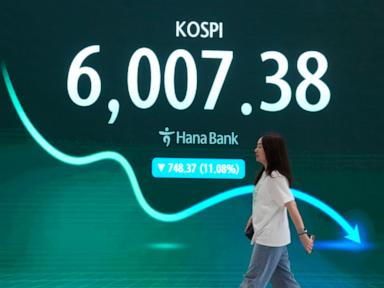
Markets don't climb forever, but when they break, they rarely do it quietly. If you were watching South Korea's financial ecosystem, you saw panic unfold in real-time as the Kospi index took an 8% nosedive.
Other Asian markets didn't escape the contagion either. But the sheer velocity of the sell-off in Seoul left retail traders and institutional desks scrambling for answers.
Let's look past the surface-level panic and break down what actually triggered the rout, why South Korea took the heaviest blow, and what this means for your portfolio moving forward.
The Real Catalyst Behind the Semiconductor Massacre
Most mainstream commentary points vaguely to shifting macroeconomic sentiment. That misses the core issue. The primary driver was a sudden, violent repricing of artificial intelligence expectations anchored entirely around hardware giants.
When chipmaker SK Hynix reported quarterly operating profits that missed aggressive analyst targets—despite posting record earnings overall—Wall Street and Asian exchanges panicked. SK Hynix shares cratered 12.6% in a single session, dragging Samsung Electronics down by 8%.
We've grown addicted to the "beat-and-raise" narrative in tech. When a bellwether company beats estimates but fails to provide astronomical forward guidance, the market treats it like a betrayal. Investors who piled into the artificial intelligence trade assume the growth curve is flattening out.
The Structural Flaw Inside the Kospi
Why did South Korea drop 8% while other regional exchanges experienced milder pullbacks? The answer comes down to extreme index concentration.
Samsung Electronics and SK Hynix aren't just normal public companies. They dictate the gravitational pull of the entire South Korean exchange. Together, they account for nearly half of the Kospi's total market value.
When both giants take a 10% beating in the same trading window, the index has nowhere to hide. Compare this to markets like Japan's Nikkei 225, which fell a relatively modest 1.8%, or Hong Kong's Hang Seng, which actually managed gains. Diversification protects indexes. Hyper-concentration destroys them during sector-specific panic.
Margin Debt and Forced Liquidation
There's another uncomfortable truth behind the crash that doesn't get enough screen time: retail leverage.
In the months leading up to the crash, retail margin debt in South Korea surged. Everyday investors borrowed heavily to chase the artificial intelligence rally. When prices started breaking key technical supports, brokers issued margin calls.
This creates a brutal downward spiral.
- Prices drop due to bad earnings sentiment.
- Leveraged accounts fall below minimum maintenance requirements.
- Brokers automatically liquidate holdings to recover funds.
- Forced selling pushes prices down further, triggering the next wave of margin calls.
Circuit breakers temporarily halted trading, but they couldn't stop the underlying math of over-leveraged portfolios getting washed out.
Global Headwinds Compounding the Pain
Local tech jitters didn't happen in a vacuum. They collided with broader global anxieties. Stronger-than-expected economic data out of the United States revived fears that central banks might keep interest rates higher for longer.
Higher interest rates crush high-growth equity valuations. Future cash flows look less attractive when risk-free government yields are climbing. At the same time, geopolitical tensions pushed oil prices higher, adding inflationary pressure to an already skittish global economy.
Practical Steps for Managing Tech Exposure Now
If you hold international equities or heavy tech allocations, don't panic-sell your entire position just because headlines look terrifying. Instead, audit your risk exposure objectively.
Check your portfolio concentration. If your gains are tied entirely to two or three semiconductor names, you're running the exact same risk that just punished the Kospi. Trim your winners to rebalance your baseline allocations.
Keep an eye on forward earnings multiples rather than headline revenue growth. Companies trading at reasonable valuations can weather a sentiment shift much better than speculative names priced for perfection. Accept that volatility is the admission fee for high-growth sectors, and structure your cash reserves so you never get forced out of a position by a margin call.