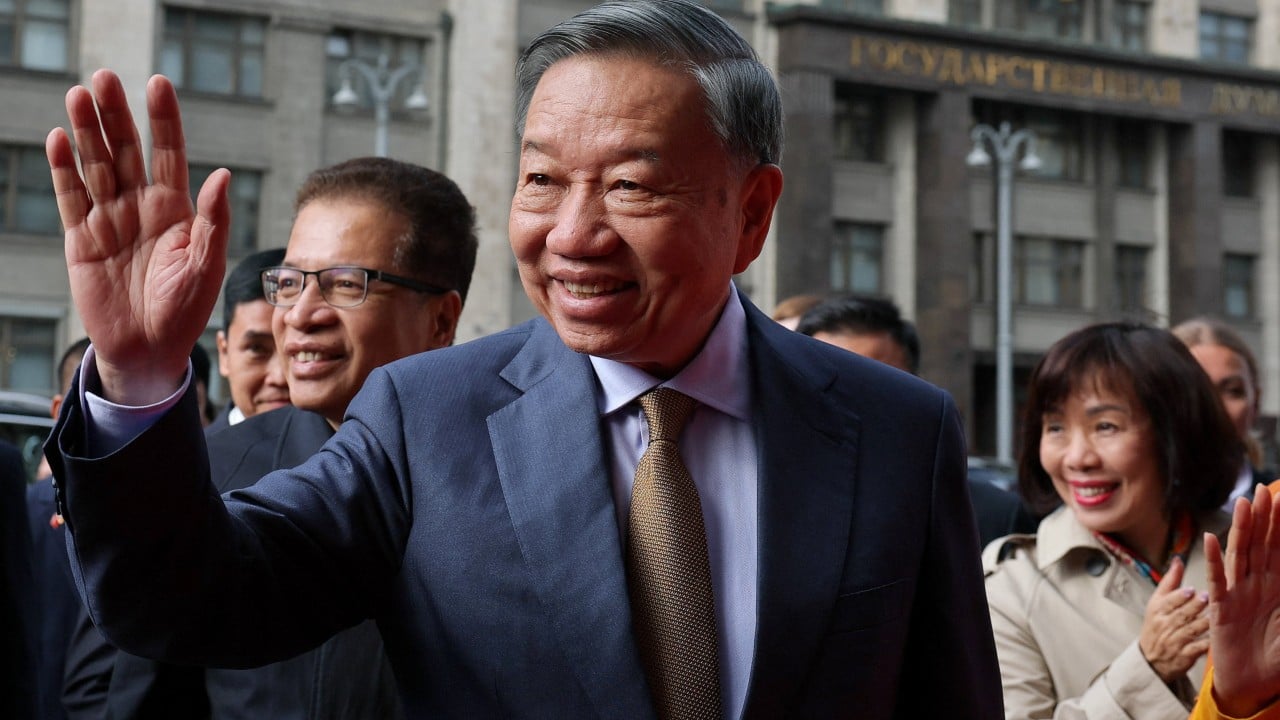
Hanoi's leadership isn't waiting around for superpowers to dictate regional waters. When General Secretary and President To Lam packed his schedule for a high-stakes diplomatic tour through Moscow and Paris, international observers immediately looked for hidden codes. They found them in maritime security charts and defense logistics.
Navigating the turbulent waters of modern geopolitics requires a careful balancing act. Vietnam masters this daily. While tensions brew in the South China Sea over disputed energy blocks and maritime boundaries, Hanoi pursues a strict "bamboo diplomacy" approach. You bend with the wind so you don't snap. Lam's itinerary reflects precisely that strategy. By engaging traditional partners and Western heavyweights back-to-back, Vietnam refuses to box itself into a single corner.
The Moscow Stopover and Energy Realities
Russia remains deeply embedded in Vietnam's military and energy infrastructure. Moscow is still the primary arms supplier for Hanoi's armed forces, despite recent diversification efforts. More importantly, Russian energy giants like Zarubezhneft and Gazprom maintain active joint ventures in offshore oil and gas blocks inside Vietnam's exclusive economic zone.
Some Western analysts panic over these ties. They shouldn't. Vietnam treats these partnerships as functional tools rather than ideological alignments. When joint ventures operate in contested waters despite external pressure, it signals strategic staying power. Lam's meetings in Moscow aimed to reinforce political trust around these exact offshore projects.
Shifting Westward to Paris
Leaving Moscow behind, Lam headed straight to France to meet President Emmanuel Macron and attend the International Space Summit. This isn't just about high-altitude technology or signing non-binding aerospace declarations with companies like Airbus. It's about building a multi-layered security architecture.
France brings a different kind of weight to the table as a permanent member of the United Nations Security Council with direct Indo-Pacific interests. Paris wants open sea lanes just as much as Hanoi does. By expanding defense dialogues and technological cooperation with France, Vietnam diversifies its diplomatic cushion.
What the Headlines Miss
Most mainstream commentary frames these trips through a reductive lens. They call it playing both sides. Reality is far more pragmatic. Vietnam's export-driven economy faces severe global trade uncertainties. Securing supply chains, maintaining maritime energy exploration rights, and keeping channels open with multiple global power centers are survival mechanisms.
If you want to understand how mid-sized nations survive an era of intense great-power competition, watch Hanoi. They don't rely on empty alliances. They build overlapping networks of mutual interest that make isolating them nearly impossible.
Take a close look at upcoming trade forums and bilateral defense pacts coming out of Southeast Asia over the next few quarters. Expect more unexpected diplomatic stops, quiet resource defense, and zero hesitation from Hanoi.
General Secretary and President To Lam's surprise visits to Russia and France
http://googleusercontent.com/youtube_content/1