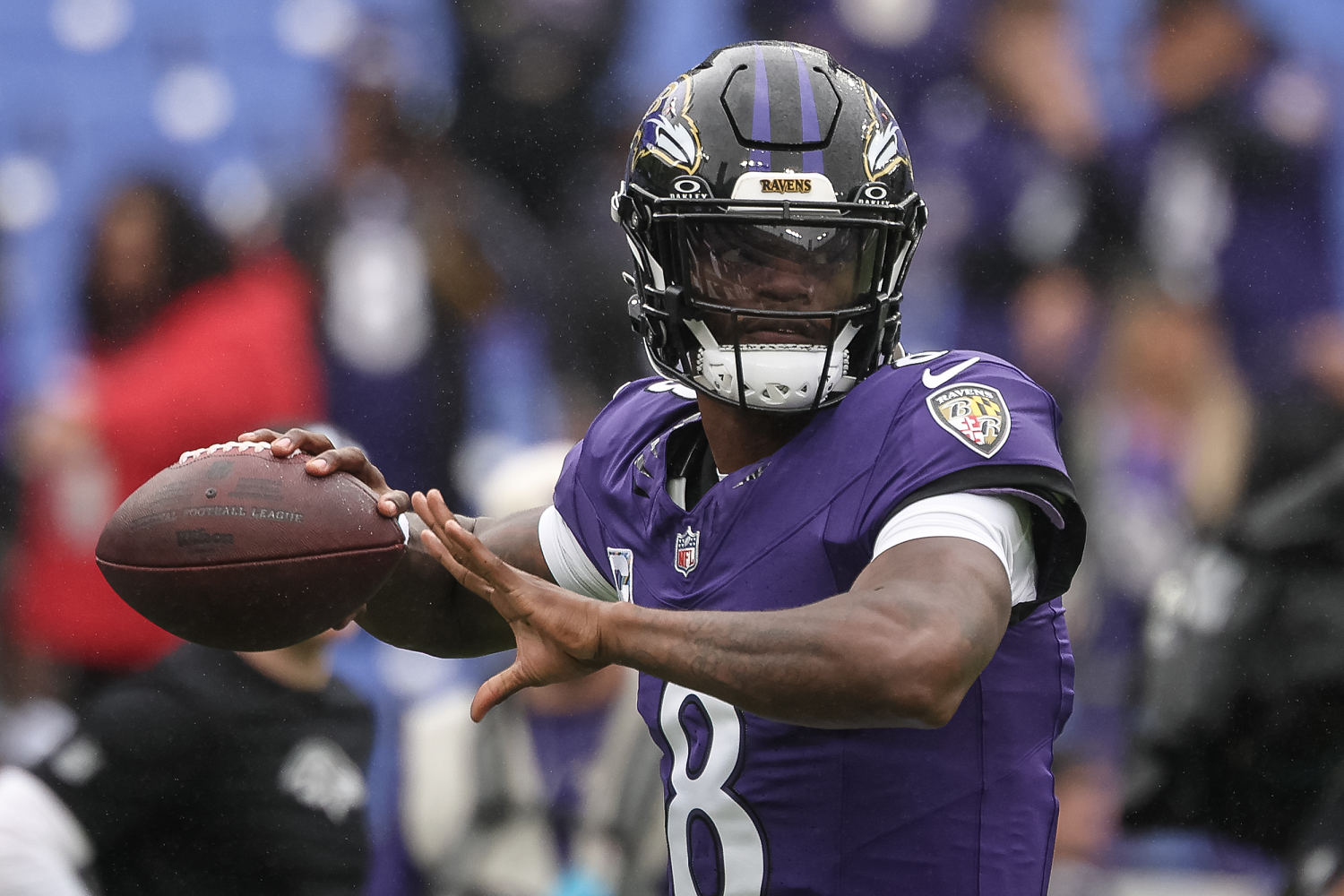
Panic is the default setting of modern sports media. Lamar Jackson limps off the turf against the Tennessee Titans, clutching his ankle, and the industry instantly treats it like a funeral procession for the Ravens season. The lazy consensus writes itself: without their dynamic signal-caller, Baltimore is dead in the water, their offensive identity shattered, their Super Bowl aspirations evaporated into thin air.
It is a remarkably shallow reading of how modern football actually operates. Read more on a connected issue: this related article.
I have watched front offices panic-buy backup quarterbacks and tear up entire playbooks because a franchise cornerstone missed a quarter of football. It is reactionary, it is terrified, and it misses the forest for the trees. Jackson walking off the field is not a catastrophe. It is an unwanted, high-stakes stress test that exposes every structural crack a dual-threat offense tries to mask with sheer athletic brilliance.
The Crutch Of Individual Brilliance
Let us dispense with the fairy tale that losing a two-time Most Valuable Player makes a team better in a vacuum. That is not the argument. The argument is that relying exclusively on an extraterrestrial talent to bail out stagnant schemes creates a false sense of security. More journalism by CBS Sports highlights similar perspectives on the subject.
When a quarterback can turn a busted protection into a forty-yard scramble by making three defenders miss in a phone booth, coaches stop scheming clean pockets. They stop demanding discipline from their interior linemen. They tolerate sloppy route depths because they know number eight can improvise his way out of trouble.
Football orthodoxy worships the bailout play. Analysts drool over off-script magic, treating it as the pinnacle of quarterback play. But off-script magic is a symptom of systemic failure. It means the design broke down.
When Jackson leaves the field, the safety net vanishes. Suddenly, the coaching staff is forced to do something terrifying: actually coach an offense that wins on timing, rhythm, and structural integrity.
Exposing The Playcalling Blind Spot
Look at how opposing defenses prepare for Baltimore. They build their entire defensive architecture around containment. They assign spies, they collapse the edge with disciplined pass-rush lanes, and they play aggressive man-to-man coverage because they know any hesitation from the second level means Jackson will exploit the green grass.
The moment a traditional pocket passer steps under center, that defensive calculus inverts entirely.
Coordinators who spent all week practicing gap integrity against a zone-read threat suddenly find themselves defending a standard pro-style passing game. If the replacement quarterback cannot exploit intermediate windows with anticipation, the offense stalls. But that stagnation is precisely where the truth emerges. It reveals whether the supporting cast can win without individual miracles.
Imagine a scenario where a backup quarterback has to operate purely within structure. Receivers cannot rely on broken-play scrambles to pad their stat lines; they have to win at the line of scrimmage. Offensive tackles cannot rely on lateral agility to bail out poor hand placement; they have to anchor against bull rushes.
The injury forces a brutal audit of the roster's depth. If a team collapses the second its star misses a snap, that team was never a true contender. It was a vehicle driven by a single passenger.
The Myth Of The Irreplaceable Scheme
We hear the constant refrain that offensive systems are custom-built for dual-threat quarterbacks, making them impossible to replicate with anyone else. This is a cop-out for lazy scheme adaptation.
Offensive systems should be built on leverage, spacing, and numbers. If your entire playbook depends on one man's superhuman ability to break the laws of physics in the open field, you do not have an offensive philosophy. You have a lottery ticket.
When Baltimore adjusted after Jackson's exit, the immediate drop-off laid bare the dependency ratio. But it also offered a glimpse into what a more sustainable, diversified attack could look like if the front office ever decided to build a true offensive ecosystem rather than a customized playground.
The Titans game became a referendum on organizational depth. Teams that win championships do not fold when their headliner takes a hit. They pivot. They lean on a power running game that does not require quarterback keepers to gain four yards. They dial up quick-game concepts that get the ball out of the hand in under two point five seconds, neutralizing a pass rush through sheer arithmetic.
Dismantling The Panic Narrative
The outcry surrounding ankle sprains and lower-body tweaks to mobile quarterbacks always follows a predictable arc. First comes the doom-scrolling on social media, followed by hot takes about durability, culminating in existential dread about the franchise's trajectory.
This is sports media manufacturing anxiety for clicks.
An ankle injury, provided it is not structural or season-ending, is a temporary mechanical glitch. But the panic surrounding it reveals a profound lack of faith in the broader machinery of the franchise. If John Harbaugh and his staff cannot win a single quarter—or even a couple of games—without Jackson, then the multi-million dollar scouting department, the strength and conditioning staff, and the position coaches are failing at their primary directive.
Depth is not an insurance policy you buy and forget about. It is an active component of team construction.
The Uncomfortable Truth About Dual-Threat Longevity
We must also address the elephant in the room that commentators whisper about but rarely dissect with analytical rigor. Running quarterbacks absorb an extraordinary amount of punishment. Even when they slide, the sheer torque placed on joints and ligaments during high-speed directional changes takes a cumulative toll.
Building an offense that can function without your primary weapon operating at one hundred percent capacity isn't just a contingency plan; it is a necessity for long-term survival.
If an offense cannot survive thirty minutes without its superstar, it will never survive a deep playoff run against elite defenses that take away your primary option for four straight quarters. Postseason football is about attrition. It is about neutralizing tendencies and forcing an opponent to beat you with their fourth- or fifth-best option.
When Jackson went down against Tennessee, it was a stress fracture in the illusion of invincibility.
Stop Mistaking Star Power For Structural Health
The takeaway from Baltimore's scare should not be that the season is doomed. The takeaway is that the Ravens need to diversify their offensive portfolio so that a single rolling tackle does not turn a Super Bowl contender into an disjointed mess.
Stop treating injuries as purely tragic strokes of bad luck that completely absolve poor organizational contingencies. Start evaluating teams by how they adapt when their primary engine stalls.
True contenders do not panic when the star goes down. They find out who can actually play football.



