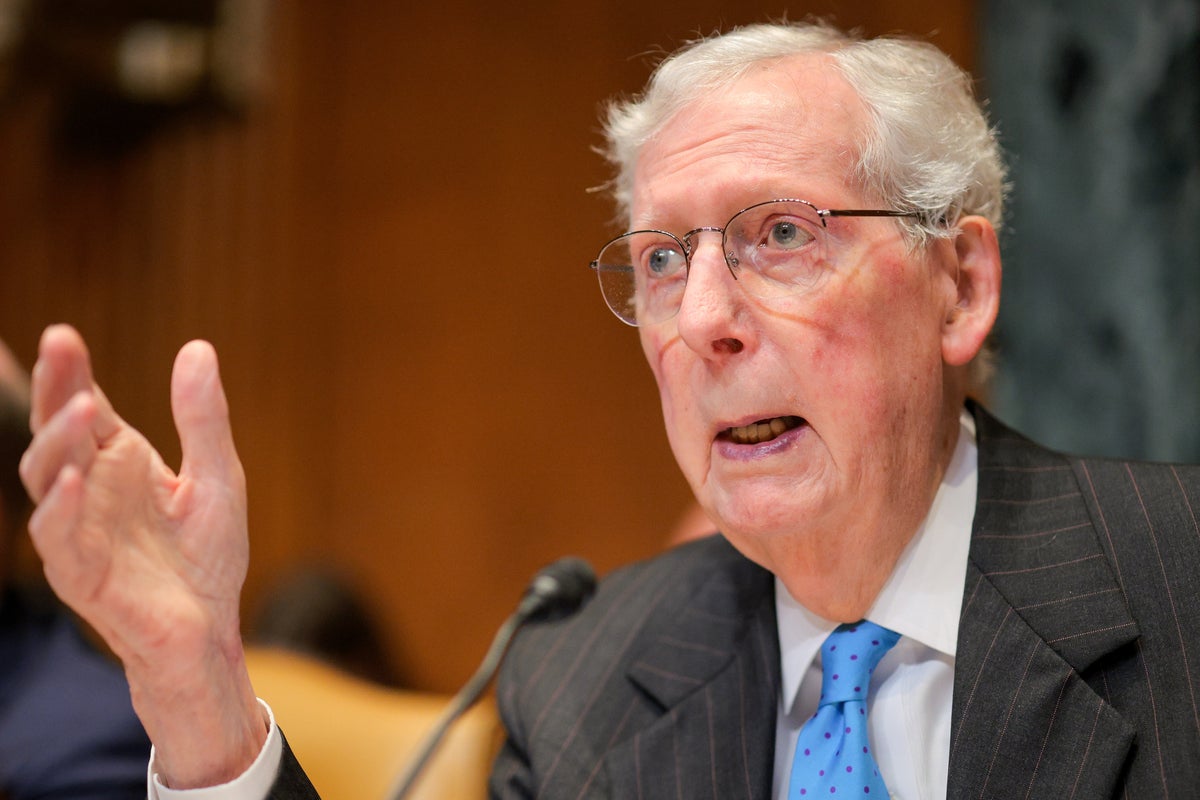
Mitch McConnell is back in the hospital. His team rolled out the standard, tight-lipped Washington playbook on Sunday morning, announcing the 84-year-old Kentucky senator was admitted and is receiving "excellent care." No location. No specific diagnosis. Just a vague "medical incident" shroud.
If this feels like deja vu, it's because it is. This is his second hospitalization this year alone, following an eight-day stint for flu-like symptoms back in February. For a man who has shaped the modern conservative movement more than almost anyone else alive, these repeated medical emergencies are signaling something far deeper than just old age. They represent the bumpy, uncertain final stretch of an era. You might also find this connected story useful: The Quiet Shift in Central Europe That Millions Will Miss.
The Reality Behind the Capitol Illness Reports
Let's look past the sterile press releases. McConnell's office, led by spokesperson David Popp, rarely gives away details until they absolutely have to. But we don't need a detailed medical chart to see what's happening. The physical toll of running the Senate for decades is catching up with a man who has battled severe mobility issues since surviving childhood polio.
This isn't just about a single bad morning or a sudden bug. Look at the timeline of the last few years. You have the severe 2023 fall at a Washington hotel that left him with a concussion and broken ribs, keeping him out of the Senate for six weeks. Then came the terrifying public freezing episodes later that summer where he blanked out in front of rolling cameras. Add in multiple subsequent trips, a sprained wrist in late 2024, and a bandaged hand just last month. As highlighted in recent articles by The Washington Post, the effects are notable.
The human body has a way of forcing a slowdown, even on the most stubborn politicians. McConnell already announced he's throwing in the towel, deciding not to seek reelection this coming fall. He's currently riding out his final months in office, with his term officially wrapping up in January 2027. But his packed schedule right up until this weekend proves he refused to slide quietly into the background. Just days before this latest hospitalization, he was grinding through an all-night Senate "vote-a-rama" and running defense subcommittee hearings.
Why a Sidelined McConnell Changes the Current Power Struggle
People who think McConnell is irrelevant just because he stepped down as GOP leader in 2025 are completely missing the point. He still wields massive influence from his seat on the Senate Appropriations Committee. Specifically, he chairs the defense subcommittee, a position that puts him right in the middle of funding conflicts regarding the ongoing war with Iran.
His absence, even a temporary one, changes the math in a highly volatile Senate. McConnell hasn't been playing nice with the White House during Donald Trump’s second term. Free from the burden of leading the entire Republican conference, McConnell has been surprisingly vocal, routinely pushing back against the administration's foreign policy and trade tariffs. He even publicly blasted a White House-backed "lawfare" compensation fund as "utterly stupid" and "morally wrong."
With McConnell away from his post, the guardrails on defense spending look a lot looser. The administration wants swift approval for wartime funding, and McConnell was one of the few institutionalists left with the institutional knowledge and the stubbornness to slow things down and demand oversight.
The Looming Battle for the Bluegrass State
Washington isn't the only place feeling the aftershocks of this hospital visit. Kentucky is already staring down the barrel of a massive political shift. Since 1985, McConnell has been the undisputed kingmaker of Kentucky politics. His retirement opened up a frantic scramble for his seat, and this latest health scare serves as a stark reminder to voters that the McConnell era is effectively over.
The race to replace him is already ugly. On one side, you have Trump-backed Representative Andy Barr, who actually got his start as an intern for McConnell years ago but has since aligned himself closely with the MAGA wing of the party. On the other side is Democrat Charles Booker, trying to pull off a historic upset in a deeply red state.
McConnell’s physical decline leaves a vacuum that local politicians are rushing to fill. For forty years, Kentucky reaped the rewards of McConnell’s immense federal power, watching billions of dollars stream into the state because of his leadership status. Whoever wins his seat won't have that kind of leverage on day one. Kentucky voters are realizing that the immense clout they took for granted is vanishing.
Navigating the Reality of an Aging Congress
This isn't an isolated incident. The constant health updates regarding McConnell mirror a broader, uncomfortable truth about the current state of American governance. We are being governed by a gerontocracy. McConnell is 84. Chuck Grassley is over 90. The average age of the Senate keeps creeping higher, and the institutions aren't built to handle the sudden, frequent absences of their most vital members.
When a corporate CEO faces repeated hospitalizations and visible cognitive or physical stumbles, board members and shareholders demand a clear transition plan. In Washington, the reaction is usually to cover it up, issue a generic statement about "excellent care," and hope the lawmaker can make it back to the floor for the next crucial vote. It’s an unsustainable way to run a government, especially when high-stakes decisions about foreign wars and federal budgets are on the line.
The immediate next steps aren't about waiting for another sterile press release from McConnell's spokesperson. Watch how the Senate Appropriations Committee handles defense funding over the next 48 hours. Watch whether temporary leadership steps in to manage the defense subcommittee while McConnell recovers. And pay close attention to the legislative calendar; if McConnell misses key votes this week, it will trigger an immediate scramble among Senate Republicans who rely on every single vote to pass or block critical legislation. The true measure of McConnell's current condition won't come from a statement—it will be written in the empty seat on the Senate floor.