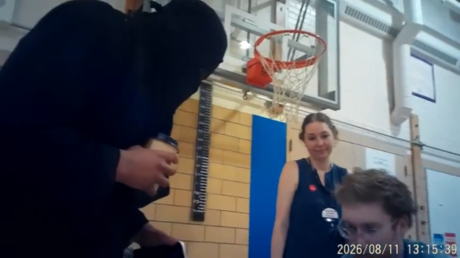
Standing in the witness box at London's Southwark Crown Court on October 29, 2026, Laura Brand called her husband a "wonderful father to our children" and an "amazing, attentive husband". Headlines quickly boiled her testimony down to that single soundbite. They missed the point.
Her appearance wasn't a standard celebrity spouse closing ranks behind a partner in crisis. It was a calculated legal gamble by defense barrister Ian Winter KC. With Russell Brand facing severe charges involving six women across a decade, Laura stepped forward as the sole in-person character witness to testify on his behalf.
To pull that off, she had to make a brutal admission under oath. She had to tell a jury of eight men and four women that her husband cheated on her.
Why Laura Brand Took the Witness Stand
Most tabloid coverage framed Laura Brand's testimony as blind loyalty. In reality, her time on the stand was built around a very specific legal objective: separating rampant infidelity from criminal sexual violence.
Prosecutors spent weeks painting Brand as a predatory figure who used his fame between 1999 and 2009 to target women. Brand's defense team didn't try to pretend he was a saint during his peak years in British television and Hollywood. Brand himself told the court he had been promiscuous and obsessed with sex as a younger man, while insisting every encounter was consensual.
Laura's job was to back up that exact distinction in front of the jury.
She testified that she first met Brand at the Edinburgh Festival in 2006 when she was 19 and he was 31. They started dating, and she fell in love with him. By February 2007, they broke up because he couldn't stay faithful.
"I was invested, we both had told each other we loved each other, but it was clear it was difficult for him to be monogamous," Laura told jurors. "We talked about it. I did find that difficult."
That candor wasn't an accident. By openly admitting that Brand's infidelity broke her heart back in 2007, Laura established credibility with the jury. She wasn't denying his well-documented history with women. Instead, she framed it as reckless promiscuity rather than coercion. She told the court that even during their early days, he had never forced her into anything without consent.
The Timeline of Their Relationship
To understand why her testimony carried weight in the courtroom, you have to look at how long she has actually known him. Their history predates his marriage to Katy Perry and spans two decades:
- 2006: Laura Gallacher approaches Brand after a comedy show in Edinburgh, introducing herself as the sister of TV presenter Kirsty Gallacher. They begin dating shortly after.
- February 2007: The couple splits over Brand's inability to remain monogamous. They reconnect as friends later that summer.
- 2015: After years apart—including Brand's brief marriage to Katy Perry from 2010 to 2012—Laura and Russell rekindle their romance.
- 2017: They marry and go on to have three young children together.
By the time she walked into Southwark Crown Court in October 2026, she wasn't just speaking as a wife defending her household. She was testifying as someone who knew him in 2006 and 2007—right inside the 1999-to-2009 window covered by the indictment.
The Exact Words That Sparked Courtroom Tension
When Laura spoke about their current marriage, her language was warm and specific. She described a partner who notices small details and makes her feel "very seen" in a way she had never experienced before. She told the jury their marriage is built on "very frank, honest and clear" communication.
"Russell, my husband, is caring, he is kind, he is a wonderful father to our children," she said. "He is an amazingly attentive husband."
From the dock, Brand visibly reacted—smiling, nodding, and mouthing words toward her as she spoke about his domestic life and his 2024 Christian baptism.
Things didn't go entirely smoothly for the defense, though. At one point, defense barrister Ian Winter asked Laura for her "view as to the truth of the allegations".
Judge Joel Bennathan intervened immediately. He reminded counsel that Laura was a character witness, not an expert witness, and temporarily sent the jury out of the courtroom. In British criminal courts, character witnesses can testify about a defendant's general reputation and personal traits, but they aren't allowed to offer personal opinions on whether complainants are telling the truth. That moment underscored the tight legal boundaries around what Laura could—and couldn't—do for her husband's case.
The "Good Father" Defense in High-Profile Trials
If you follow criminal trials closely, the "wonderful father" testimony isn't a new phenomenon. Defense attorneys routinely lean on domestic stability when a client is accused of historical sex offenses.
Here's why they do it, and where the strategy hits a wall.
First, juries naturally struggle to reconcile two competing images of the same human being. On one side, prosecutors present testimony about a man who allegedly snapped from charming to aggressive, ignoring pleas to stop. On the other side, a composed mother of three takes the oath and describes a gentle, attentive family man. The defense wants jurors to feel that a man capable of being a devoted father in 2026 couldn't possibly be the person described by the complainants from the 2000s.
Second, Brand's legal team combined Laura's testimony with his religious conversion. Throughout the trial and in public statements leading up to it, Brand leaned heavily on his sobriety and his 2024 baptism. He framed his past self as a recovering addict who had found faith, drawing a hard line between moral failings like cheating and criminal acts like rape.
The problem with this approach is simple. Being a good parent in your forties or fifties doesn't erase what happened in your twenties or thirties. Legal analysts and advocacy groups frequently point out that domestic tenderness and predatory behavior aren't mutually exclusive. People compartmentally separate their lives all the time.
Two of Brand's former girlfriends also provided written character statements that were read to the court. Like Laura, they described him positively while noting that he had cheated on them. Yet nobody else stepped into the witness box in person to vouch for him—something Brand himself acknowledged during his own testimony when he noted he couldn't find other people willing to give evidence on his behalf.
How the Jury Weighed Her Testimony Against the Evidence
Ultimately, Laura Brand's character testimony couldn't overcome the weight of the prosecution's case.
The trial, which lasted three weeks following the September 2023 joint investigation by The Times and Channel 4's Dispatches, forced jurors to sift through accounts from six women. Prosecutors pointed out that the complainants didn't know one another and came forward independently to police. Two dozen supporting witnesses corroborated details of the women's accounts and the immediate trauma they experienced years earlier.
After deliberating for eight hours and 30 minutes across two days, the jury delivered a split verdict on November 5, 2026:
- Guilty of one count of rape involving a 21-year-old woman in 2009.
- Guilty of three separate counts of sexual assault occurring between 2004 and 2009.
- Not guilty on two additional counts of rape and one count of attempted indecent assault.
That split verdict tells you everything about how the jury processed the trial. They didn't blindly rubber-stamp every accusation, nor were they swayed by Brand's image as a reformed family man. They evaluated each incident individually against the corroborating evidence.
Judge Bennathan immediately denied bail and remanded Brand into custody. Four days later, on November 9, 2026, the judge sentenced the 51-year-old comedian to 10 years and six months in prison, condemning what he described as Brand's "casual and arrogant disregard" for women. Brand is expected to serve at least seven years behind bars before becoming eligible for release under strict monitoring conditions.
What Happened After the Verdict
Laura Brand's role as her husband's primary public defender didn't end when the courtroom doors closed. Throughout the trial and sentencing, she remained his most visible supporter outside Southwark Crown Court.
On November 16, 2026—a week after his sentencing—she read a statement written by Brand from prison in a video posted to YouTube, in which he continued to maintain his innocence. That broadcast triggered an immediate investigation by British authorities into whether Brand violated prison communication rules, alongside a government request to have the video removed.
Meanwhile, London's Metropolitan Police confirmed their inquiries aren't finished. Detectives have already passed files to the Crown Prosecution Service regarding two further rape accusations made by other women. Brand also faces ongoing civil litigation in New York filed under the Adult Survivors Act over an alleged 2010 assault on the set of the film Arthur.
How to Read Character Witness Testimony in High-Profile Cases
When a high-profile trial hits the news cycle, spouse and family statements almost always dominate social media feeds. If you want to separate courtroom PR from actual legal substance next time a major case unfolds, look for three things:
- Check what the witness actually observed. Character witnesses almost never witness the alleged crimes. Pay attention to whether they are testifying about direct facts from the relevant dates or simply offering a broad endorsement of who the defendant is years later.
- Watch for strategic concessions. When a defense witness openly admits a flaw—like Laura Brand confirming her husband's infidelity—that isn't a slip-up. It's a deliberate tactic meant to make the witness seem honest so the jury trusts their broader defense.
- Separate verdicts from soundbites. Media coverage gravitates toward emotional quotes about marriage and parenting. Juries, as the split verdict in Southwark Crown Court proved, look at corroborating witnesses, contemporary messages, and patterns of behavior across unrelated complainants.
For coverage of her testimony inside Southwark Crown Court, watch Channel 4 News's report on Laura Brand taking the stand, which breaks down the key exchanges between defense counsel, the judge, and the jury.