Silence.
That is the first thing you notice when a multi-trillion-dollar nerve center loses its pulse, not the shouting on the trading floor or the frantic blinking of red tickers on a CNBC chyron, just a heavy, suffocating quiet that settles over the desks of engineers who suddenly have to wonder if the person signing off on their most audacious bets still understands why those bets matter. Building on this theme, you can also read: Taiwan Is Wrong About Canada Trading With China And Ottawa Knows It.
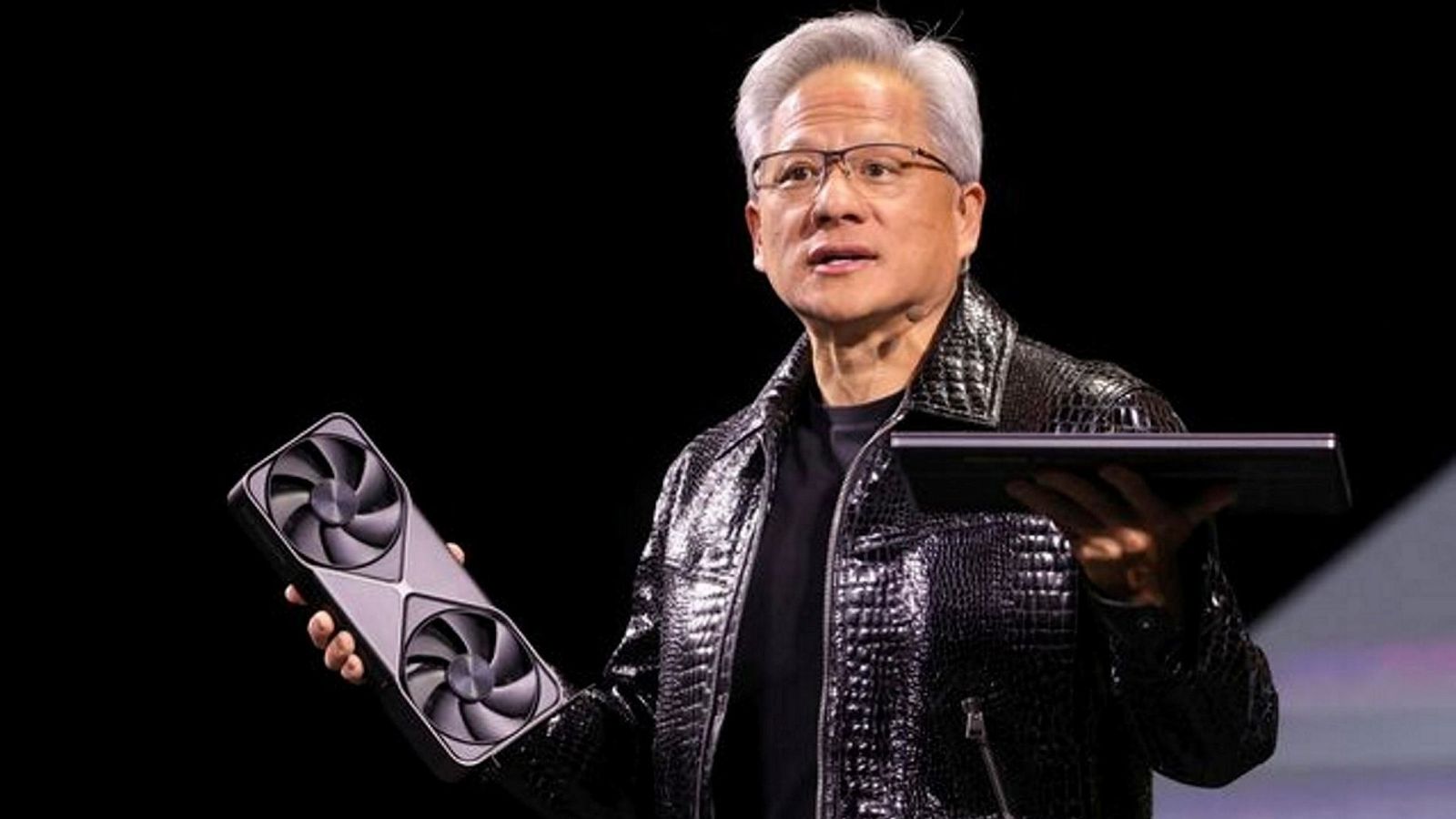
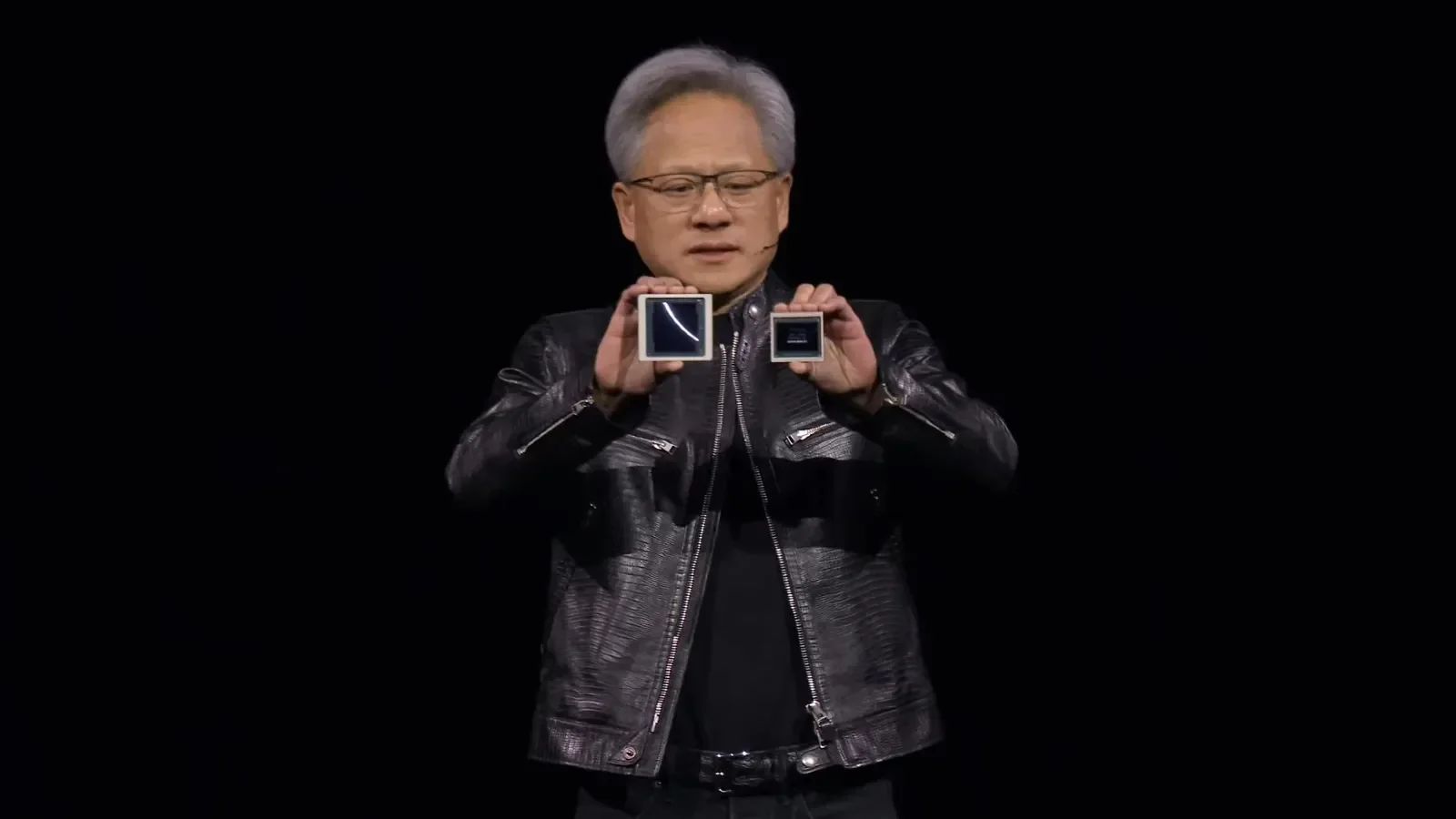
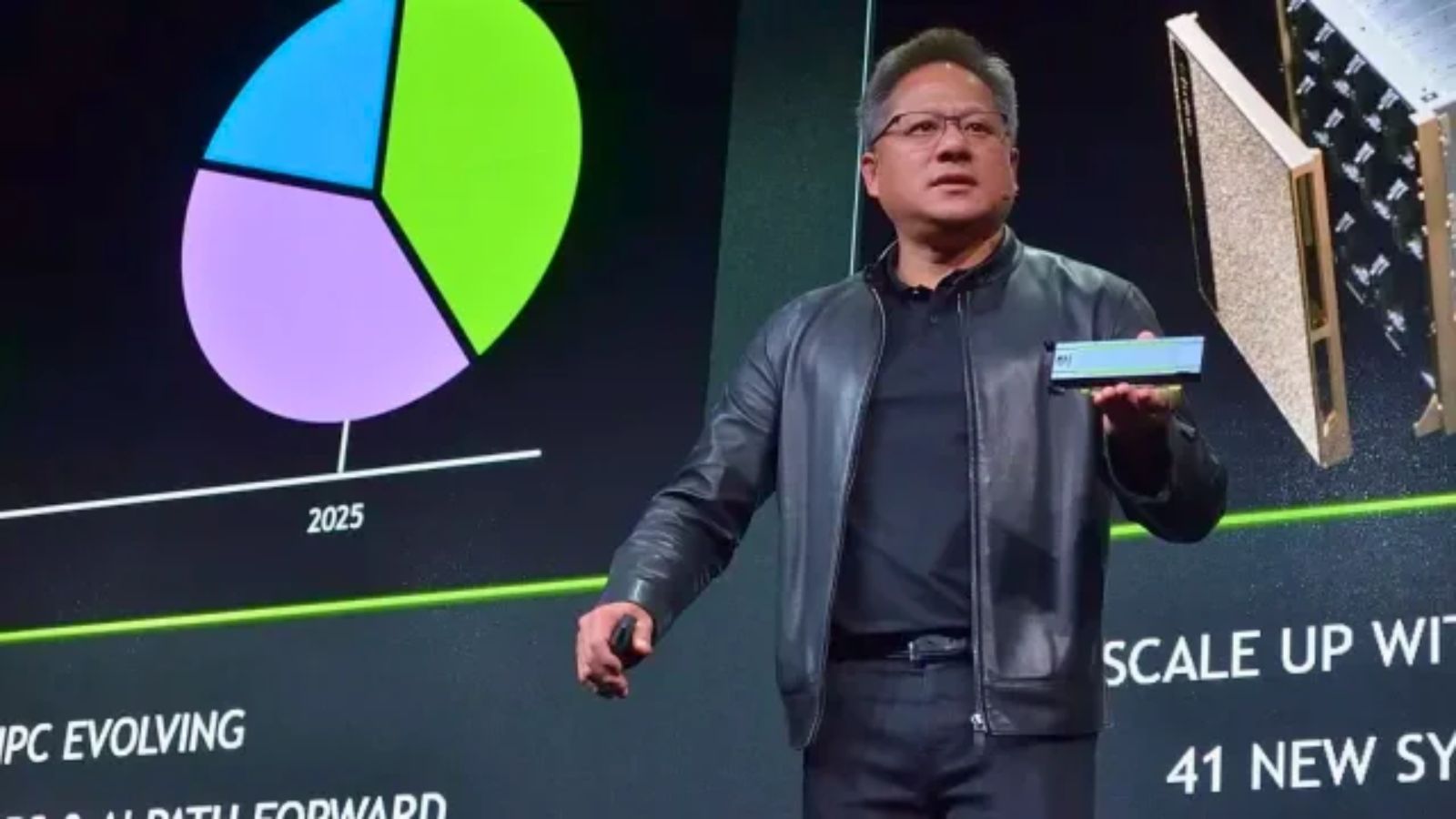
Picture a fictional portfolio manager named Elena sitting in a glass-walled office in midtown Manhattan at 9:31 AM on a Tuesday. Her coffee is cold. Three monitors glow in front of her, painting her face in the sickly green and crimson light of pre-market volatility. For months, she has watched the hardware giant she staked her fund's reputation on drift like a supertanker with a jammed rudder. The numbers on her spreadsheet were still technically impressive, full of healthy margins and backlogged orders, yet the electricity had vanished from the room. Institutional buyers were trimming positions. Rival chipmakers were circling like wolves testing the perimeter of an aging alpha. Then, a single press release crosses the wire, announcing that Jensen Huang is stepping back into the operational helm, and within forty-five minutes, Nvidia shares surge by thirty-three percent.
To understand why a single human being walking back onto a stage can conjure hundreds of billions of dollars out of thin air, you have to throw away almost everything taught in first-year finance classes. Experts at Harvard Business Review have shared their thoughts on this matter.
The Myth of the Rational Ledger
Standard market commentary treats a thirty-three percent rally like a simple math equation, a clean adjustment of discounted cash flows and forward price-to-earnings ratios. Analysts write dry notes about supply chain stability, data center demand, and executive continuity. They treat a corporation like a vending machine where you put in capital expenditure at the top and pull out predictable quarterly earnings at the bottom.
Anyone who has ever built something hard, or lost sleep over a payroll deadline, knows that is a lie.
Companies at the bleeding edge of silicon and artificial intelligence are not vending machines; they are fragile coalitions of stubborn human beings trying to bend physics to their will. When a founder of Huang’s specific obsession steps away, even briefly, an invisible tax begins to accumulate across the entire organization. Decisions that used to take five minutes in a hallway suddenly require three committees and a slide deck. Risk aversion creeps in through the air vents. Middle managers start protecting their territories instead of burning the boats to reach the next architectural generation.
Wall Street smells that hesitation long before it ever shows up on a balance sheet. The discount applied to the stock during an absence isn't really a punishment for missing leadership; it is a pricing-in of bureaucratic gravity. Investors know that without the founder's gravitational pull, a tech titan slowly reverts to the mean, becoming just another vendor selling components rather than an architect dictating the future of computing.
Anatomy of a Thirty-Three Percent Shockwave
Consider what a thirty-three percent jump actually represents when a company already sits at the pinnacle of global market capitalization. We are not talking about a penny stock doubling on a rumor or a mid-cap biotech firm clearing a Phase II trial. A move of that magnitude in a semiconductor heavyweight is the financial equivalent of an underwater earthquake displacing an entire ocean.
In the span of a single morning session, retirement funds in Ohio, sovereign wealth desks in Oslo, and retail traders staring at their phones on a commuter train in Tokyo all experience an instantaneous rewriting of their net worth. Short sellers who bet that the company's best days were behind it find themselves trapped in a burning building with the doors welded shut, forced to buy back shares at any price just to stop the bleeding. Options market makers scramble to hedge exposure, pouring gasoline onto a fire that is already visible from space.
Yet if you zoom past the trading algorithms and look at the actual engineers in Santa Clara, the surge means something entirely different. It is permission to be unreasonable again.
In the semiconductor business, every product cycle is a high-wire act without a net. You are designing chips today for software workloads that won't exist for three years, spending billions of dollars on lithography masks and foundry capacity before a single customer has written a line of code for the finished hardware. Only a founder with absolute moral authority inside the building can look a room full of exhausted physicists in the eye and tell them to scrap six months of work because the architecture isn't radical enough. A hired caretaker CEO, no matter how brilliant their MBA or operational pedigree, rarely survives making that kind of call if it goes wrong. The founder can make it because the building itself is an extension of their nervous system.
Why One Leather Jacket Carries So Much Weight
Let us be honest about the theater of modern capitalism. It is deeply uncomfortable to admit that global markets, supposedly the most sophisticated information-processing engines ever devised by human civilization, can hinge so dramatically on the presence of one man in a black leather jacket. It feels superstitious. It feels fragile. When I first started tracking technology equities years ago, I stubbornly resisted the "great man" theory of corporate valuation, convinced that great engineering teams and patent moats were what actually endured.
I was wrong, and watching the market's visceral reaction to Huang's return is the clearest proof you will ever get.
Think of a symphony orchestra that has played together for thirty years. Every musician in that pit is a virtuoso. They know the sheet music cold, their instruments are priceless, and they can execute a complex piece flawlessly on autopilot. If the conductor walks off the podium, the music does not stop. The first violinist nods, the percussion keeps time, and the audience still hears a competent performance.
What disappears is the tension. Nobody dares to push the tempo to the edge of collapse, and nobody pulls back into a whisper that makes the entire hall lean forward in their seats. When the conductor returns and raises the baton, the musicians haven't suddenly practiced more hours overnight, yet the sound transforms instantly because the person responsible for the risk is back in front of them.
The market's thirty-three percent repricing is not an irrational burst of hero worship. It is a cold-blooded recognition that in an era where artificial intelligence infrastructure is being rebuilt from the dirt up, tempo is the only moat that matters.
The Invisible Stakes Behind the Ticker
Step away from the brokerage screen for a moment and follow the ripples outward, because the price of Nvidia stock is no longer just a scorecard for shareholders. It has become the unofficial thermometer for the entire global technology buildout.
When that stock languishes, CFOs at cloud providers and enterprise software firms start getting cold feet. Boardrooms begin asking uncomfortable questions about return on invested capital. Startups building foundational models find their venture funding rounds stalling out as investors wonder whether the hardware roadmap is losing momentum. A sluggish chip leader creates a deflationary psychological drag across the whole ecosystem.
Flip the switch, and the exact opposite happens. A massive, violent vote of confidence in Huang’s return forces every competitor, customer, and supplier on earth to recalibrate their urgency before lunch.
- Cloud hyperscalers immediately accelerate their capital allocation timelines, terrified of being caught short on next-generation compute clusters while rivals lock up supply.
- Enterprise buyers who were sitting on the fence about deploying internal AI infrastructure treat the rally as a signal that the current architectural standard isn't going anywhere.
- Competing chip designers watch their carefully crafted pitch decks about stealing market share turn into scrap paper overnight, forced back to the drawing board to match a pace that just accelerated again.
Let us return to Elena in her Manhattan office, though now it is 4:05 PM and the closing bell has finally rung. The frantic green flashes on her screens have settled into a steady, staggering number. Her fund has made back six months of underperformance in a single afternoon, and her phone is buzzing with calls from clients who suddenly sound like they believed in the thesis all along.
She doesn't feel triumphant. Mostly, she feels exhausted, staring at the reflection of the city lights in her window and thinking about how strange it is that trillions of dollars of pension money, college endowments, and personal savings depend on the stamina of a single human being refusing to slow down.
The ticker tape stops moving at the end of the day, leaving behind a neat, clean percentage gain that tomorrow's newspapers will print in bold ink, a tidy number that tells you everything about what the market paid and nothing at all about the weight sitting on the shoulders of the man who has to walk into the building tomorrow morning and earn it.